


RTÉ is inviting entries to one of Ireland's longest established and most significant literary prizes, the RTÉ Short Story Competition in honour of writer and broadcaster, Francis MacManus - find out more here.
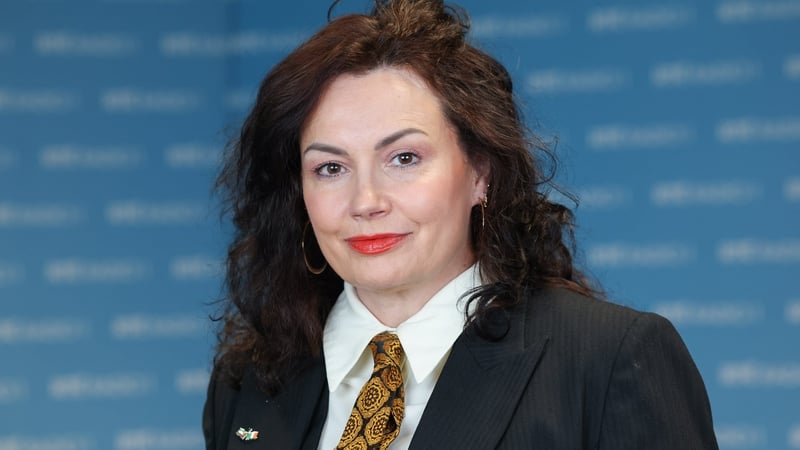
Below, award-winning novelist and competition judge (also a former Short Story Competition shortlistee) Aingeala Flannery offers a few tips for budding writers thinking of taking the leap...
When I think about what makes a great short story, my mind runs the gamut from Flannery O'Connor to John McGahern. It cartwheels through Carver and Chekhov and Cheever, somersaults over Saunders, before racing past Trevor, Keegan and Barry. The more you read, the more you realise there is no winning formula, no foolproof recipe.
Short stories are to writing what souffles are to cooking: fragile and temperamental, difficult to time and easy to overcook. They take patience, restraint and a sprinkle of je ne sais quoi — qualities the paragraph you have just read is sorely lacking in.
We need your consent to load this rte-player contentWe use rte-player to manage extra content that can set cookies on your device and collect data about your activity. Please review their details and accept them to load the content.Manage Preferences
Listen: Carnegie and Me, by Aingeala Flannery, for Sunday Miscellany
In other words, less is more. The most common misconception about short stories is that they are easy to write simply because they are short. Another is that they are an apprenticeship for writers who aspire to become novelists. In practice, short stories are far less forgiving of weak writing than novels. Why? Because there are fewer places to hide in a confined space. In a short story, every word needs to earn its place. Sentences work extremely hard, you are exerting yourself, but the writing must appear effortless to the reader. This means you don’t have time for chunks of back story, overpopulation, quantum leaps and convoluted plot. Find subtle, clever ways of smuggling information into the story. Be ruthless with redundancy, trim the fat, and never, ever explain, trust the reader to figure it out.
A strong opening line is especially important when you're writing to be heard.
The first short stories I ever read were in a schoolbook called Exploring English, an Inter Cert anthology compiled in the late 1960s by UCD Professor of Anglo-Irish Literature Gus Martin. It baffled me how Frank O’Connor managed to pour an entire world into eight pages, when it took Charles Dickens close to six hundred. Upon reading the opening line: "All the trouble began when my grandfather died and my grandmother — my father’s mother — came to live with us." I was instantly nosey about what trouble his grandmother had caused. This was long before the term 'hook’ entered my vocabulary but that’s exactly what’s at work in the opening line of First Confession.
We need your consent to load this rte-player contentWe use rte-player to manage extra content that can set cookies on your device and collect data about your activity. Please review their details and accept them to load the content.Manage Preferences
Listen to Scrappage by Aingeala Flannery, shortlisted for the RTÉ Short Story Competition in 2022
A strong opening line is especially important when you’re writing to be heard. People do other things while listening to radio you want them to prick up their ears.
Another thing that turns me on in a story is vivid detail. A powerful image will lodge in the mind, similes (comparisons) rarely go beyond the eye. Use evocative language, words have a mouthfeel, they give your story a taste and a smell. The way your story sounds will depend on the length of your sentences and how you arrange the words. The rhythm of a story is more apparent on the radio than on the page. Write for the voice. Think of your story as a musical composition. Read it aloud to test its pace. Does it sound urgent at moments of tension? Have you given the reader room to reflect? Don’t be afraid of silence.
Finally, (perhaps most importantly) for me, the magic of radio is its intimacy. I love a story told in a conversational tone, casually inviting the listener in — then kicking the door shut behind them. Here are a few examples:
‘I am sitting over coffee and cigarettes at my friend Rita’s and I am telling her about it.’
-Raymond Carver, Fat.
‘A few years ago I used to tell myself I wanted to marry a cowboy.’
-Lydia Davis, The Professor.
‘So I bought an old hotel on the fjord of Killary.’
Kevin Barry, Fjord of Killary.
Anyone looking for inspiration could do worse than seeking out these stories at their local library and reading them to the end.
Good Luck!
For rules and all information about the competition, and to find winning and shortlisted stories from previous years, go here.
Aingeala Flannery is the author of The Amusements (Penguin), which won the Kerry Group Irish Novel of the Year 2023 and the John McGahern Prize. Her short stories and essays have appeared in The Irish Times, Harper's Bazaar, Paper Visual Art, and Winter Papers, and have been broadcast on RTÉ Radio One. She is deputy publisher at The Dublin Review and is the current Kildare Library and Arts Service Writer-in-Residence at Maynooth University.
