


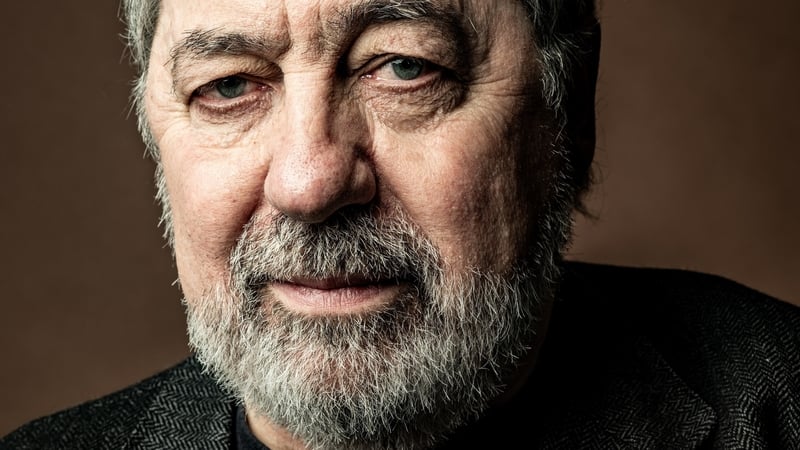
We present an extract from The Fourth Wall, the international bestseller by French author Sorj Chalandon, informed by the author's own experiences as a journalist in the Middle East, and published in a new translation by Dublin-based Lilliput Press.
Beirut, 1982, at the outbreak of the second Israeli invasion of Lebanon, and the young French activist George has been tasked by his old friend Samuel – a Greek Jewish resistance fighter and theatre director – with staging a performance of Jean Anouilh's Antigone in the Lebanese city.
With a cast composed of those on all sides – Palestinian, Christian, Druze, Jewish, Shiite, Sunni, Chaldean and Armenian – and a stage caught amid the chaos and destruction of the approaching war, Georges and Sam hope that this radical act of art may spark the beginnings of peace and reconciliation. Their aspirations, however, are soon confronted by the brutal realities of the conflict and the true price of violence.
For months I didn't know that Sam was Jewish. He was Greek and claimed nothing else. My buddies and I wondered about him. He was foreign, older than we were, different in every way. I remember one day in April 1974, marching towards the palace of the Mutualité in Paris. We filled the street. Sam followed along on the pavement, tense, his face stern, unreadable. To our shouts of 'Pales-tine will conquer,’ he answered, ‘Palestine will survive.’ I didn’t ask myself what that distinction meant to him. I car-ried a bucket of green paint. Behind us, comrades carried the other colours: white, red and black. Two hours before a Zionist meeting, we planned to paint a Palestinian flag in front of the entrance to the building.
‘This is not a day to raise the flag,’ Sam protested.
The day before, Thursday, 11 April 1974, three mem-bers of the Palestinian Liberation Front had attacked the city of Kiryat Shmona, in Galilee. Their target was a school, but they found it closed for Passover. Instead, they entered an apartment building where they murdered nineteen peo-ple, including nine children, before killing themselves.
‘Couldn’t we postpone our protest?’ Sam had asked.
In our group, he was the only one opposed to this war painting. We put his idea to a vote. On his side, he stood alone. Opposing him, all those who thought the slaughter changed nothing about the pain of Palestine.
One of us had even claimed, ‘It’s the cost of the cause.’ ‘Nine children?’ Was Sam’s response.
He stood up, imposing, calm. In the three months he had been a refugee in France, I had never heard his voice harden, seen him make a fist, or even frown. When we fought, he refused to use a weapon, even an iron rod. He said a Molotov cocktail was neither argument nor answer.
Sam was tall, his body visibly battered yet muscular, strong as an ancient olive tree. Some people mistook him for a cop. His short grey hair stood out in our long-haired leftist group, his tweed jacket contrasted with our leather, also his way of checking out a place, the scrutiny in his gaze. His way of never taking a step back. Except slowly, defiantly, with a glacial smile that chastened any adversary. We all feared the police, the extreme right, and Zionist ambushes, but he feared none of their blows. After surviving dictator-ship, the battle of Athens and prison, he said our battles were a form of light opera. He didn’t judge our political commitment. He just made sure that in the morning, we’d all be at roll call. That there would be no dead in our ranks. He called our anger a slogan, our wound a bruise, and said the blood we shed would not fill a handkerchief. He dreaded the facts of struggle, not the belief in it.
One day at an intersection, he kept me from yelling ‘CRS = SS’ with the others. Simply, with one hand on my arm, his dark eyes probing mine. We were trapped by tear gas. Between two ferocious fits of coughing, he asked me if I knew of Alois Brunner. I looked at him, confused, alarmed at his calm. Alois Brunner? The Nazi war criminal? Of course I did. The tear gas smelled like sulphur, our rocks gashed the sky as we shouted, police batons beat cadence against their shields. We were on the pavement, Sam and I. He grabbed my iron rod and threw it in the gutter. He pulled his scarf from his face and pushed me ahead of him. I struggled fiercely against him.
‘You’re an idiot!’
He led me towards the police cordon the way a plain-clothes officer drags his prey towards the police cruiser.
‘Show me Brunner, George. Point him out!’
We were facing the line of CRS officers, alone in the middle of the street, as our comrades flooded back all around us. The police were ready to charge. One officer walked the ranks, screaming over the noise.
‘Which one is Brunner? Tell me!’
Sam wouldn’t let go of me. He pointed at one of the helmeted men.
‘That one? That one? Where is the bastard?’
Then he let me go. The police attacked, shouting. Sam opened the door of a building and pushed me inside. I was crying, shaking, breathless. And he was suffocating. Beyond the closed door, the street was fighting. Screams, shouts, moans, chaos of tear gas. I sat on the low post box, my back to the door. Sam was bent over, one hand against the wall, trying to catch a breath. He pulled the scarf down from my face.
‘Alois Brunner wasn’t there, George. Or any other SS. Not their dogs, not their whips. So don’t ever yell nonsense like that again, got it?’
I got it. A little. It wasn’t easy for me. I could have answered that a slogan was an image, a sketch of a thought, but I didn’t have the courage. Or even the desire to contra-dict him. I knew he was right.
‘Protect your intelligence, please,’ Sam said. And then he helped me stand up.
In Athens, he had chanted, ‘Bread, education, freedom.’ The most beautiful appeal to rise up ever distilled by the anger of men, he said. And it was he, the Greek resistance member, who challenged the idea of the Palestinian flag. He repeated that smearing paint on a street corner the day after a massacre was wrong. He was more tense than usual. He looked from one face to another to try to convince us.
He had trouble breathing, mangled his French, mixing his language with ours, his words stripped back to the accent of an exile. I believe that day it was the Jew who spoke, secretly, the man who wanted to survive, not conquer. When the vote came, he raised his hand. Only his, alone. And all our hands next, to show him up. He had lost. I remember all of us, boys and girls, foolishly applauding, excited as children at a circus. Not to com-mend the death of nine children, but to proclaim our determination.
‘None of you has ever been in danger,’ Sam responded.
My Greek friend lowered his eyes. He could have left the room, but that wasn’t his way. He would never shut the door on a friend. He just spoke his truth, what he felt was right. And even volunteered to go with us.
‘So the flag won’t be painted backwards,’ he said flatly.
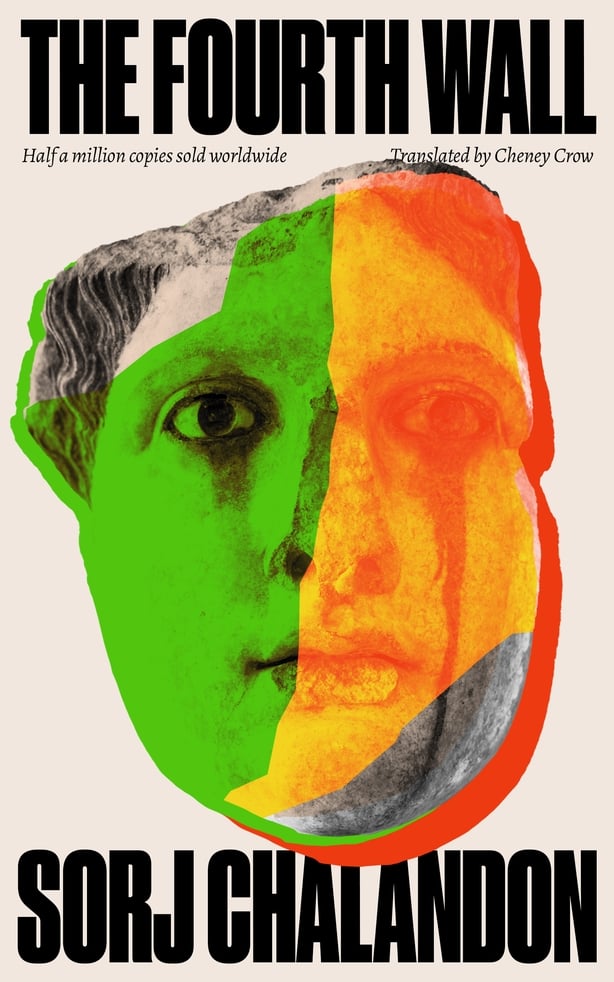
The Fourth Wall is published by Lilliput Press
