


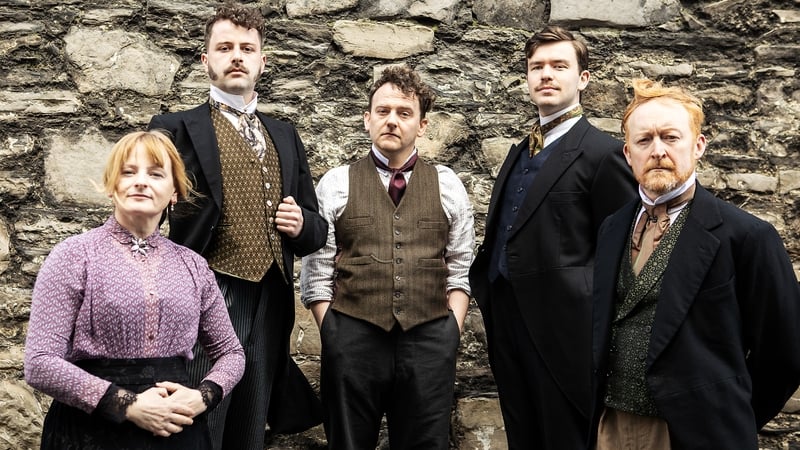
Playwright Colin Murphy introduces his new play, Miasma, a 19th century medical detective story with lessons for our own time, touring to 'august institutions and unusual venues' this April and May.
In London's Soho, in August in 1854, a woman named Sarah Lewis lost her baby daughter after a short bout of illness.
She would never know this, but Sarah's tragedy would be a turning point in the fight against a mass killer.
Soho that August was victim to one of the deadliest local outbreaks of cholera ever. Cholera was a riddle. Most people, including the most eminent scientists and doctors, believed it was spread in the air, as a "miasma", associated with the stench of the open cesspools and sewers that characterised city living in the 1850s.
We need your consent to load this rte-player contentWe use rte-player to manage extra content that can set cookies on your device and collect data about your activity. Please review their details and accept them to load the content.Manage Preferences
Listen: Colin Murphy talks Miasma with RTÉ Arena
But one man in particular had an alternative theory: that it was spread in the water. His name was John Snow, and he was a doctor and, despite that, an outsider: his father had been a labourer and, though Snow had climbed the professional ladder thanks to brains and obsessiveness, he was never quite accepted by the establishment.
During the cholera outbreak, Snow went door to door, and managed to prove that the worst-hit homes were those that drew their water from the pump on Broad Street. But if the water was contaminated with cholera, he had no evidence as to how the cholera might have gotten there.
Snow's rival medical detective was a local reverend by the name of Whitehead: Whitehead believed Snow was wrong, and that closing the water pump, as Snow had demanded, could be a fatal mistake. But then Whitehead called to the door of Sarah Lewis.
The story of John Snow is a story about groupthink and dissent, a story about bad science and good science, a story about the invention of epidemiology, a story about trusting "the science" and knowing when to question it.
Her baby's death had not been recorded as cholera, but the symptoms fitted. And Lewis had been disposing of the waste from the baby into a cesspool in front of her house - which, it turned out, was leaking into the Broad Street pump. This was the missing link in John Snow's attempt to prove that cholera was in the water.
Together, Whitehead's and Snow's medical detective work would revolutionise medical science and save innumerable lives.
I stumbled upon the story as we were wrestling with our own pandemic, and saw in it a fable for our times. Having written a series of plays and TV dramas about Irish political history (including The Treaty, Haughey/Gregory and The Guarantee), I was excited to write a story set in Dickensian London.
I called the play Miasma - a title that, to my mind, conjured up both Dickensian suspense and B-Movie horror, not to mention the parallels with our own experience of a miasma-like virus.
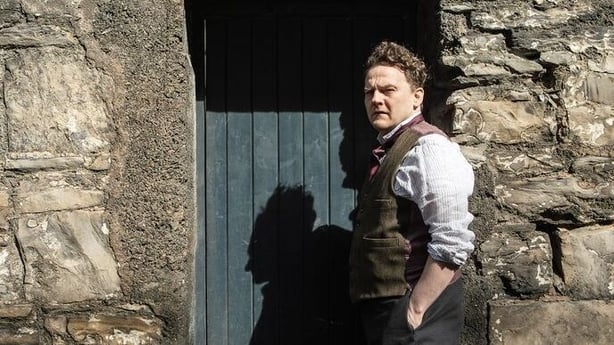
Thanks to funding from Research Ireland, as part of their Discover public engagement programme, we're also hosting expert-led post-show discussions in many of the venues, as well as presenting matinee shows and workshops for school groups. (If interested, contact our engagement manager at caitlin.white1@ucd.ie.)
Professor Luke O'Neill, who saw an earlier performance, said "Everybody in Ireland should see this play". Despite the serious subject matter, the play is staged in a fast-paced, comic format by a company of five actors, all playing multiple parts.
We are bringing Miasma on a unique tour with Verdant Productions, visiting a series of august institutions and unusual venues, from the Royal College of Physicians to Trinity's Old Anatomy Theatre to Tallaght University Hospital - and many more, in Dublin, Waterford, Portlaoise and Ratoath.
The story of John Snow is a story about groupthink and dissent, a story about bad science and good science, a story about the invention of epidemiology, a story about trusting "the science" and knowing when to question it. It's about how, under the pressure of a pandemic, well-meaning people can make mistakes that cause mass tragedy - and how unlikely heroes can change the world.
That's a story that never gets tired.
Miasma tours from Monday April 13th to Friday May 8th - find a venue near you here
