


RTÉ is inviting entries to one of Ireland's longest established and most significant literary prizes, the RTÉ Short Story Competition in honour of writer and broadcaster, Francis MacManus - find out more here.
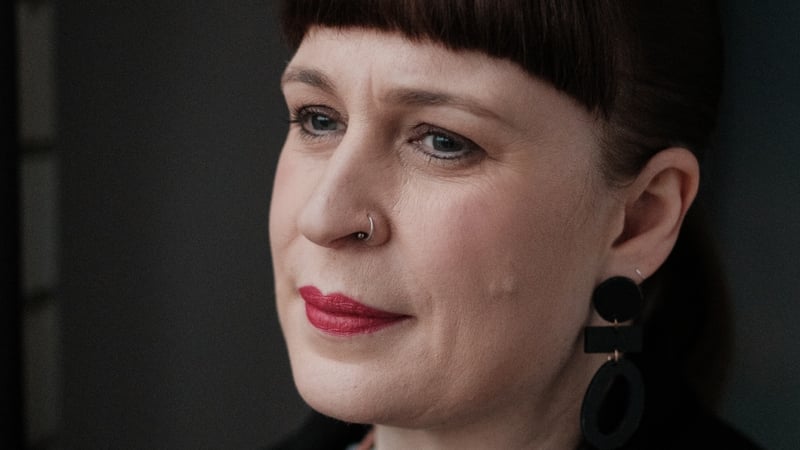
Below, returning judge and acclaimed author Jan Carson offers a few tips for any budding writers thinking of taking the leap...
As a writer of both novels and short stories, I'm frequently asked, "how do you know whether an idea wants to be a short story or a novel?" It’s never a question I need to ask myself. With each new project I’ll instinctively know what particular form the story wants to take.
A novel’s its own peculiar beast; wide-ranging, occasionally meandering, a sum of many parts, like a long walk through a densely populated city where there’s much to observe and much to distract. A short story’s more like sitting on a bench, or pulling up a seat outside a café to take a snapshot of all that’s available in this moment, through a very limited lens. As I write this, I’m well aware that some of my favourite short stories wilfully and gloriously defy this definition. They’re wide-ranging, meandering, distracting delights. The first rule of writing is you should never trust the writer who tries to tell you there are rules.
We need your consent to load this rte-player contentWe use rte-player to manage extra content that can set cookies on your device and collect data about your activity. Please review their details and accept them to load the content.Manage Preferences
Listen to the 2025 winner of the RTÉ Short Story Competition - Lynda McCarthy's Witness
The best short stories often feel like they’re subverting the rules or pushing the boundaries of what the writer can get away with. I often find my crazier, more outlandish concepts are explored in the short story form simply because it’s easier to maintain the suspension of disbelief for a handful of pages, rather than the enormous word count a novel requires. Because of this, I’m always enamoured with a short story which is willing to take risks both thematically and stylistically. I enjoy a story with notions. I don’t mind being knocked for six.
Ignore the rules. Write from the guts. Take all the risks. Scare yourself
I’m also a fan of carefully drawn characters. I have no time for tropes or cliches, but a character who is intriguing, unique and, above all things, believably rendered on the page, is often the one aspect of a short story which lingers with me after I’ve finished reading. Believability’s a deal maker or breaker for me as a reader. I don’t mind if your plot’s outlandish and your characters are a little unhinged, but if I can see -and it’s usually painfully obvious- that you don’t believe in the essential realness of the story you’re bringing to life, then it doesn’t matter how eloquent your writing is, or how many hooks you’ve woven into your narrative, I’m afraid you’ve probably left me cold.
We need your consent to load this rte-player contentWe use rte-player to manage extra content that can set cookies on your device and collect data about your activity. Please review their details and accept them to load the content.Manage Preferences
RTÉ Short Story Competition 2026 - the judges talk to RTÉ Arena
Which brings me, finally, to voice. The key to unlocking a brilliant short story is capturing an authentic, and ideally intriguing, voice. In a radio context, I particularly love it when a story’s voice feels as if it’s conspiring with me, telling me something candid and confessional, only intended for my ears. I spend a lot of time reading my own stories in progress out loud to myself, just to ensure the voice is spot on.
Now, I’d love to say, if you follow these rules, you’ll create the perfect short story - but writing’s a contrary pursuit. So, instead I’ll say, ignore the rules. Write from the guts. Take all the risks. Scare yourself, if you can. Once you’ve finished, you’ve only just started. Edit like you’re excavating for treasure buried beneath the muck. Take comfort in the knowledge that there’s at least one story you alone are equipped to tell.
Find out more about the RTÉ Short Story Competition 2026, and how you can enter here
About The Author: Jan Carson is a Belfast-based writer who has published four novels, three short story collections and two micro-fiction collections. Her novel The Fire Starters won the EU Prize for Literature for Ireland, 2019. The Raptures was shortlisted for the An Post Irish Novel of the Year and Kerry Group Novel of the Year. Her writing has aired on BBC Radio 3 and 4 and RTE and has been translated into twenty languages worldwide. Jan was the Seamus Heaney Centre Fellow at Queen's University Belfast in 2025 and is a Fellow of the Royal Society of Literature. Her latest novel, Few and Far Between is published in April 2026.
