



We present an extract from The Visit, the debut novel by Neil Tully.
Sergeant Jim Field feels a guilty paternalism for Patrick Hatten, a young man struggling to find a job, a life and a purpose in a small-town Wexford community. Both are used to being on the fringes but while Jim is a romantic with bad health and regret, Patrick is full of anger and action, and his actions could have devastating effects.
'Will you hear anything about the Inspector exams?'
‘Probably not yet.’
‘I’m stuck with a sergeant a while longer.’ She smiled in the mirror.
The promotion exam was tougher than expected – the same old arithmetic that used to trip me up in school catching up decades later to do the same again, while obscure clauses of the Road Traffic Act and licensing laws were like remembering my mother’s name. The 27th will be the real exam anyway. Any mistakes and I might as well have turned in blank pages.
Siobhán started with her hair. There are intimacies only a married man is invited to share, and the day I tire of watching is the day I’ll be fit for pasture. She brushed, plaited, and weaved the threads – her fingers working as if with delicate fabric, disguising pins and clips until it all hung perfectly – before carefully unravelling one strand so that it fell down the right side of her face. Both her mother and mine can’t ever stop themselves from tucking it back behind her ear. She caught me looking and took a spare pin from between her teeth. ‘I meant to ask you yesterday, are we short a few pounds this week?’
I turned to the mirror inside the wardrobe door, clocking my huge ears and my face a decade older than hers, then looked myself in the eye and lied to her. ‘The car didn’t sound right coming back from Cork, love, so I let John have a tinker. A couple of gaskets needed changing is all.’
She stood and started making the bed. ‘Right, well you’ll need to leave me some for the dentist.’
‘Grand.’ I put my hand in my left pocket and found it empty of more than coins, then checked the right and patted my chest. She brushed something from my lapels and in her eyes was the same distance I saw down in Cork at the weekend, visiting her parents for one last rest before this month’s madness reaches its peak. ‘I’ll make breakfast. Don’t wake herself on your way down, she had a bad night.’
When she was gone, I went back to the window. The sun flooded New Ross rooftops and warmed the Barrow beyond – the dark river flowing between the legs of fishermen standing in its shallow stretches, slicing the morning air with lines cast and recast. Continuing along the quay, where for the past week, men in shirtsleeves with browned arms and faces have been building a platform for Kennedy – choosing every beam as if choosing a name for a child, measuring and nailing with such care it’s as if it’s Christ Himself who’s going to come and stand on it.
The lad is a bit like a stray dog. I keep an eye on him and throw him a few scraps. There are plenty of people in this town who'd just as soon drop him off in the wilderness and hope there’s no scent to follow home.
I’ll be on duty down in Dunganstown, close enough to smell his aftershave while he visits the farmyard his great-grandfather abandoned last century. The planning has me wrecked. From Mayor Minihan’s men to chip van owners, headquarters and journalists, publicans and lorry drivers, ice-cream sellers and the US Secret Service. All with questions about licences and tickets and overtime and road closures and emergency routes. We’re reminded by the higher ups that every shoe should shine, and that any guard with as much as an unclipped nostril hair risks embarrassing the force. It’s why the tractors set me on edge – something military-like in their small and loud early morning convoy, as if they were on their way to cause trouble I could do without. Finishing up yesterday evening, it took two goes to get out of my chair, like my legs had given in to the tiredness and gone off to sleep before the rest of me.
I wondered if Patrick Hatten cared a jot about Kennedy. The difference between the two about as great as the distance between the stars in the sky and the coffins in the earth. Maurice Kearney came to the station yesterday afternoon, a pencil tucked behind his ear like he’d come straight from his calculations to tell me that Patrick owed three pounds and wouldn’t be given as much as another grain of salt on credit until his account was settled. I paid Kearney from my own pocket, with the money Siobhán noticed missing, and reminded him to come to me if there’s ever a problem. Siobhán doesn’t want to hear another word about Patrick aft er the trouble he was involved in a couple of months back.
The lad is a bit like a stray dog. I keep an eye on him and throw him a few scraps. There are plenty of people in this town who’d just as soon drop him off in the wilderness and hope there’s no scent to follow home. The problem is that Patrick could find his way out of any wilderness and they wouldn’t like whatever starved thing came back. It’s best to keep him where I can see him. I sorted the dole paperwork for him a few months ago, after his mother died. I’m not sure he even knew such a thing existed. I do call out to him the odd time. He let the place go to some state after burying Maura. She was a sort of ballast at least – like a prison warden, imposing some order on his days. A tidy house the day of her funeral was her legacy, like she knew in advance that she couldn’t trust him to set up properly for visitors. He had knives and forks and glasses washed and dried and left on the table in case anybody came, but no food to feed them if they did. Imagine, setting a table for people and not thinking of what to put on the plates. Nobody came in any case, apart from myself, not touching the glass of murky water he put in front of me, ashamed by the feeling of unease that came over me just from sharing silence out on that lonely acre.
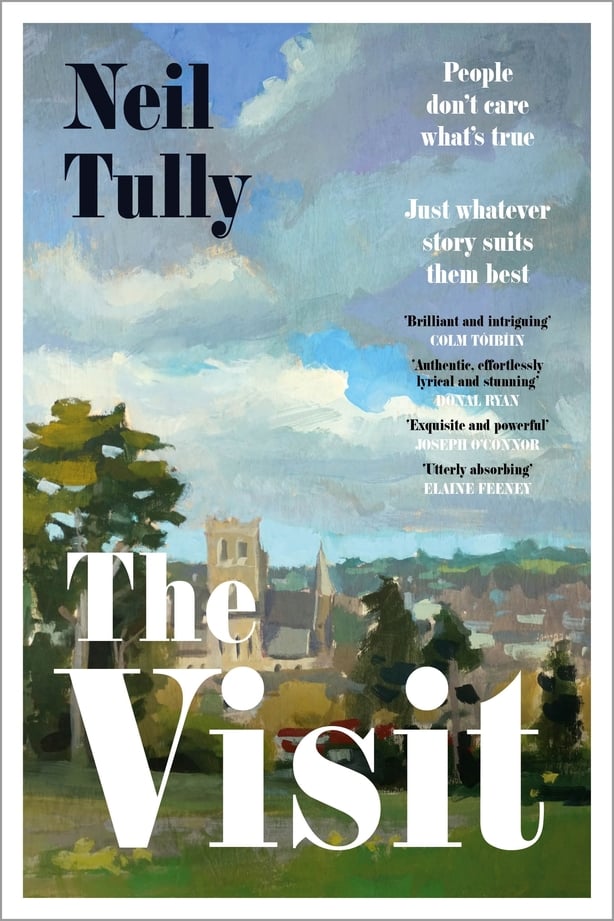
The Visit is published by Eriu
