



It seems almost inconceivable now, but there was a time when Irish writers were regarded as inferior to their Anglo counterparts.
Reading lists were dominated by dependable novels which reinforced the status quo and there was little room for transgression, much less the multitude of diverse voices that characterises so much of today's publishing output.
There were exceptions, of course. In 1992, Patrick McCabe was Booker-shortlisted for his sensational novel The Butcher Boy. In 1994, Edna O’Brien published House of Splendid Isolation; a novel born out of interviews she conducted with INLA leader Dominic McGlinchey in Portlaoise Prison, culminating in perhaps her most daring work to date.
But these flashes of daring were mostly subsumed. You’d have been forgiven for thinking that the Thatcherite project had annihilated all creativity or that the burgeoning Celtic Tiger had lulled the Irish nation into a state of well-fed apathy. North of the border, a tenuous peace was being carved out in the wake of the 1994 IRA ceasefire. Old battlelines around national identity were beginning to soften, but there was still a sense of unease about how to maintain this hard-won accord.
By 1996, things looked as though they might fall apart completely. In February, the IRA ended its 17-month ceasefire by detonating a massive truck bomb in the London Docklands, killing two and injuring over 100. In July, a Catholic man was murdered on the outskirts of Lurgan, Co Armagh, and suspicion quickly fell on a loyalist splinter-group calling itself the LVF (led by the errant Billy Wright).
Against this backdrop, it seemed unlikely that the North could be capable of anything other than internecine sectarianism. And yet - as is so often the case during times of national hardship - the people’s conscience was awoken suddenly by a series of literary masterworks which spoke, not only to the current moment, but which resonated far beyond their immediate milieu.
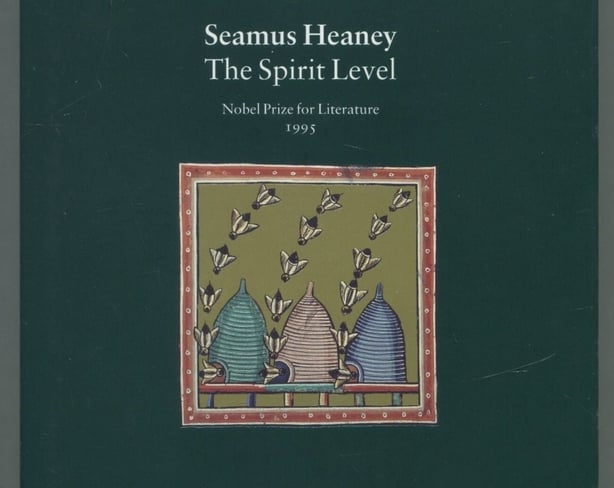
The first and most important of these was probably Seamus Heaney's The Spirit Level, a poetry collection published against a backdrop of great personal and artistic triumph for the poet. Heaney had won the Nobel Prize for Literature the previous year, and with it came the expectation that he would act as a public spokesperson for the ongoing conflict in the region of his birth.
A lesser writer might have buckled under such pressure. Heaney took it and made it his subject, ending up with perhaps some of the best writing of his career. In 'The Flight Path’, this culminates in a confrontation with a senior representative of the Republican movement on a train from Dublin to Belfast. He builds out from a reflection on the role of the artist in society to a more personal meditation on the responsibility he felt for not doing more.
[…] So he enters and sits down
Opposite and goes for me head on.
‘When, for fuck’s sake, are you going to write
Something for us?’ ‘If I do write something,
Whatever it is, I'll be writing for myself.’
And that was that. Or words to that effect.
Since at least the publication of North more than 20 years before, Heaney had fallen into the role of moral weather vane for the Irish nation, whether he liked it or not. Here, he strikes a more reticent tone: measuring strain, testing balance, asking what might still stand.
1996 turned a fissure into a hinge, and in large part that must've been down to the transformative potential of art.
In poems like ‘Keeping Going’ and ‘Mycenae Lookout’, familial memory and classical myth push at the borders of complicity and endurance. The past—both ancient and modern—flickers against contemporary crisis, and at the very moment when the end of the IRA ceasefire seemed to shatter public confidence in the peacebuilding project, The Spirit Level offered an opportunity to sit back and take stock.
If Heaney steadied the lens, other mediums turned it inward. Reading in the Dark, written by Heaney’s school friend, Seamus Deane, feels, even now, like a whisper overheard in a darkened hallway. Set in mid-20th Century Derry, its young narrator pieces together a family secret rooted in betrayal and disappearance.
Listen: Stephen Rea reads from Seamus Deane's Reading In The Dark
The atmosphere is claustrophobic, thick with things unsaid, and in perhaps the most successful Irish deployment of autofiction since Joyce’s Portrait, the reader is left wondering how much is real, how much simply mythmaking. Deane renders history as haunting; not as event, but as a presence pressing in on the domestic sphere. The act of reading - of interpreting fragments, rumours, shadows - becomes a political gesture, and in a culture where silence was ineluctably weaponised, storytelling in Deane’s formulation offers the possibility of both risk and release.
It is for us to distinguish, to see the difference between wrong done to us and equal wrong done by us; to know that our transient life, no matter how scarred, how broken, how miserable it may be, is also God's miracle and gift; that we may try to improve it, but we may not destroy it.
The final text of note came with the publication of Deirdre Madden’s One by One in the Darkness. There were other sensational books throughout 1996 - Robert McLiam Wilson’s Eureka Street, Ciaran Carson’s Opera Et Cetera, Sinead Morrissey’s poetry debut There Was Fire in Vancouver - though none had the same poise, the same quiet confidence as the north of Ireland’s chronicler of record.
Foreshadowing many of today’s conversations about the legacy of the Troubles and epigenetic trauma, One by One traces the generational afterlife of violence from the perspective of three sisters whose father has been murdered by loyalist paramilitaries.
In typical Madden fashion, the novel resists spectacle. It attends to the tremors that follow catastrophe in a series of gradually altered routines. Madden’s prose is lucid, patient, tender and forgiving. By centring female interiority and the textures of domestic space, she subtly unsettles the patriarchal hagiography that too often dominates our narratives around the Troubles. If Deane’s novel opts for something gothic and semi-autobiographical, Madden delivers compassion stripped bare of sentimentality.
When she got into the car she realised that she felt miserable again. Everything around her looked bleak, and she couldn’t find it in herself to rise above it. She wasn’t usually like this, she thought, as she turned on the ignition.
It would read too much like revisionist fantasy to suggest that art - and literature in particular - allows for beleaguered peoples to reassess their place in the world during pivotal big moments. "Poetry makes nothing happen" if we are to take Auden at his word, and part of the pleasure that comes from its making lies in knowing that it can’t be legislated.
Then again, art can also ease transitions, vocalise the impossible and make a nation’s conscience tangible. 1996 turned a fissure into a hinge, and in large part that must’ve been down to the transformative potential of art.
The Good Friday Agreement would arrive less than two years later, though the emotional groundwork had already been laid. It’s a lesson in what good can be born out of horror; a timely one at that, given the escalating chaos of our current moment.
The views expressed here are those of the author and do not represent or reflect the views of RTÉ
