


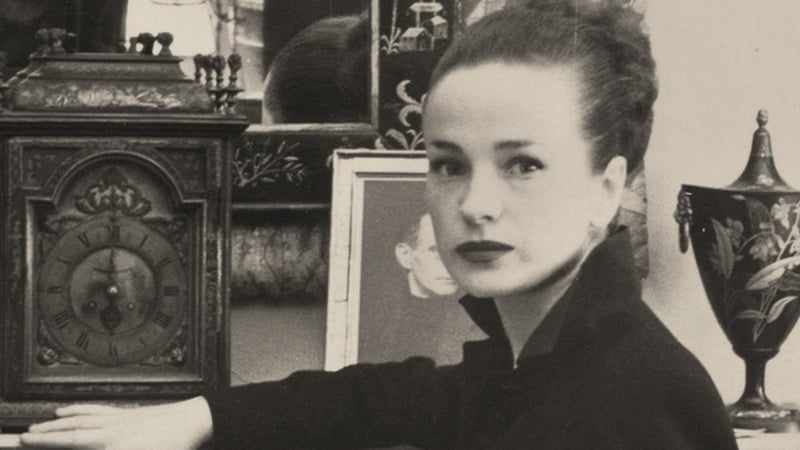
Editor Molly Hennigan introduces the new anthology An Asylum For My Affections.
In this collection of essays centered around the life and work of writer Maeve Brennan, ten contemporary Irish writers consider the various meanings of the word 'asylum': an institution, a site of incarceration, a refuge and a shelter. The anthology features an array of contributors, including Darran Anderson, Belinda McKeon, Éilís Ní Dhuibhne, Jessica Traynor and Roddy Doyle.
On the occasion of her mother's birthday, Maeve Brennan wrote a letter to the essayist and editor William Maxwell describing the emotional landscape provided by her mother. She wrote: 'She gave me an "asylum for my affections" and I learned that my affections so far exceeded her ability to understand me that she came near to drowning.’
Maintaining an openness to the varied understandings of asylum as it might have applied to Brennan over the years; as psychiatric institution in later life, as site of incarceration in the context of her father’s life, or as refuge and shelter as in pockets of her own life in New York – be that in Sneden’s Landing, the ladies’ bathroom of The New Yorker, or the various hotel rooms she called home, this anthology brings together a series of essays that respond to the life and work of Maeve Brennan.
My first introduction to Maeve Brennan was during the final year of my undergraduate degree. It is one I’m grateful for but easily could’ve missed. Brennan’s name was listed, alongside others, on the final slide of a PowerPoint that was being read aloud, somewhat apathetically, the lecturer’s voice getting lost under the swell of students packing bags, getting ready to leave the lecture hall. These names were an afterthought in that room and I was trying to write them down before the slides were pulled. It is easy, as a young student, to think the gaps in knowledge are always and only yours. That you not knowing where to look for something reflects only your own shortcomings.
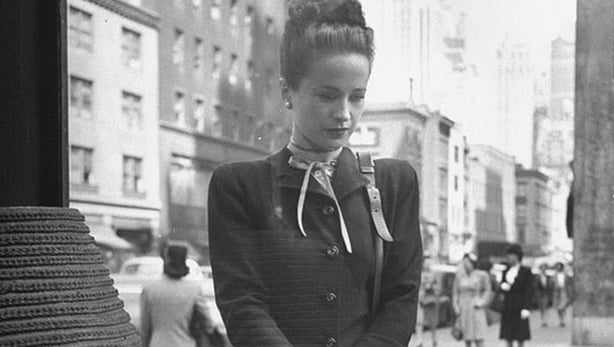
I sought Brennan's writing out after this brief introduction and started with her novella The Visitor. I still have my first copy of the book and can revisit the sections I underlined instinctively on my first read: 'tiny hotel room of memory’, ‘a fine sunless day’, the beautiful and often-quoted paragraph that opens, ‘Home is a place in the mind. When it is empty, it frets . . .’
A lot of my underlined sections focus on the idea of time as a gift – a younger woman giving her time to an older woman simply because she believes she has more of it, not thinking of the fact that she will run out of it as quickly – just in a different moment. I was circling the idea of writing about my grandmother at the time and that preoccupation reveals itself in the sections I was drawn to.
I remember reading a section when I was working in the cloakroom at the National Concert Hall and how it bedded into me an hour or so later walking home at night along St Stephen’s Green to catch my bus. I remember this section of the text shifting something in my perception of things in a way that felt permanent and welcome but still surprising and remote. I didn’t know why it meant something to me, just that it did: ‘The trees around Noon Square grew larger, as daylight faded. Darkness stole out of the thickening trees and slurred the thin iron railings around the houses, and spread quickly across the front garden, making the grass go black and taking the colour from the flowers.’
When you can't find what you are looking for you have to begin to use your imagination.
Writing my MPhil dissertation on Maeve Brennan, over a decade ago, I have a distinct memory, late in the year, of visiting the university library and passing by shelves and shelves of texts on Joyce, Yeats, Beckett, the rest – in search of something about Brennan. Angela Bourke’s biography was a clear beacon of light here but it was not bolstered by rows of texts on Brennan like the others. There is something physically as well as psychically daunting about trying to navigate an archive for a trace of what you’re looking for. What you aren’t looking for is easy to find, is right in front of you, and it becomes a kind of comical literary Mount Rushmore, staring you down, helped none by the accents around you that seem to reinforce a feeling already inherent, that you don’t belong.
When you can’t find what you are looking for you have to begin to use your imagination. You will be ushered, with the efficiency and banality of a regular health check, towards taking The Psychoanalytical Approach (I picture these three words lit up on the back wall of the library like a poor man’s Tracy Emin neon sculpture, hot pink or yellow and the light fizzing with a little smoke then switching off or breaking just as you finish reading it).
What I was missing though, as a student, was a sense of how others felt about Brennan’s work. I could patchwork together theories and apply them to her writing, I could read short articles about her here and there – snatches of print whose wordcount only ever allowed for a brief introductory note – the context of her family life and a predictable comment on her sense of style. Maybe towards the end of these articles, or somewhere buried in the middle, would be a trace of actual feeling, a thread of unique opinion, but it always left me wanting more. This anthology on Brennan seeks to address that, to deliver a series of sketches that are rooted in feeling.
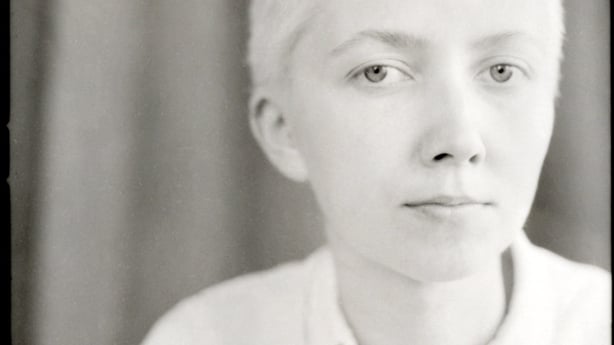
When I took a biography writing class in Amherst with Dr Gretchen Gerzina, she asked us how we would feel about someone writing our biography. My first thought was of all the things I haven’t said or documented but that feel crucial to who I am. If a biography is a record of a record it feels important to consider not only the fact that the biographical body itself can include resources and records that have been written by someone else; but also the ways in which silence can be interpreted as biographically resourceless. How, whether intending to or not really setting out to, people who write about that person in any capacity are adding, in a material way, to the creation of the image of that person. In her book The Lure of the Biographical: On the (Self-) Representation of Modern Artists (Valiz, 2017), Sandra Kisters touches on this, asking: ‘To what extent have artists influenced or corrected the process of their own image-making during their lives and perhaps posthumously? Can artists change unwanted public images, or are they always at the mercy of the interpretation of others?’
If Brennan remains at the mercy of interpretation I hope that the interpretations in this anthology will move delicately for the reader. These sketches of Brennan are intended to be just that – a series of impressions that might assist in making a picture.
An Asylum for My Affections: Sketches of Maeve Brennan is published by New Island
