



We present an extract from Sweep The Cobwebs Off The Sky, the new novel by Mary O'Donnell.
As spring evenings lengthen over Kilnavarn House, two sisters, looking after their infirm mother, navigate the fragile territory between past and present. Memories of a troubled upbringing resurface and the house holds onto the women, as it always has, refusing to let them go until long suppressed truths are spoken.
Kilnavarn House is something I carry with me forever. Kilnavarn continues. Kilnavarn resists. Kilnavarn, the family stronghold, lives on into its dreaming self as if it had the power to stop change. There were once three of us in the house. Before Tess. We arrived one autumn afternoon in a Morris Minor, several lorries lurching and tilting on the stony, tree-shaded, long avenue that rose ahead of us, our furniture stacked and strapped, two men holding it in place, flickers of golden sunshine catching their strong arms. I remember the doors on one wardrobe swinging open, and how I cried out in fear that it would tumble back on the car and kill us. Before Tess. A threesome with a playful, handsome father, who would throw snowballs at the window in winter to make me laugh, and a joking, funny mother. Strict, yes, but also funny, and with father there it didn't matter so much. Mother’s dresses were a fanfare of unending summers. Gay skirts and blouses with red and yellow umbrellas and a blue sea, or green, silky ferns, shining buttons and a slim belt. Patent high heels I could play grown-ups in when cousins visited. Before Tess.
Even after Tess’s arrival there remains something that sits brightly in my mind, which can never be erased. My mother and father, Elma and Paddy, at their best, throwing a winter party. Infant Tess upstairs in her pink cot and a baby-sitter brought in so that my parents can get on with the party, celebrating her arrival. I am allowed to stay up later than usual, but I race upstairs once and into the new baby’s bedroom. The baby-sitter is playing with her, bobbing a soft stuffed rabbit up and down the cot, much to Tess’s amusement. This is laid down in the bunker of memory as an occasion in which everything seemed colourful, happy. I race downstairs again and elbow my way through the big room with the long windows, past the little groups wrestling with their mushroom canapés, their skewered bits of pineapple and cheese, as they chat and laugh. It seems to me that adults laugh a lot when they come together. Some people lean down and ask me questions, or pass remarks about how tall I am. The kind of questions they ask are for the most part unanswerable. Isn’t my new little sister a dote? Isn’t she marvellous? Your Mammy and Daddy must be delighted that you have a little sister. Who do you like best, your Mammy or your Daddy? Do you like school? I field these questions as Elma floats around the room, in her element, making people welcome, dressed in a navy short-sleeved dress with a large polka-dot bow at her cleavage. She has done one of the things she excels at, having prepared a huge buffet. I eye the dressed salmon, jellied tongue, clove-pricked hams, the Russian salad, potato salad and garlic and vinaigrette dressed tomato and rice salad. The grownups pile their plates, pick up the napkin-wrapped silver cutlery, and move out into the room again. On a smaller table various desserts lie in a shimmer of glory, the raspberry mousse, lemon mousse, two apple tarts, a mountain of cream-filled profiteroles over which soft, warm chocolate falls, lava-like, pooling along the bottom of the platter.
***
Now it is springtime twenty years into the new century and I’m more than grownup. I sing Happy Birthday to myself at the kitchen sink as I scrub my fingers. Repeat, I instruct, to prolong the finger-scrub for twenty seconds, stretched vowels and all.
I’m in bare feet. When the ditty finishes, I twist the tap hard to stop it dripping. The washer needs replacing. Behind the taps, two tiles are hanging loose, revealing mould. I dry my hands, then turn to the tiny bottle of hand sanitiser salvaged from the bottom of a handbag, and squeeze a few drops onto my palms, even dabbing it around the base of my nostrils.
It’s not my birthday and these are extraordinary times. Hands, to be washed as many times as possible every day, preferably to a distracting tune that will last two minutes. Happy birthday sung twice is just less than a minute unless sung slowly. Eleanor Rigby might be better. Or Soap your Arse and Slide Backwards up a Rainbow, 1970s Dublin music-hall theatre, when times were also tough, albeit for different reasons.
The boredom of constant hand-washing will ensure that the virus continues to spread, as people grow lazy or forgetful. For all I know, I may contribute to this. Despite the Health Minister’s scolding, I haven’t the patience to prolong every single bit of washing and self-arming recommended daily — no, hourly — on radio and television. My actual birthday is mid-June, still months away. Overnight, I will become a pensioner, just like my mother. Elma could be at risk, but at her age she is at risk of many things. Am I concerned? Not in the slightest! Falling. Heart attack. Stroke. Cancer. Parkinson’s. The sickness shelf is full of possibilities, yet none, apart from many falls, have struck my mother. When found after her falls, Elma always explains them away by saying she has been doing floor exercises.
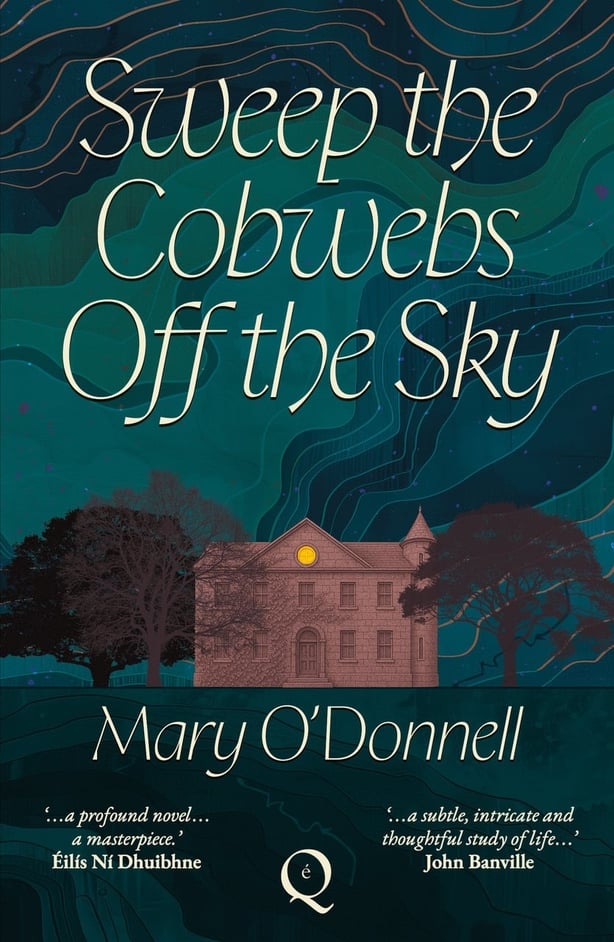
Sweep The Cobwebs Off The Sky is published by Epoque Press
