


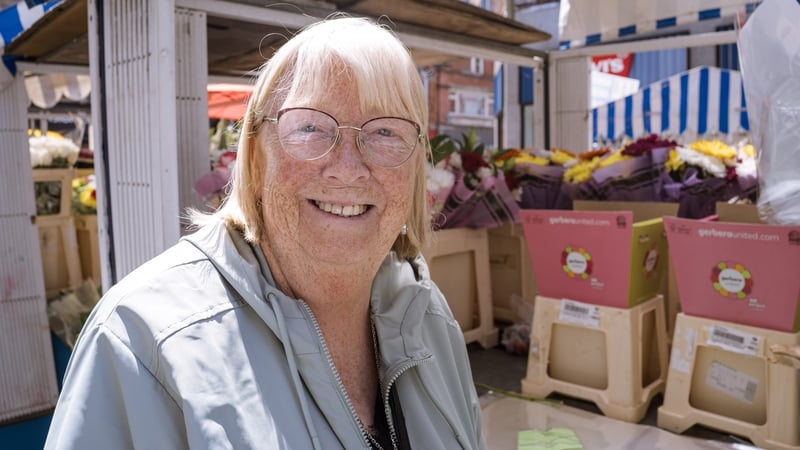
The new RTÉ One documentary series Welcome To Moore Street gives a glimpse into life on one of Dublin's most iconic streets, sharing the colourful stories of both the local traders who made the street famous, and the immigrants from many different nations who have made Ireland their home.
Historian in Residence with Dublin City Council, Dr Caitlin White reflects on the history of Moore Street in relation to 1916 and its rich social history.
Few streets in Dublin carry as much living history as Moore Street. Running north from Henry Street to Parnell Street, this short stretch of cobbled roadway has functioned for over two centuries as a place of commerce, community, and resilience, where the ordinary rhythms of working-class Dublin life have played out across generations.
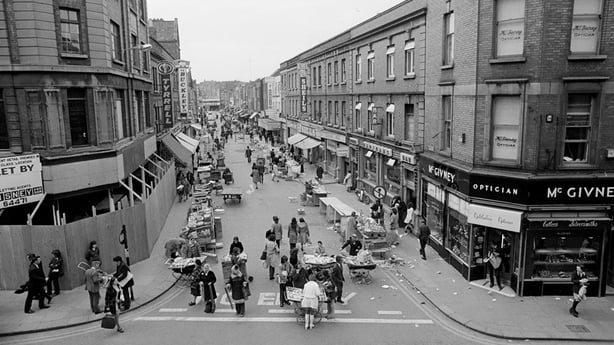
Built at a time when much of the city was expanding and being redeveloped in the late 17th and early 18th centuries, Moore Street and the surrounding streets took their names from Henry Moore, Earl of Drogheda, who owned the land, developed the area, and bestowed his name onto the streetscape. Its position, close to the bustling arteries of the north inner city and the developing Georgian centre, meant that by the mid 18th century it was established as a place of trading.
The buildings and stalls on the street are central to the fabric of the social history of the city. If they could talk they’d tell stories of domestic home life, of social change, of labour history and, of course, of rebellion. Moore Street is inseparable from the final hours and moments of the Easter Rising in 1916. As the battle neared its end, the surviving leaders and soldiers of the GPO garrison, which was in flames, retreated through Moore Street seeking an escape route northward. They took shelter in a row of terraced houses surrounded by British Army soldiers and it was here, in the back rooms of these ordinary buildings, that the decision was made to surrender. Notwithstanding the building’s significance as the site of the last headquarters of the 1916 Rising their preservation, and that of the wider street, has been the subject of sustained public debate in recent decades, touching on questions about how the city values (or fails to value) the material traces of its own past.
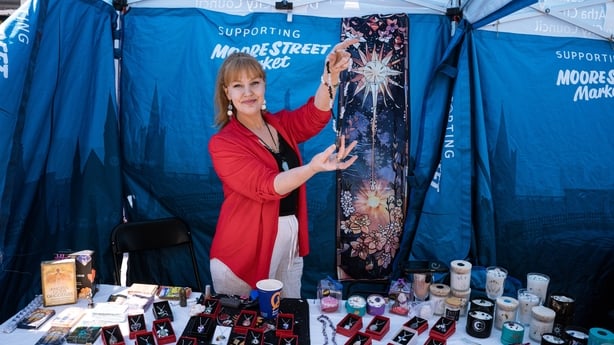
It is, above all, the street traders who define the social history of Moore Street. Predominantly women, they formed a remarkable occupational community, passing their stalls down through families across generations, from mother to daughter and aunt to niece. The trade was precarious and physically demanding, conducted outdoors in all weathers for earnings that could be painfully slim, yet it offered an independent livelihood and membership of a tightly-knit community.
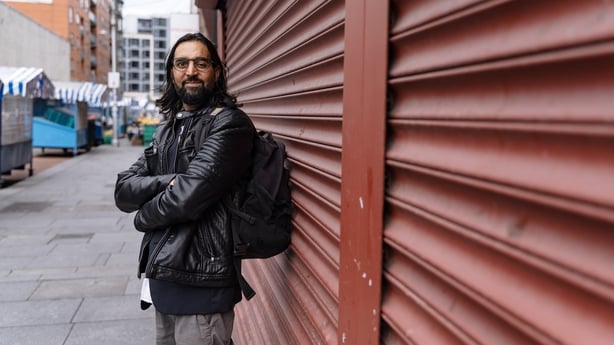
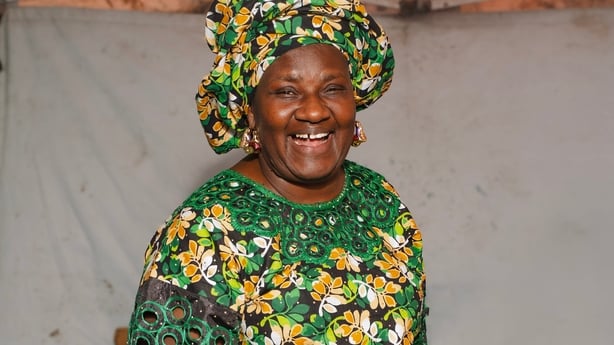
Throughout the 20th century Moore Street continued to serve as a focal point for communities at the economic margins of the city. New waves of migrants, initially from the countryside and later from across the world, found a foothold here, and the street's character evolved accordingly. By the late 20th and early 21st century the street had become one of Dublin's most visibly multicultural spaces, with shops and stalls reflecting the city's new diversity. Chinese supermarkets, African grocery stores, and Polish delis sit alongside the traditional fish and vegetable stalls, making Moore Street a kind of living index of the city's changing population.
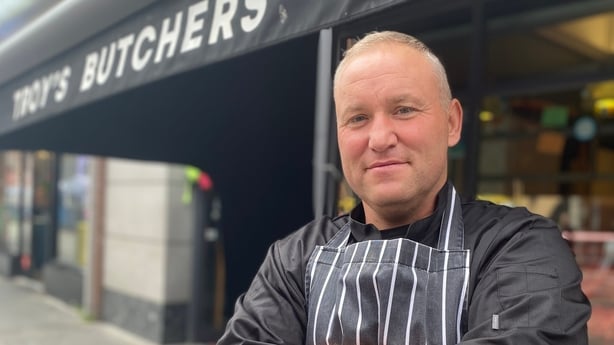
The street has faced existential pressure from large-scale urban redevelopment proposals, and its future has been bitterly contested with the Save Moore Street campaign leading the charge for preservation and conservation of this historic space. For many Dubliners, Moore Street represents something that cannot be easily replaced or relocated - a form of urban life rooted in place, in memory, and in the particular social textures of working-class community. The battle over its preservation is, at its core, a battle over whose history the city chooses to remember, and what kind of city Dublin intends to become.
Welcome to Moore Street begins Thursday March 19 at 10.15pm on RTÉ One - catch up afterwards via RTÉ Player
About The Author: Dr Caitlin White is Dublin City Historian in Residence for the Dublin North West area. She holds a PhD and M. Phil. from Trinity College Dublin in Irish public history, with special interests in social history and public engagement with the past. Her work in public history has involved podcasts, exhibitions, radio shows, documentaries, and popular history writing. Her most recent publication, a book chapter in Space in Public History (Routledge, 2024), explored the politics of space in Dublin 1922-39.
References:
Fallon, Donal, Three Castles Burning: A History of Dublin in Twelve Streets. New Island, Dublin (2022).
Goodbody, Rob, Irish Historic Towns Atlas no. 26, Dublin, part III 1756 to 1847. Royal Irish Academy, Dublin (2014).
Lennon, Colm, Irish Historic Towns Atlas no. 19, Dublin, part II, 1610 to 1756. Royal Irish Academy, Dublin (2008).
Martin, Susan Marie, Dublin’s women street traders, 1882-1932: 'Civic evil’ and civil disobedience. Four Courts Press, Dublin (2025).
