


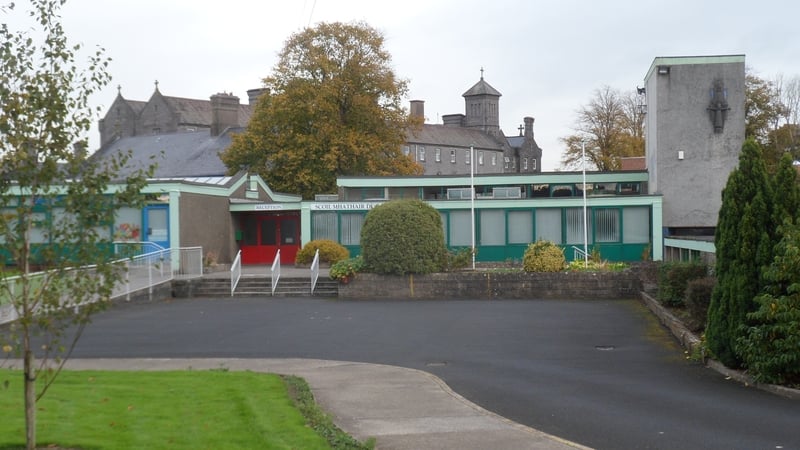

In 1963, the Limerick Leader announced the arrival of a "Unique City School, First of its Kind in Europe" regarding Scoil Mháthair Dé National School. It would not only be used to teach children, but also to train student teachers at the teacher training college located conveniently across the road.
We are all familiar with the Basil Boyd Barrett national schools dotted around Ireland from the 1930s to the 1950s. They followed a standard plan of a single-storey classroom block, ranging from two to eight classrooms off a corridor under a pitched roof. The 1960s saw a change in educational standards, which subsequently changed the design of a new generation of national schools.
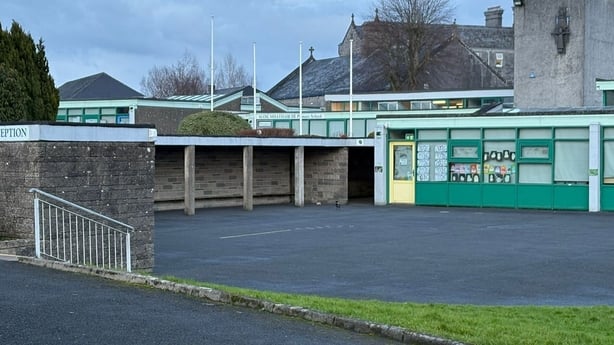
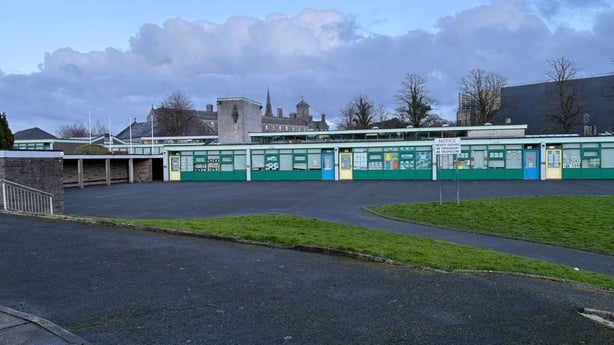
A departure from the traditional school is the modernist Scoil Mháthair Dé National School on the South Circular Road in the suburbs of Limerick city. This low-lying school, arranged horizontally, is set against the imposing 19th‑century neo‑Gothic John Henry Newman campus (formerly the Mount St Vincent convent and orphanage). Scoil Mháthair Dé has wonderful internal circulation spaces split into three blocks: the upper block with two rows of classes off a central corridor, the centre block containing offices and administration rooms, and the lower block with the original 18 classrooms arranged on either side of a large activity space. The building is distributed over three levels, with the assembly hall in the lower block at the lowest level. The lower block integrates a large run of clerestory glazing, allowing light to flood the assembly hall below. Externally, a simple low‑relief sculpture of Our Lady with Child adorns the vertical concrete cube above the assembly hall.
One of the innovations in the design was the self‑containment of each classroom - the provision of toilet facilities within the classroom area. The newspaper at the time enthused: "Each classroom has two toilets ingeniously situated in a separate compartment, and a wash‑hand basin and sink. The layout is such that each classroom could be classified as a school in itself, having all the required amenities."
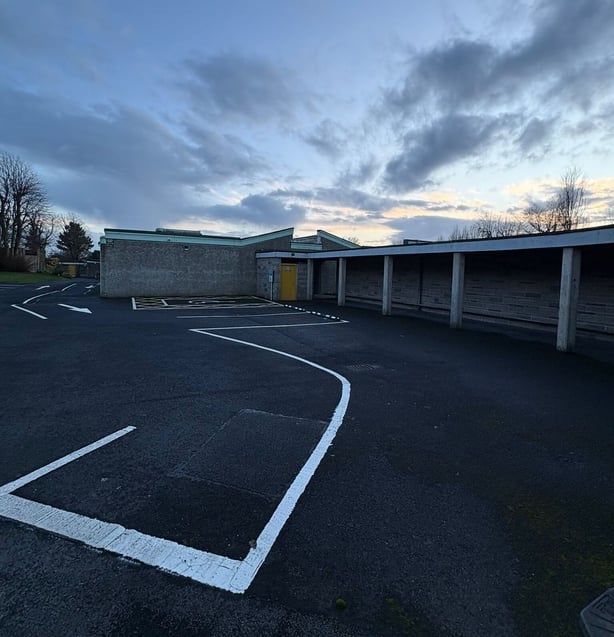
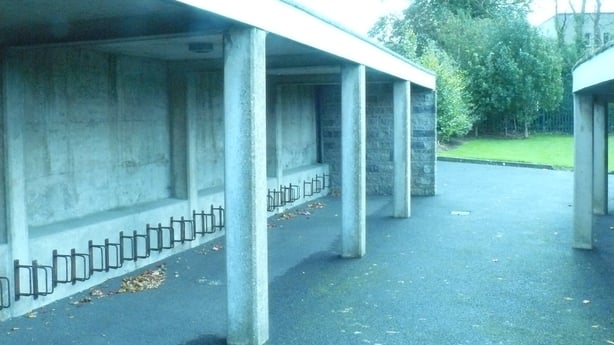
The Sisters of Mercy, as client, hired architect Andy Devane (1917–2000) of RKD Architects for the design of the school. He considered every detail, down to the water pipes running along the wall beneath the coat hooks, positioned so the heat from the pipes would dry wet coats during lessons. Devane prepared plans for a high‑quality school in modest materials, reducing the cost by £10,000 and providing more accommodation, with the final build cost coming to £98,000. He might have cut costs, but not style: the glass‑fronted rooms give maximum brightness, and externally, two curved verandas provide shelter from the rain (with seating and integrated bike racks), alongside Devane's signature raised planters. The walls of the verandas and planters are built with Bekstone and Winston split block, giving the appearance of quarried stone. One of the most unique features is the roof gablet‑end detail formed by two predominantly flat roofs with mirrored protruding glazed rooflights; the sharp projections create a delightful "bat‑ear" profile.
The Limerick Leader in 1963 quoted the Bishop as boasting: "This is a big step forward in our approach to primary teaching, and the proximity of this school to Mary Immaculate Training College will give the teacher‑students ample opportunity to put into practice the new methods they were learning." This observation‑based practice was referred to by the MIC faculty at the time as the Modh Cheacht.
Retired national school teacher Mary Gilleece, a graduate of MIC in 1970, remembers:"Once a month the whole college assembled in the hall to watch a selected student teach a class. The Scoil Mháthair Dé pupils would be marched into a classroom set up in the middle of the hall with desks, chairs and blackboard. This classroom would be encircled by all the student teachers, with the entire teaching body up on the stage. The pupils were well prepared for each lesson. We thought all the kids in Ireland would be as brilliant as the kids of Scoil Mháthair Dé."
As teaching practices evolve, the design of Scoil Mháthair Dé remains an enduring testament to its quality.
Thanks to my mother for contributing to this article, and to Dr Paul O’Brien for images.
