



We present an edited extract from the essay A Short History of Decay by Philip O'Ceallaigh, which features in the new anthology As If Nothing Could Fall - Essays on monuments.
As if nothing could fall: Essays on monuments takes us through distant vistas and past worlds, monolithic structures and forgotten ideas. These seventeen new personal essays reflect on how and why we imbue the objects around us with memory.
Since the revolution in 1989, a building like mine has been the kind buyers avoid. There is a complicated ownership situation in the garret, with bits owned privately, bits in common between the residents and parts for which no documents exist and which may or may not belong to the state. The prospective buyer would look at our leaking roof and wonder what powers of organisation the residents might have when it starts falling in.
Many buildings in the older streets of Bucharest show the effects of this complicated history. Motley collections of owners and ex-tenants of the state found themselves sharing run-down buildings. Some nationalised properties were restituted to their original owners or their descendants, who might be scattered abroad and then engaged in interminable inter-family squabbles and litigation. Many owners were elderly or poor, without the tenacity for the bureaucratic hoops needed to set up a residents’ association, with an agreed mechanism for dealing with the problems large old buildings encounter. In the older parts of the town, there has certainly been a trend towards renovation. But it is not uniform; in a certain light on a certain street it can seem that more is collapsing than has been saved, then you turn a corner and something you have never noticed before has been reborn.
I think of how my apartment looked when I saw it first, that gloomy day in January, unlived in since the death of the previous occupant, and the dirty stairwell with the broken windows, and the snarling dogs in the yard. I forced myself to imagine it as a home. And that is what it became. I fixed those broken windows, got the place watertight, instituted an owners’ association with the neighbours. It’s been a slow-motion renovation, over years, and I never feel it’s over, but I’m content with that, and the home I imagined came into existence. I remember the day I first showed it to my then five-year-old daughter and how she did not at first notice the decrepitude, so excited was she about how big her room was.Now she’s thirteen and the room is covered with posters of Lana Del Rey, Olivia Rodrigo, and Taylor Swift – mostly Taylor – and there are several guitars, including one that plugs into an amp.
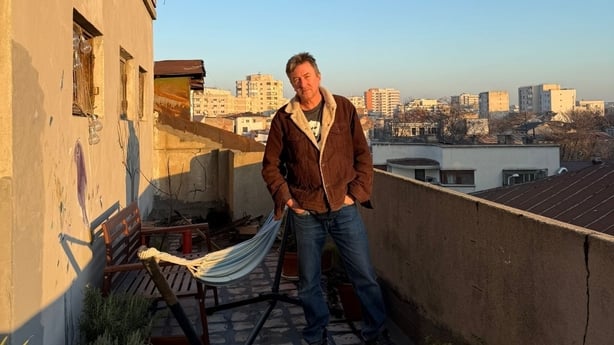
Sometimes I'll crack a beer open when I’m finished and sit and take in the view over the rooftops of my city, a place I now realise has always been broken and will never be fixed.
It hasn’t always been easy. I think of those first months of renovation, when the bathroom was gutted and unusable and work was stalled because the people living below refused to engage with me on the problem of some badly rusted pipes running between our apartments that had to be replaced. This required a common solution. I was mulling the problem, depressed at their attitude, when a small hammer on a stool, left by some workers, caught my eye. I picked it up, went to the bathroom and gently tapped the rustiest pipe. Nothing happened. I tapped it a little harder. It exploded. Water gushed in ever direction. I ran down to the courtyard, pulled open a manhole cover, and shut the water off for the whole block. I informed all the building’s occupants what had happened, then took a bus home, to the little rented apartment where I was still living, to wait until the neighbours beneath me called to propose a solution. The first couple of calls were just the wife threatening me and shouting. Towards evening, the husband came on the line and we sorted it out rapidly. A plumber came and the water was back on that night.
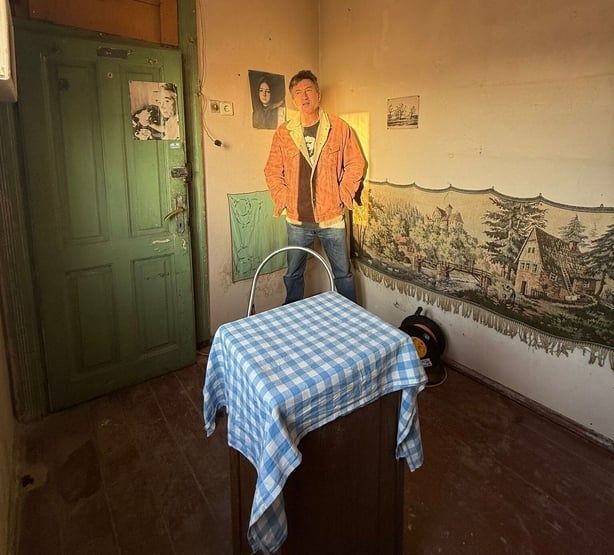
Unlike a modern block with an administrator, here I have to muddle through with the people I live alongside, because we have problems to solve. All in all, I like this inconvenient way of living. I think of those Jewish brothers who made this building. Even though they were forced to leave in 1941, following the brutal pogrom that swept through these streets, they built it to be beautiful and they built it to last.
The rain now gushes into the garret after a rain-storm, so having watched a few roof repair videos on YouTube, I’ve been climbing up there through a skylight in the summer evenings, for an hour or so of relative cool before sundown, patching things up with cement and bitumen. Sometimes I’ll crack a beer open when I’m finished and sit and take in the view over the rooftops of my city, a place I now realise has always been broken and will never be fixed. I’m part of the story now.
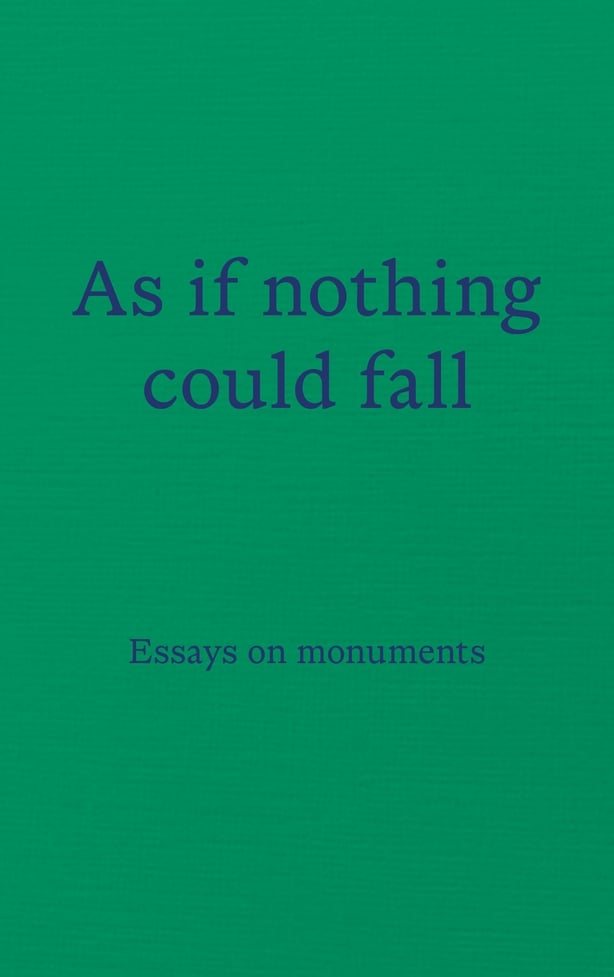
As If Nothing Could Fall - Essays on monuments is published by PVA Books - find out more here
