


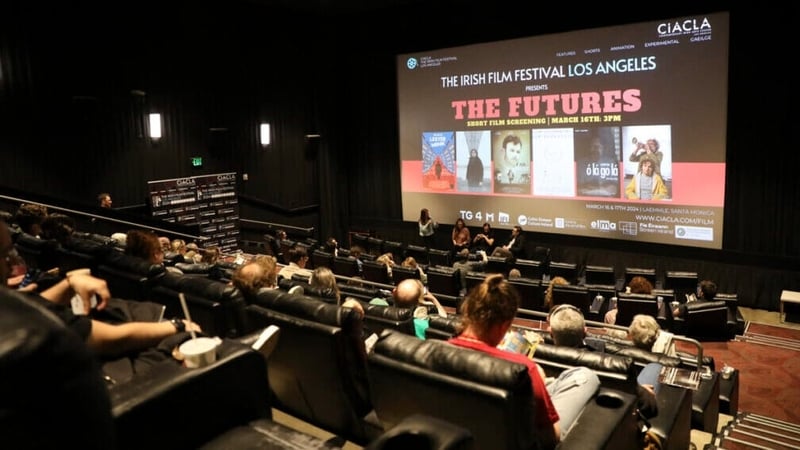
Matthew Nevin, Executive Director of CIACLA and Co-Director of MART Gallery & Studios, introduces this year's edition of The Irish Film Festival Los Angeles, showcasing new Irish cinema in the centre of the world's entertainment industry.
For three days in March, Irish accents will echo throughout the Laemmle Monica Film Center in Santa Monica as the Irish Film Festival Los Angeles returns. It is a vital festival dedicated to promoting the wide range of Irish films being produced in Ireland, giving filmmakers the opportunity to showcase their work in what is still considered the home of film.
The film industry has changed drastically in the past few years. Filmmakers and promoters are struggling for attention, funding and a place in a global film industry that has become increasingly competitive and saturated. Los Angeles remains where many of the deals happen, where celebrity culture is still at its peak, and where the dream of opportunity continues to pull thousands to its beaches each year.
CIACLA, the presenting partner of Irish FFLA, is dedicated to supporting and promoting Irish culture in Los Angeles. Founded in 2019, it operates in one of the few major US cities without a permanent Irish cultural centre. CIACLA constantly relies on the goodwill of many to pull off its programming. CIACLA produces events like the Irish Film Festival Los Angeles to provide an opportunity for community building, where filmmakers based across the world who have a connection to Ireland can showcase their work in the "City of Dreams," arrange meetings, network, present their films and grow as artists.
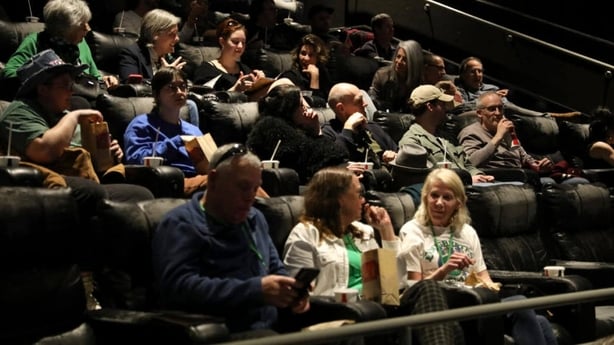
Meanwhile, Los Angeles itself is still recovering from the aftershocks of Covid, industry strikes and shifting production models. For Irish filmmakers based at home, screening in LA is less about glamour and more about proximity to the wider ecosystem of global cinema. For generations raised on American television and film, Los Angeles held a certain mythic power. Many who grew up in the 70s, 80s and 90s can trace their understanding of the city through the shows and films that shaped their imagination.
Showcasing Irish work abroad does not happen in isolation. Organisations such as Culture Ireland and Screen Ireland play a significant role in enabling films to travel and in sustaining the wider screen ecosystem. While their work often operates quietly in the background, that structural support is essential for Irish artists seeking international audiences.
Producing these global cultural events can sometimes feel like a complicated relationship. Anyone outside the arts who hears about the administrative grind involved in getting projects off the ground often asks why we do it. But those of us working to support everyday artists know how vital international opportunities are to professional development. The film industry, in particular, offers few guarantees. Success can be fleeting; reputations are often measured against the latest production.
In a fragmented industry and an increasingly uncertain world, gathering physically around films feels quietly defiant.
As a cultural producer working with both CIACLA in Los Angeles and MART in Ireland, I'm often struck by how the arts can appear competitive from the outside; films pitted against one another, theatre productions battling for space, visual artists clamouring for exposure. In reality, artists, curators and everyone in between are usually championing, supporting and showing up for each other. Somehow, our society prefers to frame creative work as rivalry.
However, I have a slight discomfort in how we speak about ourselves. If I hear Ireland described as "punching above its weight" one more time, I might blow up, even though I am as guilty as anyone of saying it. We are doing remarkably well as a small country, but what is often overlooked is the privilege that comes with being Irish: international visibility shaped in part by historic migration to the United States, the relative racial homogeneity that has historically insulated many of us from discrimination, and the undeniable advantage of working largely in the English language. As someone trying to become a better Gaeilgeoir, our reliance on Béarla can feel bittersweet.
It is important that everyone use whatever privilege they might have to support those who do not share it. The diversity and range of voices emerging from Ireland today is extraordinary. Given our history of emigration, it is essential that we support the full spectrum of voices present on the island now and that we present contemporary Ireland internationally, moving beyond narrow or nostalgic ideas of Irishness.
I am proud of the line-up at this year’s IrishFFLA. It could always be bigger and broader; there were hundreds of filmmakers seeking exposure, many of whom we simply did not have space to programme, but we have worked to ensure that the selection reflects a modern Ireland, spanning early, mid-career and established voices. This year we will also welcome the largest number of visiting Irish filmmakers the festival has hosted.
In a fragmented industry and an increasingly uncertain world, gathering physically around films feels quietly defiant. It is a reminder that cinema is still communal, that culture is shared rather than owned, and that Los Angeles still represents both ambition and connection in a world that can sometimes feel divided. If nothing else, it reminds us to take care of and support one another and perhaps feel a little better for doing so.
The Irish Film Festival Los Angeles will run March 20-22nd in Laemmle Monica Film Center Los Angeles - find out more here.
