



In 1995, I was teaching English in Buenos Aires. With cell phones mostly reserved for businesses and the internet in its adolescence, my daily reading on the bus, along the seemingly infinite Rivadavia Avenue, was largely restricted to the English-language Buenos Aires Herald. I ate my morning medialuna—a sweet Argentine pastry—while hustling for more hours in the job section.
It was late in the week, so I moved on to the cinema listings to see what was opening. Occasionally, you'd get a bit of local showbiz news. There were two big productions in town while I was in residence: Evita, starring Madonna, and The Man Who Captured Eichmann, starring Robert Duvall, who has died at 95 after seven decades in cinema.
Robert Duvall is in town?! Okay, Madonna is Madonna, but… Duvall… Tom "Consigliere" Hagen of The Godfather! The thought of kissing his ring burst like a bullet in my head. I slumped forward lifelessly into my newspaper. Yeah, like that’s ever going to happen. I’d have a better chance of snogging Evita.
For both Robert Duvall and me, fate had different plans.
The institute where I worked was about a ten-minute walk from the bus stop. Buenos Aires is an old, gigantic but gridded city of avenues. I had to cross several as I made my way to class. Something was different this morning. A side street was partially blocked off. There were lights set up outside a restaurant; a woman and a young girl lingered in period clothes, waiting for their cue. I listened to fellow looky-loos with my pidgin Spanish. HBO? Oh my God… Eichmann's eating out!
My students were waiting. They were mostly middle-aged businesspeople. Argentines are a cine-literate people; I reasoned they would know exactly who Robert Duvall was and forgive my tardiness. But what was I going to do? Burst into the restaurant, my hands in my pockets clutching a biro? I guessed not.
I saw only a silhouette. But what a silhouette.
Time was running out. I made do with crossing the street and skulking along the pavement opposite the restaurant. Pivoting a hundred and eighty degrees, I suddenly strolled back across the car-free road directly toward the camera lights. In my eagerness, I moved too fast and could see I had been spotted by an assistant director. All adrenaline fled. I took a knee in the middle of this usually traffic-jammed street, pretending to tie my shoelace.
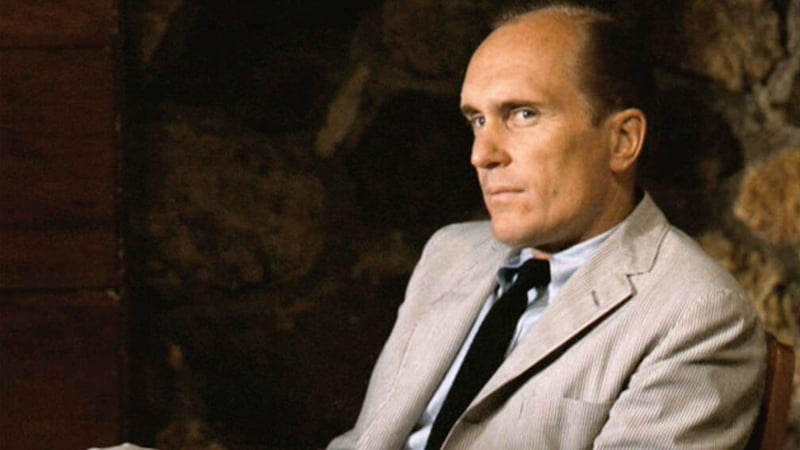
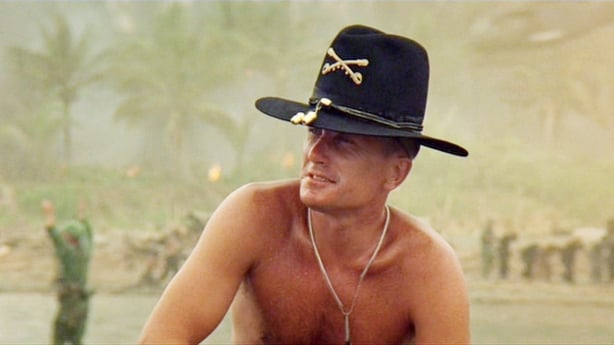
I looked up to see if I was about to be shouted at in Castellano. And there in the window was Eichmann, Stalin, Boo Radley, Kilgore, Hagen, Frank Burns, Hackett, Earl Macklin, and Max Sledge… Robert Duvall.
I saw only a silhouette. But what a silhouette.
From thirty to ninety-five, Robert Duvall was a perpetually middle-aged man. He never seemed to change. A star made of granite - crumbling a bit at the edges, like us all, with time - but forever a rock of cinema.
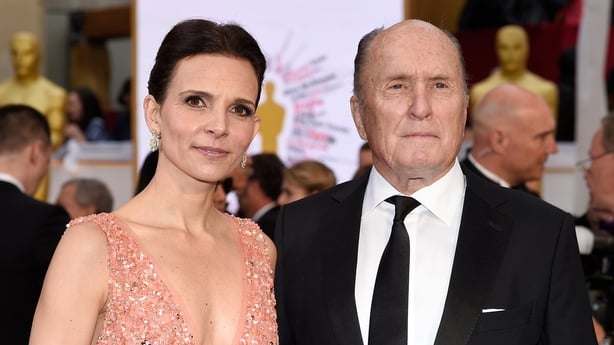
This bald-domed boulder learned the tango while filming in Argentina. Loving it so much, he opened a dance studio in downtown Buenos Aires. Yes, that’s right: Major Kilgore of Apocalypse Now could float like a butterfly. And, like me, he loved the taste of medialunas in the morning. It was in a bakery, while buying his breakfast, that he met his wife, Luciana Pedraza, granddaughter of Argentine aviation pioneer Susana Ferrari Billinghurst. They perfected the tango together (and Brazilian jiu-jitsu). Luciana said on his passing, "To the world, he was an Academy Award-winning actor, a director, a storyteller. To me, he was simply everything."
Being a star, Duvall once said, is an agent’s dream, not an actor’s. Gene Hackman, Robert Redford, Diane Keaton, Robert Duvall: the constellation of the 1970s has lost another cast member.
