


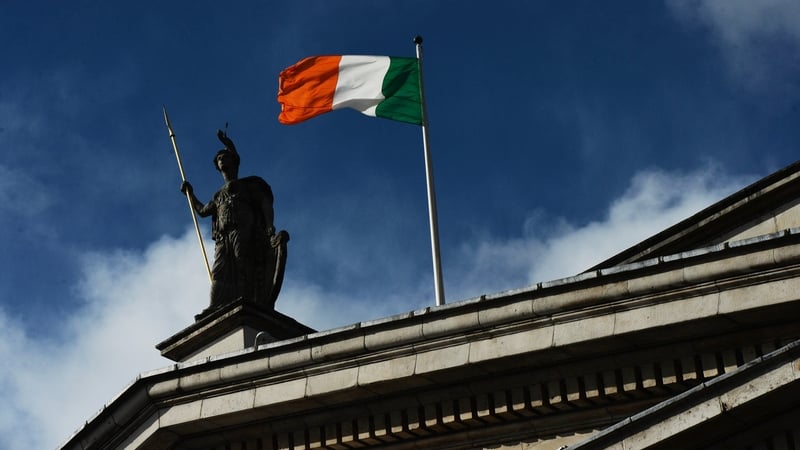
Author and historian John Crotty reveals new origins for the Irish Tricolour and other symbols of Irish identity, in an extract from his new book The Irish Tricolour - The Truth behind the Symbols and Struggles that Defined a Nation. Read below...
Long believed to have emerged around the rising of 1848, the findings center the story around 1830, restoring a forgotten female patriot to her rightful place in Irish history.
It was a matter of months later (after the first green - orange device emerged) that in September 1830 a first fusion of green, white and orange is recorded.
The first person to combine the three colours was a dreamer like Wolfe Tone but more closely aligned to the Home Rule independence ideals of Daniel O’Connell.
We need your consent to load this rte-player contentWe use rte-player to manage extra content that can set cookies on your device and collect data about your activity. Please review their details and accept them to load the content.Manage Preferences
The Irish Tricolour - author John Crotty chats to Oliver Callan
It was the creation of Emilia Eleanor Hamilton of Annadale Cottage, Fairview, Dublin – an Irish female patriot written from her rightful place in Irish history.
The French Revolution had erupted July 27th, 1830, influencing and inspiring global affairs just as the first had in 1789. Emilia was one of those inspired to action.
She was not alone as special interest groups across Ireland considered sending congratulatory messages to the French. How one such communication would be composed and delivered was discussed at a meeting held in the National Mart, chaired by the Marquess of Westmeath in September 1830.
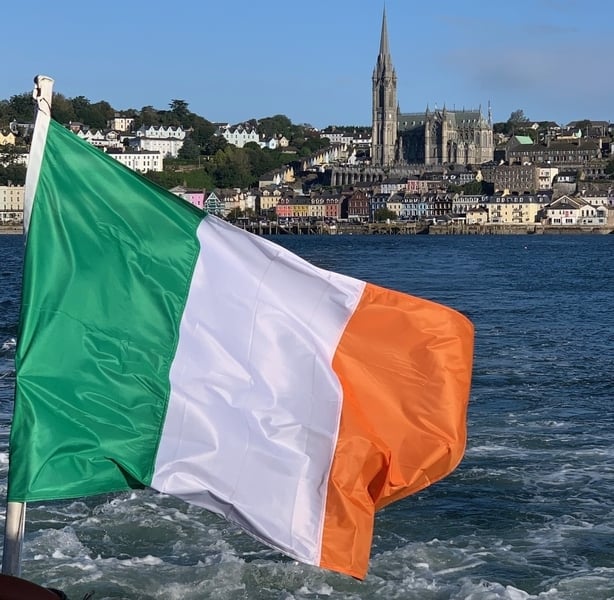
Emilia had written to the Marquess expressing her thoughts and desires, asking her letter be read to the meeting. She included a very special gift, a ‘cockade of orange, green and white’.
She opened her letter with words from an Irish poem, forever cementing the symbolism we identity in the Irish Tricolour: ‘May Orange and Green, no longer be seen, bestained with the blood of our island’. She expressed a wish to see the device ‘generally worn throughout Ireland’.
These new findings add a new female figure to the pages of Irish history.
Emilia shared her excitement at the conciliatory spirit prevailing in Ireland between Ireland’s main factions: ‘Understanding that all sects and parties are in cooperation on this great occasion, I send you an appropriate little emblem for my nations use – a loyal tricoloured cockade…’.
She urged the Marquess to ‘see how the colours harmonise? Just ask the meeting, if it is not prettier than the French or Belgian…’. Emilia was proud of her creation.

She then added her perception of how the colours might be applied to Ireland’s existing political situation. There is no question that Emilia Hamilton’s orange, green and white cockade represents the first flight of an Irish tricolour device, one espousing unity between Ireland’s factions. There was little left for later persons involved in the tricolour story to add, future actions representing refinement of Emilia’s existing device with subtle changes in the colour order, but no great development or divergence.
There is no record of the tricolour’s reception at the meeting, however Emilia’s donation was published in popular press of the day. It was even proposed as a national flag, occasions I believe are republished here for the first time, going some way to explaining Emelia’s exclusion from the tricolour story to date. The Atlas newspaper gushed, ‘A most spirited letter was received by the noble Chairman, at the Dublin meeting to congratulate the French. The writer was a young lady, and the letter was accompanied by a new tri-coloured cockade of orange, green and white. Would that this emblem of conciliation were worn near the heart of every Irish-man’.
Emilia’s device would gain notable press but not an immediate national adoption. This task fell to the follower of Daniel O’Connell at an event to welcome the Liberator home from taking his seat in Parliament. At a well-orchestrated affair in Howth, Dublin, tens of thousands cheered O’Connell draped in tricolour and green-orange hues.
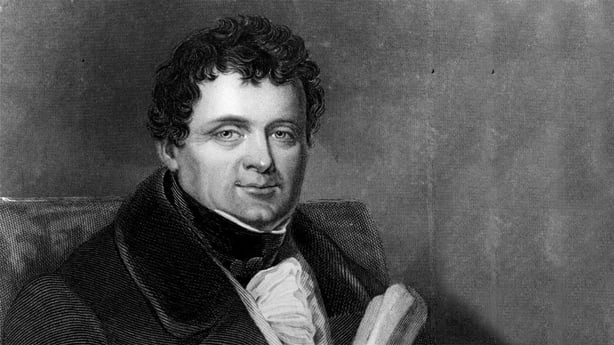
The Waterford Chronicle felt ‘one might justly suppose that the return of Mr O’Connell was chosen as the period for the grand reconciliation of Irishmen – The Orangemen and the Catholic renounced their inveterate dissensions, and the colours which have been hitherto the emblems of the opposite factions, were blended together’. The Tipperary Free Press echoed these views, stating 1830 would be remembered for the ‘union of orange and green’.
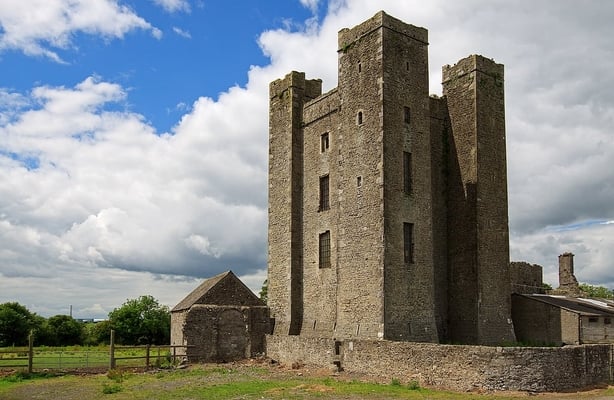
The tricolour appeared with frequency across the 1830’s, the flag of O’Connell’s campaign for Repeal. It also saw adoption at anti-tithe (church taxes) events and by the tee-total movement of Father Matthew who enlisted millions to sobriety. Its first recorded flight in flag form over an Irish building took place in 1832 as it flew over Dunsoghly Towerhouse in Saint Margaret’s, Dublin, an impressive 15th century structure. The flag even crossed the Atlantic, appearing in its modern green, white and orange format at a meeting of the association of ‘Friends of Ireland’ in South Carolina, 1831.
Its use ebbed as O’Connell’s Repeal efforts faltered, its use more occasional alongside the retained green-orange device of the same message and the familiar green harp flag. With O’Connell’s death in 1847 the torch of increased Irish autonomy passed to the Irish Confederates, their influential figures like leader William Smith O’Brien collective known as the Young Irelanders. The group had quarreled with O’Connell on the use of force to achieve Irish aims but this did not stop the Confederates adoption of the O’Connellite device of green-orange, seen in their membership cards for 1848.
A well-publicized return of the Irish Tricolour in Enniscorthy, Wexford on March 7th 1848 reminded the would-be revolutionaries of its utility. Within two weeks it flew from their premises in Limerick on Saint Patrick’s Day and was worn in Manchester by Confederate attendees at a Chartist event in identical form to Emilia Hamilton’s first cockade flourish.
The use of a French flag in Waterford City on March 7th was mistaken for an Irish Tricolour much later in the 1990’s. Clear references attest to the flight of a French flag. A later Confederate trip to France in April 1848 procured a striking version of their newly adopted symbol, this also becoming confused with first flights of a symbol in use for 18 years by that point. An imaginary donation by ‘French ladies’ of the Paris tricolour also became woven into the Tricolour’s origin story, depriving Emilia Hamilton of her rightful place in Irish history.
These new findings add a new female figure to the pages of Irish history. The long forgotten and wrongfully overlooked ‘woman behind the flag’.
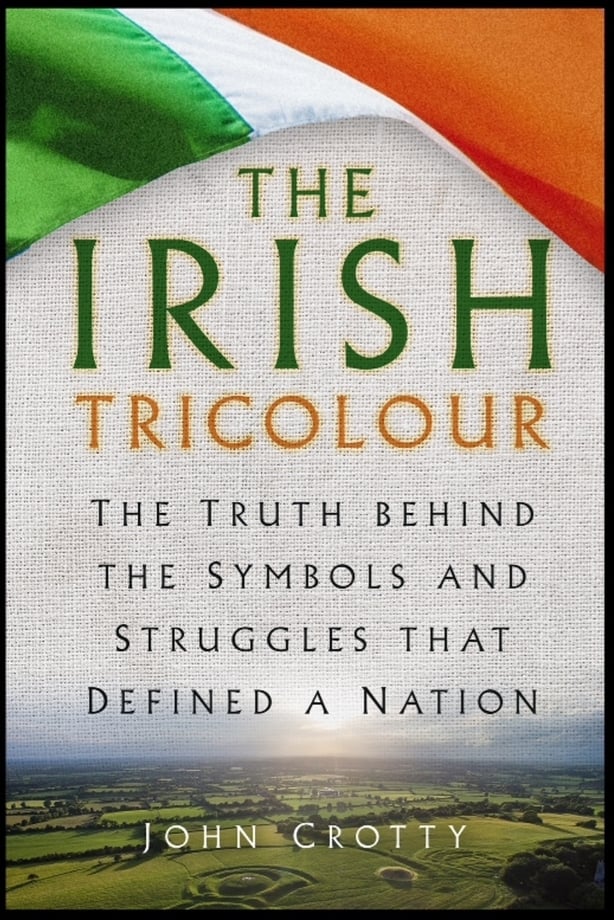
The Irish Tricolour is published by The History Press
