


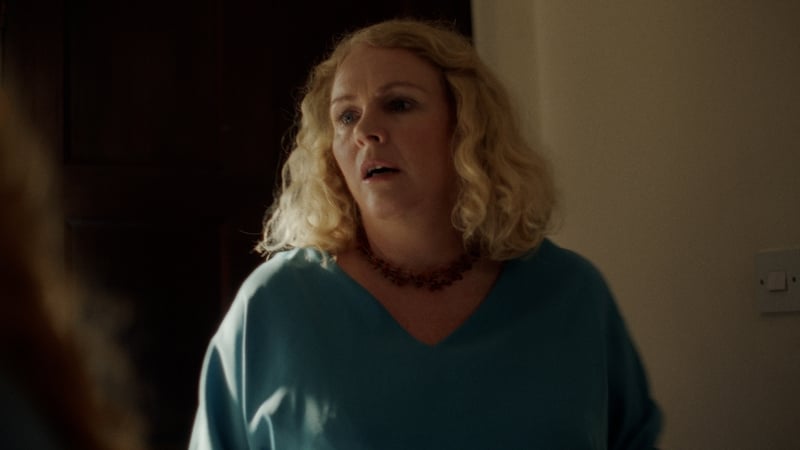
Ever dreamed of one day treading the boards, but don't know where to start? In a new series, award-winning actor and playwright Janet Moran, one of the stars of RTÉ's acclaimed dramedy The Dry, offers some tips for the budding actor...
In this instalment, Janet explores acting for film and television.
I'm slightly less qualified to speak about this, having done less screen work than stage work — though I have learned a few things.
Most auditions for screen work are initially self-tapes, as mentioned in the article on auditions, after which you'll meet in person and perhaps be asked to do a chemistry read, where you read opposite an already-cast actor you’ll be playing against. Just as on set — and harder than it sounds — it’s essential to harness your nerves, turn them into adrenaline, and simultaneously stay relaxed, so do whatever you need to do to achieve that. It obviously requires a degree of confidence, so as always: prepare, prepare, prepare.
When you get on set, you don’t have to try to be everyone’s friend. Prioritise your own job, and to do that you have to stay focused and relaxed. That can be difficult when there are 50 people looking at you and their ability to do their job depends on you not messing up yours. But the truth is, film and TV crews are uniformly excellent at what they do, and everything is in place for you to succeed.
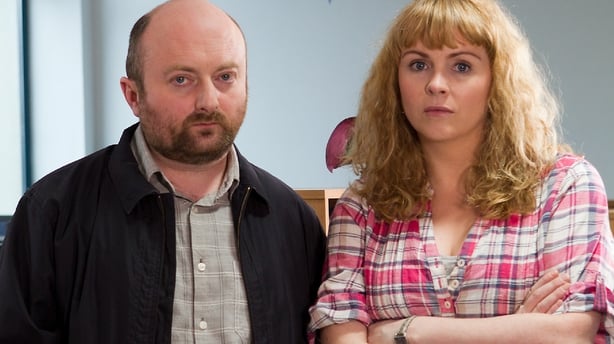
The old clichés — "less is more", "don’t act, just be", "acting is just reacting" — are true. Audiences will read a lot into your face (see the Kuleshov effect). On screen, every minute thought can be detected, so your performance must be connected primarily to your thoughts. Michael Caine famously gave his lines to other actors so they would have to do the heavy lifting while he focused on reacting, which is where he felt the most interesting screen performances lived. His much-maligned but very entertaining acting masterclass (find it on YouTube) does include some excellent technical points. I wish I’d known about continuity, for example, before I went on a set for the first time, so I didn’t do so much in the wide shot and then struggle to repeat it in the close-ups. Or even a simple technique for finding your mark — which I still sometimes manage to miss.
When you get on set, you don't have to try to be everyone’s friend. Prioritise your own job, and to do that you have to stay focused and relaxed.
This is why it’s so important to work out your actions before filming, and in most cases you’ll have to do that alone because there generally isn’t much rehearsal time for screen work. But also be ready to pivot if required. React to what the other actor is doing. In other words, throw it all out if necessary. But if you’ve prepared well enough, that won’t be a problem.
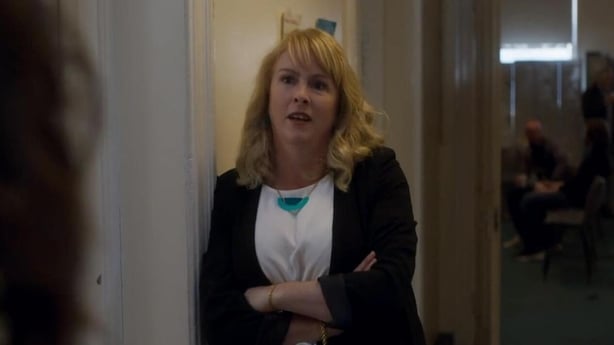
You’ll often be shooting out of sequence, so you must be clear in your mind about what’s happened before each scene you film, what your character knows and doesn’t know, and have a sense of how you want to play scenes not yet shot. Ironically, film acting — though it appears more "real" — requires more imaginative work.
There are a lot of distractions, so keep focused and, remembering that film sets can be tense environments, always be professional. I recently worked with a brilliant director who never lost his temper and, when I remarked on it, he said, "No, I never do, because I know I’ll look like an a**hole if I do." Excellent advice.
Watch The Dry on RTÉ Player here, and take a deeper dive into our Get Creative section here. Janet stars in Edelle Kenny's new short film The Race, premiering at this year's Dublin Film Festival on February 20th - find out more here.
