


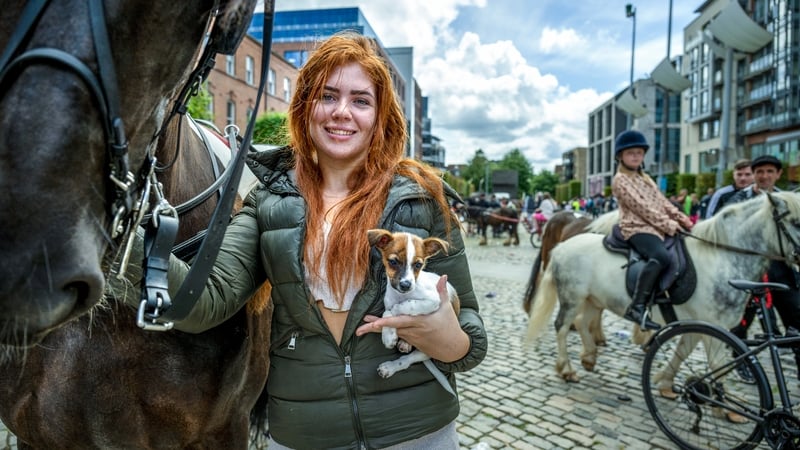
We present an extract from On Dublin: Reflections on the Irish Capital, the new book by Louise East, with photographs by Deanne Fitzmaurice.
In On Dublin, Irish writer Louise East offers a vivid snapshot of her hometown, and asks what makes it tick. Inquisitive, nostalgic and wry, her text is accompanied by a photo essay from Pulitzer Prize-winning photographer Deanne Fitzmaurice.
Everyone comes of age somewhere. One particular set of streets or fields is the backdrop to a litany of teenage and 20-something firsts – love, pint, flat-share, hangover, job. For me, Dublin was that place. In the summer of 2023, I made several trips back to Dublin from Berlin, where I've lived for over 15 years, to write about my home town for the Little Museum of Dublin, and as I moved through the city, I was assailed by memories of the 1990s and early 2000s.
These memories shared a slightly hyperreal quality: Technicolored and over-exposed, the classic filter of nostalgia. Where it all gets more complicated is that, during those 15 years, life in Dublin felt somewhat Technicolored and over-exposed.
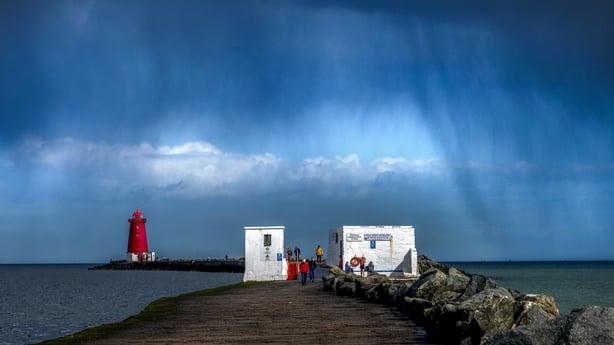
In the final decade of a century that had been shaped by the struggle for independence, emigration and recession, Dublin was suddenly seized by a kind of Jazz Age fervour. Hectic and heedless, solipsistic and superficial, Dublin in the 1990s was a city in love with itself, with novelty, with its own bright future.
This mania was not a coming of age per se. Dublin had marked its 1000th anniversary in 1988, with a certain amount of pomp as well as a commemorative milk bottle for every household, so it was well beyond adolescence. What happened in Dublin at the tail-end of the 20th century was, for once, nothing to do with the English.
What happened in Dublin was money, lots of it, showering down across the city and the country with the suddenness of a monsoon, flooding us shore to shore. Between 1995 and 2000, the Irish economy grew at an average rate of 9.4 per cent, continuing to expand by over five per cent a year until 2008.
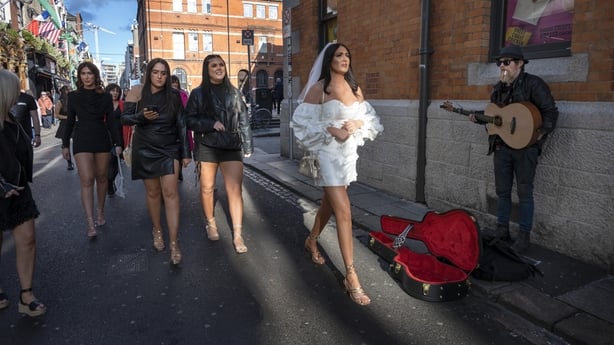
That's astonishing growth by any standard; for a country so recently wreathed in unemployment and recession, it was wild. At first, most Dubliners did not feel the benefits, but soon the effect on the city was unmistakable. There was simply no time for the likes of teething pains or speed bumps; this was a city strapped into a jump-jet and subjected to the juddering effects of G-force.
As a Dubliner, it was a strange and exhilarating time to come of age. For the first time in decades, centuries even, emigration was not the only career path for me and my peers. In the early 1990s, the idea that we might stay in Ireland, work here, get rich here, was shocking in its newness. Yet there was something inherently destabilising about trying to find our feet and work out how the world works in a city in flux.
What had started in a blaze of cocky self-belief and optimism curdled into something rather more Marie Antoinette-ish.
The summer I graduated from Trinity College was one for the ages. Day after day, week after week, Dublin was drenched in unbroken sunshine. Slowly at first, and then greedily, the weekends filled up with picnics, dips in the sea and semi-legal raves in semi-deserted mansions. Dublin was sloshing with film money, and we all got jobs as extras, making a week’s wages in a day, eating chicken breasts from craft services, and laughing between takes at the film eejits talking into those ridiculous new portable telephones.
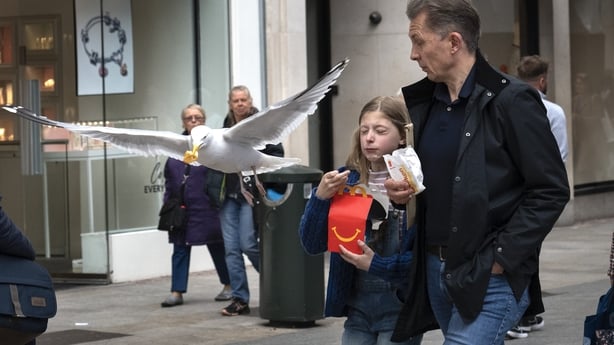
I don’t think I was the only one harbouring a subterranean belief that the weather had come with the money. When Dublin was poor, ours was a city of waterlogged barbecue sets and never-worn flip-flops. But that was over for us now. We were rich so we had rich people’s weather and suntans.
By the late 1990s, I was working as a features writer for the Irish Times, a job which offered a front-row ticket to observe the circus. I would cycle around Dublin to interview film directors, celebrity chefs, and Ireland’s fledgling entrepreneurs, returning to the paper’s labyrinthine offices on Fleet Street to bang out copy on ancient computers running a similarly labyrinthine software called Atex.
Every morning, there would be a stack of invitations waiting for me, the cardstock getting progressively thicker as the years went by. New shopping centres, five-star hotels, pet-grooming parlours; nothing opened without a blitz of flash photography and a red carpet. I was once invited to a party to celebrate a new shape of tea bag (round not square).
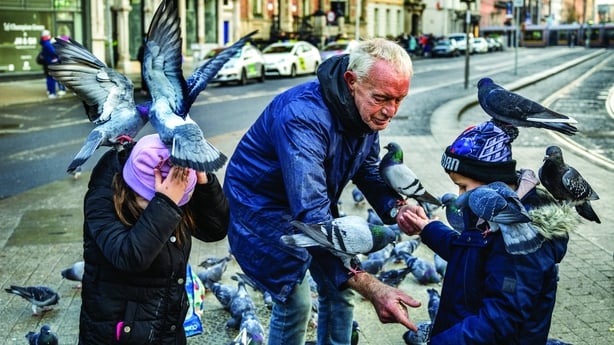
Within a couple of years of tasting champagne for the first time, I was regularly being assured by public relations executives that I would not be expected to drink non-vintage at their event. At a friend’s country wedding, a concert promoter I hardly knew suggested a group of us could jump in his helicopter, grab a drink in Dublin and be back in time for the speeches.
What had started in a blaze of cocky self-belief and optimism curdled into something rather more Marie Antoinette-ish. People flew to Galway to go to a horse race, bought holiday homes in South Africa, did their Christmas shopping in New York. Supermarkets sold crystal-encrusted bottles of water for €45. Dublin bar workers reported picking up 10 and 20 euro notes off pub floors at the end of a Saturday night; people no longer bothered to pick up dropped "change".
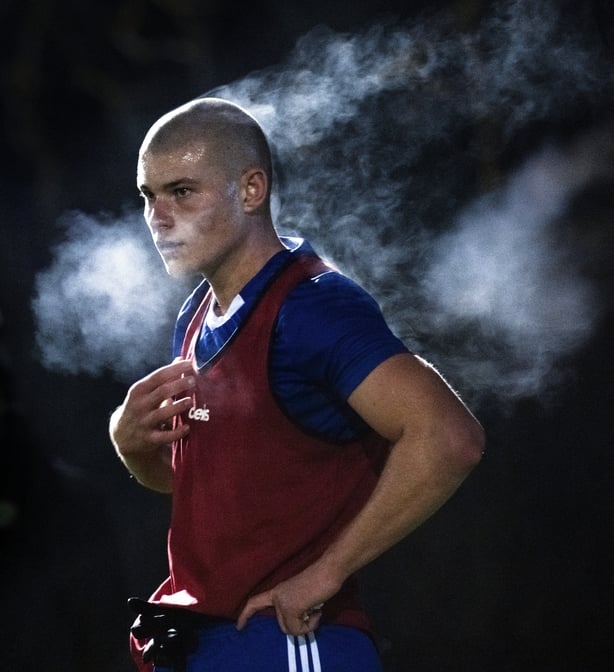
The fall, when it came, was epic. In 2008, the Celtic Tiger-shaped balloon was shot down by a sub-prime-mortgage-shaped gun, and the sound was heard all over the city. Over-exposed banks went under, house prices plummeted, the streets of Dublin were lined with shuttered businesses. The country entered recession for the first time since the grim 1980s. By 2011, unemployment in Dublin stood at 13 per cent.
There was no money and no sustaining legend either. I remember gazing out the windows of a southbound Luas a couple of years after the crash. On either side of the tram, fields had been ripped up, vast craters gouged out of the earth. Severed hedgerows dangled in mid-air, as though a giant toddler had been interrupted mid-tantrum, which to a certain extent was true. This morass was what remained when an over-extended property developer ran out of funds, and it was replicated all across the city, and the country beyond.
Dublin's coming of age was over.
On Dublin: Reflections on the Irish Capital is published by The Little Musem of Dublin - find out more here
