



With over 350 million copies sold (and counting), Minecraft is the undisputed best-selling game of all time. Officially released in 2011, the sandbox phenomenon gave players unprecedented freedom to create their own stories, systems, and games - and in doing so, revolutionised the industry.
It transformed legions of passive players into active creators. Today, Minecraft exists in some form in almost every home and school, supported by spin-off titles, a blockbuster movie, and more merchandise than anyone could reasonably keep track of.
Its influence is simply inescapable.
And yet, despite its cultural dominance, the core experience has remained largely unchanged over the years, retaining its iconic blocky visuals and learn-as-you-play design. While countless games have drawn inspiration from it, none have truly threatened its reach or appeal.
Until now. Enter Hytale.
Hytale is already a sensation
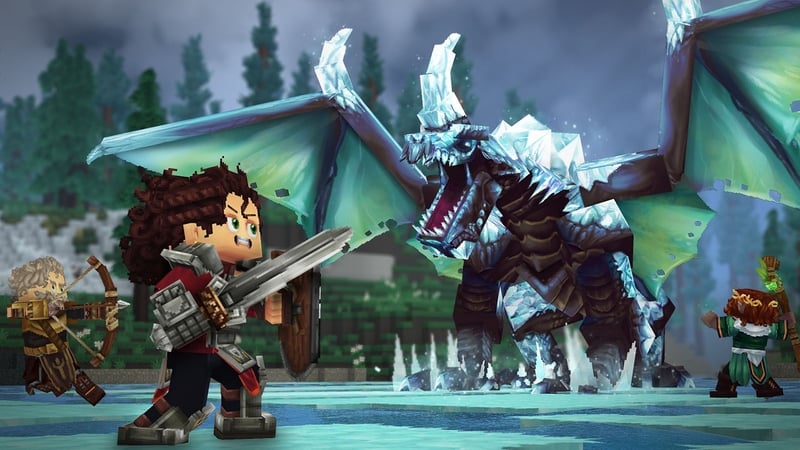
Hytale is a block-building game that blends the creative freedom of sandbox mechanics with deeper role-playing elements. Players drop into a procedurally generated world where nearly everything can be customised. It’s a blank digital canvas — and your mission is simple: turn ideas into something tangible.
Despite being out for less than two weeks, the game has reportedly seen over 2.5 million concurrent players during its early access debut. It has also secured funding for at least two years of development through pre-orders alone, a clear indicator of both hype and faith from its community.
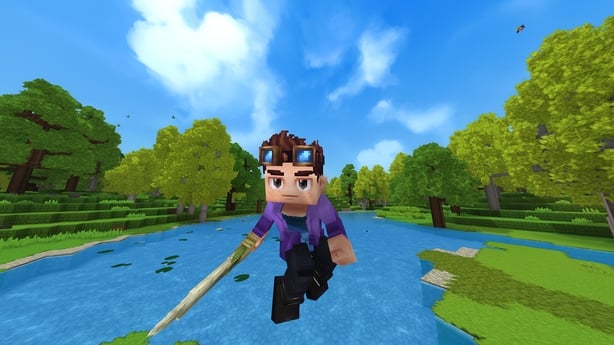
After customising my avatar, I throw caution to the wind and jump into Exploration Mode, one of two options available at launch. As the game is currently still in early access, I’m prepared for bugs, glitches, and features still under construction.
Even so, as I leave the safety of the opening spawn room and watch an expansive grassy world generate before me, the game immediately oozes potential and polish. If this is Hytale at the very beginning, I’m eager to see what it grows into.
I spend my first hour wandering my own private world, exploring biomes, ruined structures, rivers, and ponds while collecting anything and everything in sight. Trees fall for resources. Flowers and stones are gathered. Small critters scurry past, tempting me to turn them into crafting materials. Dark tunnels dot the landscape, practically begging to be explored.
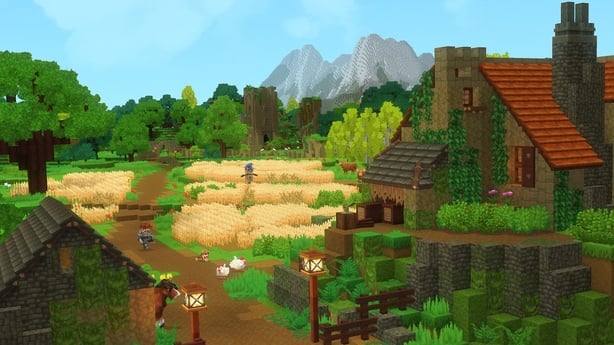
This is the experimental phase: testing interactions, pushing boundaries, learning the rules of the world. At first, it feels eerily familiar, almost like Minecraft 2.0, complete with a few shiny new bells and whistles. But gradually, subtle improvements begin to stand out.
Movement feels more fluid and responsive. The interface and inventory systems are more approachable. And while the graphics retain a pixelated style, they’re more textured and vibrant than Minecraft’s. The music, too, is a standout, making an hour in-game slip by in what feels like minutes.
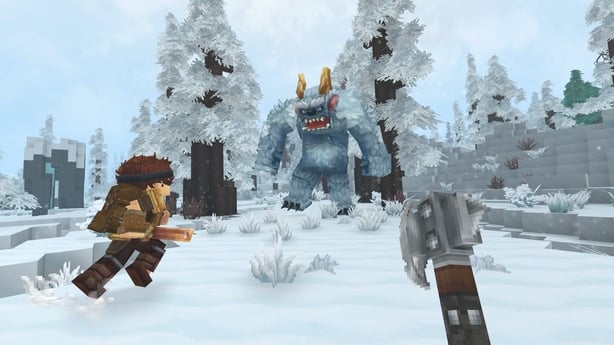
Eventually, I spot skeletons in the distance - and they are far less friendly than I’d hoped. They charge toward me, swords swinging, in a fight I can only describe as pitiful on my part. Too focused on running, I barely notice my health bar vanish. And in that moment, Hytale’s appeal truly clicks.
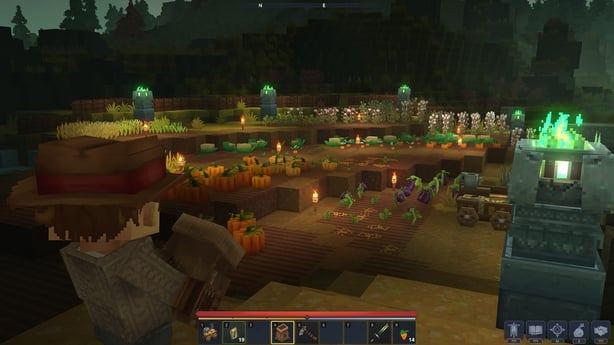
There’s no overarching storyline in this mode. No main quest demanding attention. Yet that brief skirmish puts an abrupt end to my reckless wandering. Upon respawning, I feel a renewed sense of purpose, a desire to impose some order on this virtual wilderness.
The game teaches you through experience. Harsh lessons, like being killed by hostile mobs, naturally push you forward. After gathering enough resources to craft a sword, I return to face those skeletons, exacting my revenge and discovering, in the process, that even more dangers lurk nearby.
As day turns to night, I scan my surroundings with fresh intent, searching for the perfect spot to build a base. Slowly — very slowly — I learn how to place posts, doors, windows, and furniture.
It’s humbling. But even at this early stage, I’m completely hooked.
A developer’s dream: creative potential without limits
While Exploration Mode incorporates survival mechanics, Creative Mode shifts the experience entirely. Here, players enter a fresh world with unrestricted access to resources, terraforming tools, developer features, and more.
You can build static structures, sweeping landscapes, entirely new games, or even cinematic sequences. You’re the director with a blank cheque - the only real limitations are your imagination (and, perhaps, a bit of coding knowledge).
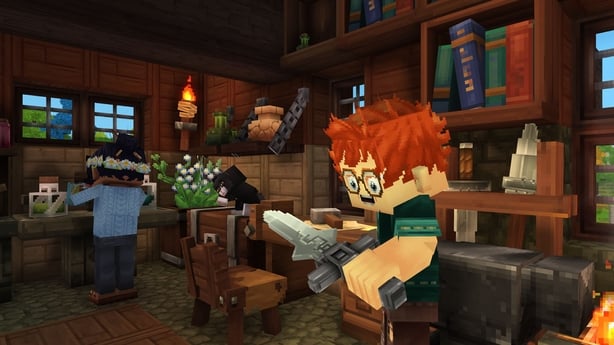
For newcomers to sandbox development, the learning curve can feel steep. In a world where attention spans are short and instant gratification is the norm, Hytale asks players to slow down and learn.
My own attempts at elegant architecture won’t be appearing on Room to Improve any time soon, but social media is already overflowing with breathtaking creations and custom game modes... and the game has been available for less than a fortnight.
Can Hytale ever step out from under Minecraft's colossal shadow?
Thankfully, a growing community of modders is already producing tutorials, tools, and downloadable assets. I found myself hopping between YouTube and Reddit to master even basic techniques, but learning new skills and applying them in a reactive, living world proved genuinely rewarding.
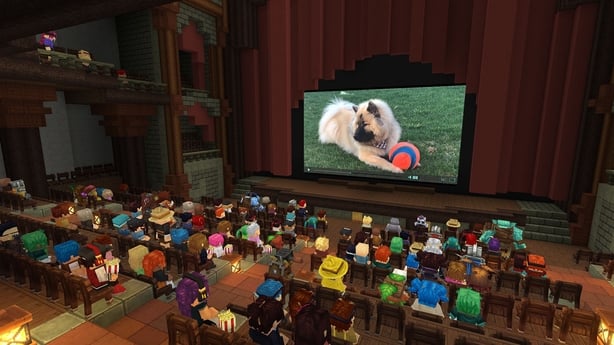
There’s also a growing selection of servers, many of which offer bespoke experiences with custom rules and mechanics. As the player base expands and developers gain time to experiment, the number of unique games within Hytale is only set to increase.
Early access means the future is uncertain, but exciting
Hytale’s success hasn’t come out of nowhere. Much of its hype stems from a long and turbulent development cycle. Hypixel Studios was founded in 2018 and acquired by Riot Games in 2020, raising expectations sky-high.
After five years under Riot’s ownership, the game was abruptly cancelled in June, sparking widespread disappointment. But gaming loves a comeback story.
We did it. Hytale is saved. We have acquired Hytale from Riot Games.
— Simon (@Simon_Hypixel) November 17, 2025
In November last year, the original creator reacquired the project and moved quickly to finally bring it to players. Now operating as a fully independent, self-funded studio with over 40 developers, Hypixel Studios has a challenging - but promising - road ahead.
Early access allows developers to release a game before it’s fully finished, using player feedback and sales to shape its future. It’s a way to sell potential rather than perfection.
That approach won’t suit everyone. Some players prefer a complete product before spending money, and certain features, such as Adventure Mode and Minigames, are currently absent.
Still, even in its early state, Hytale largely lives up to the hype. It delivers a blocky experience that balances familiarity with fresh ideas, and a Creative Mode that can be as simple or as complex as players want it to be. It feels like fertile ground for a new generation of creators.
Can Hytale ever step out from under Minecraft’s colossal shadow? Based on my short time with the game, one thing is clear: anything is possible.
Hytale is available now in early access on PC. For more information, visit the official website
