


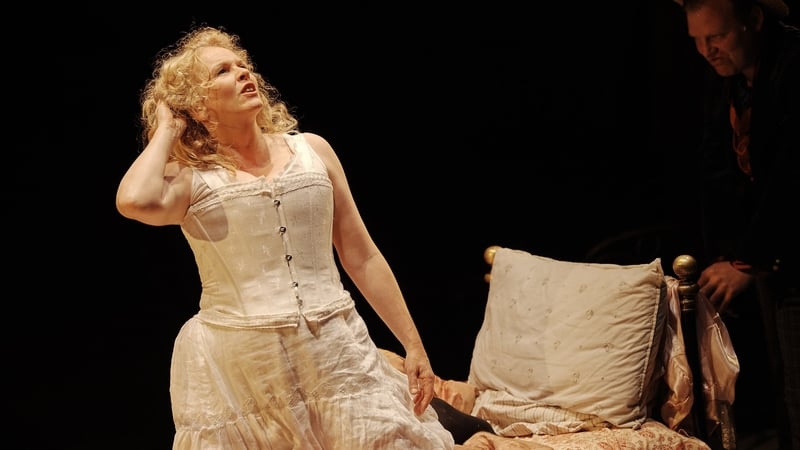
Ever dreamed of one day treading the boards, but don't know where to start? In a new series, award-winning actor and playwright Janet Moran, one of the stars of RTÉ's acclaimed dramedy The Dry, offers some tips for the budding actor...
In this instalment, Janet tackles the fine art of auditions...
It can be difficult to land an audition and then, when you do, it can feel like so much is riding on it that it's hard to enter the room in any kind of relaxed state. That’s if you get in the room. More and more, auditions are done over Zoom, which may involve you trying to find a blank white wall in your house and directing your long-suffering husband to read opposite you as you simultaneously film yourself while scolding him for reading the stage directions as well as the dialogue. Maybe that's just me...
But if that sounds bad, then think about what it’s like to not get one. So auditions are brilliant! When a great script comes in and gets you buzzing and daydreaming, it’s you getting to do what you love. For film and TV auditions, it’s essential to learn the script so that you can keep your face up and be free to listen to your scene partner, reacting authentically without having to bob your head up and down away from the camera. It’s also important to make a bold, clear choice about the character and the scene. By that I mean that it’s not enough to just say the words in a natural sounding way; think about who the character is, what they are trying to achieve in the scene, what they want and what they really want. Try to think of yourself as a detective looking for clues from the script.
The director needs to see that you can listen and respond. It's a cliché, but they want it to be you.
Before I film an audition, I do it out loud as many times as I can in as many different ways. I also try to do this while I’m doing something else - i.e. making lunch, doing laundry - so that I don’t put myself in a position where I can only do the scene, sitting still, staring at the lens. I like to "score" my script with notations: where I think the stress on a line should be, where my intonation might go up, etc. A lot of actors do this. A friend of mine once peeked at the script of an older actor he admired, to see what he could glean from her "scoring" but all he saw was "Buy crisps". She’s one of the finest actors in Ireland, so it all comes back to whatever works for you.
Really, you’ve got to prepare, prepare, prepare, read the books about the period/place, practise the accent, (the IDEA website is a handy free resource) research the writer, learn as much as you can to inform the work.
We need your consent to load this rte-player contentWe use rte-player to manage extra content that can set cookies on your device and collect data about your activity. Please review their details and accept them to load the content.Manage Preferences
Listen: Janet Moran reads A Spectrum Of Sorrow for the RTÉ Short Story Competition
If you get a callback and get into the room with a director, it means your work so far has been in the right direction - what’s important now is showing that you can listen and take notes. So having made that bold, clear choice about the character earlier, be ready to drop it, to be flexible and take on new ideas. The director needs to see that you can listen and respond. It’s a cliché, but they want it to be you. They want to have found their person, so why not make it easy for them?
Watch The Dry on RTÉ Player here, and take a deeper dive into our Get Creative section here
