


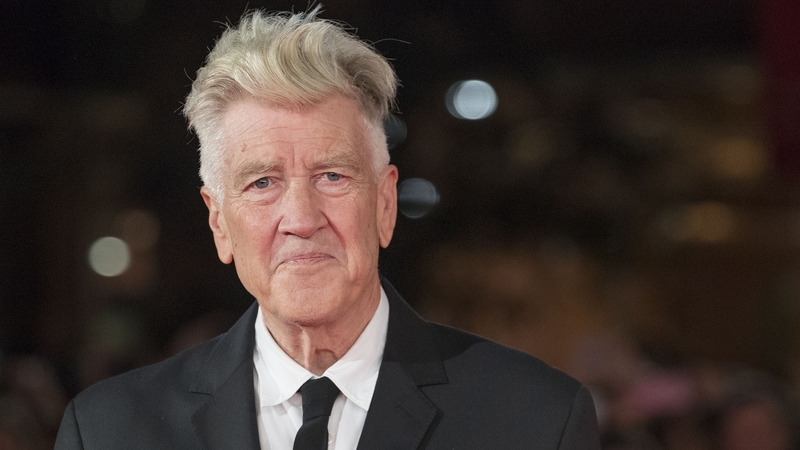
On the first anniversary of David Lynch’s death, acclaimed cinematographer Ron García ASC reflects on working with the filmmaker, in conversation with Irish production designer Jill Beecher.
Garcia worked with Lynch across four projects, including Twin Peaks (1990) and Twin Peaks: Fire Walk With Me (1992) - a creative partnership shaped by trust, communication and an instinctive way of seeing.
Working with David Lynch was unlike anything Ron García had experienced before. Over the course of four projects, including the pilot episode of Twin Peaks and the feature film Twin Peaks: Fire Walk With Me, he came to understand that Lynch was far more than a conventional filmmaker. Every set, every frame, every gesture carried a quiet intensity that reached deep into those working around him, often without their realization. For García, that experience was less about following instructions and more about feeling the work into being, learning to trust both Lynch’s vision and his own intuition in equal measure.
David Lynch is often described as singular and enigmatic. How did you experience him, as a person and as an artist?
I feel I need to begin by explaining the feeling of working with David Lynch. David was an artist before he ever began filmmaking. He was a filmmaker who used his artistry as a guide to the depths of our psyche. He reached something deep in everyone, whether we were aware of it or not.

How did you first become involved with Twin Peaks?
It was the late 1980s. My agent called me just after I’d finished a TV series called Crime Story with Michael Mann. He said ‘David Lynch wants to interview you for the pilot of Twin Peaks’. I read the script and honestly, I threw it in the trash. It reminded me of a soap opera, something similar to Peyton Place, but in the woods. My agent was quite insistent for me to take the meeting, so I watched Blue Velvet and it wasn’t quite my cup of tea either, I didn’t fully understand it so I was still reluctant. In the end I showed up and David completely changed my mind on the project instantly.
David really taught me that if you have a plan and it isn't working, just change direction and go with the flow.
What happened in the first meeting that made you reconsider the project?
His demeanour. His calmness. His quietness. He reminded me of Jimmy Stewart, he even spoke a bit like a Boy Scout master. He had a very interesting way of communicating, short precise phrasing with flamboyant hand gestures. I showed him my demo reel, which included a film I shot called Nightbreaker. It was a film about atomic testing filmed in the desert in Nevada. We watched it together and he said ‘That’s exactly how I want the pilot to look, that warmth of colour’.
Once production began, how quickly did the project start to evolve?
By the second day we were already a week behind schedule. I felt vindicated for throwing the script away because David Lynch and his creative partner Mark Frost decided it wasn’t working either. They also threw their scripts in the bin and by Day 3, everything changed on the spot.
What you see today is that change. David really taught me that if you have a plan and it isn’t working, just change direction and go with the flow.
Lynch was known for communicating through feeling rather than explanation. How did that manifest itself on set?
That feeling of working with David always comes down to clarity of communication.
Let me give you just one example. I decided not to shoot the entire series of Twin Peaks as the days were twenty hours long during the pilot and I was also committed to other projects. But David called me while they were mid-shoot on the series and asked if I’d go back to Seattle to shoot establishing shots, the houses, inserts, anything that I felt might work. So I put together a crew and we started experimenting with different lenses and unique angles.
A couple of days into filming, during lunch in the local diner, the 1st AD told me that there was a call from L.A. They had rung through to the public telephone at the back of the place and they were waiting for me on the line. I picked up and said hello. It was David. All he said was, "Ron, too weird. Think mysterious’. Then the line went dead.
Can you recall a moment on set that encapsulates how Lynch directed through intuition rather than instruction?
We were shooting the opening sequence for Twin Peaks at the old mill, a wooden mill beside a river that was used for transporting the large logs down from the woods to be cut. David wanted a pan shot that went down the river and ended at the mill in the centre. I started the pan, David said ‘too fast’. We tried again and David said ‘TOO fast’. After another take he simply said, ‘Think underwater’. The visual of a slow resistance became crystal clear to me. He hit my psyche. That’s how he spoke to me, the actors, and the crew.
From a cinematographer’s perspective, what visual qualities did Lynch consistently gravitate toward?
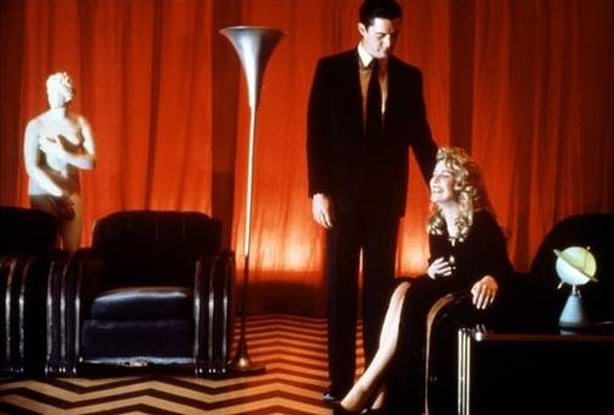
David loved darkness and deep blacks. I was shooting Fuji 500 ASA film, which I always forced in development to get 1000 ASA. That sensitivity allowed me to just about shoot in pitch darkness, exactly what David wanted.
David Lynch famously resisted explaining his work. Having worked with him so intensely, what do you think David Lynch’s art was about?
I worked on four projects with him. David never answered questions about the film structure or symbolism, what the hanging light in Twin Peaks evoked, or why a character drank a certain beer. On one occasion I did ask him why he never explained anything. He said, ‘Because it is what it is.’
That was his view on life and on art.
It is what it is.
