


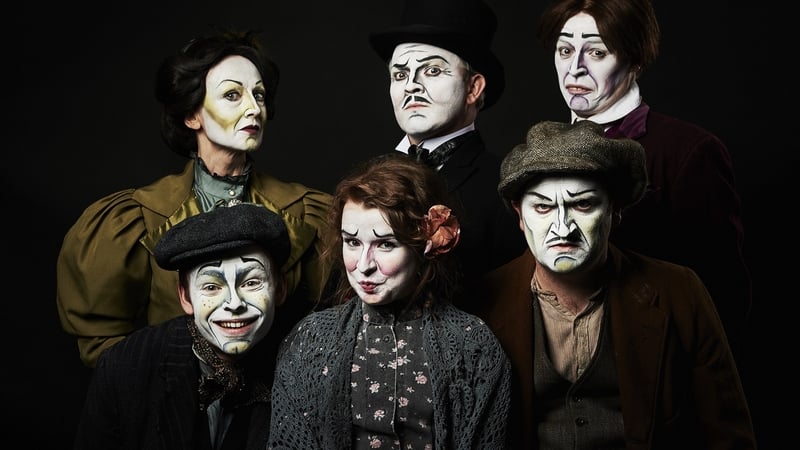
The following is an edited version of a speech given by Jimmy Fay, Executive Producer of the Lyric Theatre in Belfast, at Mission Critical: A forum for international conversation about the future of theatre criticism hosted by the Abbey Theatre with the support of the Irish Times.
Times keep changing.
I was wondering why Ruth (McGowan, the Abbey Theatre's Literary & New Work Director ) asked me to do this intro. Age, most likely.
A great memory I have is opening my first Abbey show, here in the Peacock, Melonfarmer by Alex Johnson, back in 1997. After the show, some of the company headed off to the Dublin Fringe Festival Club in the City Arts Centre, then on to RI-RA off George's Street. Then, when we were kicked out of there, we moved onto D'Olier Street to pick up the first print edition of the Irish Times, fresh off the presses, actually, we picked it up on Fleet Street where they were loading the trucks with very early editions at 4 am and then reading the review in a 24-hour snooker club over the Connelly on the quays. It was like being in The Sweet Smell of Success. Thankfully, it was a rave!! We ended up celebrating in Bewley's on Westmoreland Street with hot coffee and buns. And then some of them went onto an early house.
Different times.
Believe it or not, I don't look back too much. Nostalgia is a comforting blanket, but it dulls the edges, and as theatre artists, we have to be like sharks, always in forward motion.
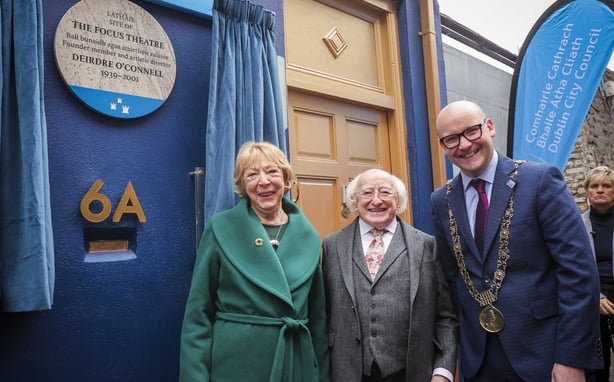
with President Michael D Higgins and Mrs Sabina Higgins in attendance.
However, on the train down, I was thinking a history of the last thirty years of Irish theatre would have to look at the period between the founding of the Dublin Fringe Festival in 1995 and just before the rather brutal dismantling of the company system by the Arts Council in 2009, as something of, if not a golden age, a gilded time for the independent sector. It was a period that coincided with the Celtic Tiger era, and certainly not everything was good, fair, or rosy. Still, it was a time you could just about make a living in the independent sector as a creative and where one could work with or see vibrant new productions by the likes of Barabbas, Druid, Corn Exchange, Siren Productions, Bedrock, Loose Canon, Coradorca, Pan Pan, Fishamble aka Pigsback, Smashing Times, Focus Theatre, The Performance Corporation, Bickerstaffe, Rough Magic, Gallowglass, Arambe Productions, Dubblejoint, Operating Theatre, Passion Machine, Kabosh, Gúna Nua, Storytellers, Island Theatre Company, Second Age, Bewley's Café, Big Telly, Quare Hawks, Calypso, Meridan, Íomhá Ildánach, Theatreworks, Ouroboros, Red Kettle, Prime Cut, Landmark, Machine Theatre Co, Dry Rain, Upstate, Tinderbox, Passion Machine, Mad Cow, Blue Raincoat, Theatre Unlimited and Yew Theatre, to name a few.
And where did all these companies perform in Dublin? Well, in venues like Andrews Lane, SFX, City Arts Centre, The Crypt, Focus, and the Da Club. All now gone.
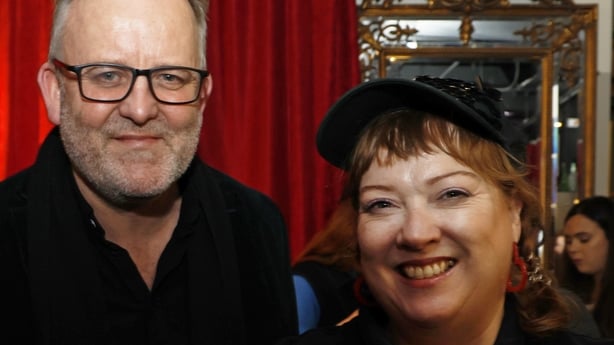
at Mission Critical (Pic: Nick Bradshaw/Irish Times)
Covering almost the whole period was the incredibly well-organised Irish Theatre Magazine – this was a vital organ of the independent theatre sector. It featured so much – thoughtful, lengthy critiques of everything going on, working journals, interviews, polemics, where plenty of young critics could pick apart the work of young theatre makers and I only appreciate it, like so many things, in hindsight.
I appreciate that it can be difficult being a critic in Dublin, especially as critics and artists tend to run into each other, invariably almost immediately after the former has posted a critical review of the latter.
As theatre makers, we tell stories, but we also evoke mood, paint pictures, create sensation and, hopefully, tap into something primal that can only be evoked in a living space containing performers and spectators.
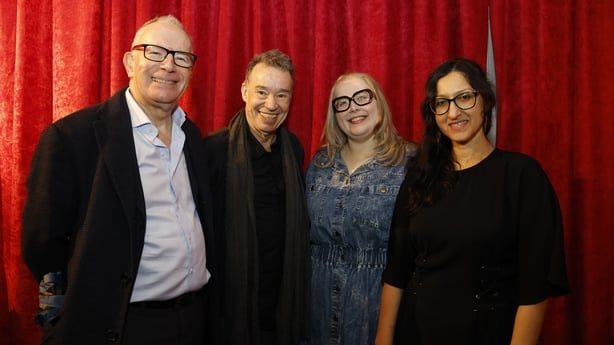
at Mission Critical (Pic: Nick Bradshaw/Irish Times)
We read criticism to continue our journey with the work or to see if the journey is worthy of a punt. The criticism I think works best is one that is curious, that deepens our understanding of the play, that discovers the unknown, that opens it up or offers a valuable insight into various meanings within the production, or is critical of what is slapdash and ill-conceived and shoddy. The worst criticism is anything that feels too personal, that steps over a line, that cheapens everything it comments on. The best criticism is extraordinary writing, an art form in itself.
In theatre, we may as well be in the business of making ice cream; it's a lot of work. You've got to sell a bucketload to make ends meet, and you're always looking for a reliable notice that says, "Best ice cream on the planet". Buy it here before it's gone. Because then it's gone.
The views expressed here are those of the author and do not represent or reflect the views of RTÉ
