


'Matty's dead, but it’s not as bad as it sounds...' This year's First Fortnight Festival features Liam McCarthy's acclaimed play He Dies in the End, direct from a sold out run at the Dublin Fringe, where it won the First Fortnight Award - it's a tale of love, memory and grief, driven by a tour-de-force performance from actor Darren Yorke as, in Liam's words, 'a young man making sense of his life on the day that he dies'. Liam introduces his play below...
I have a friend who doesn't work in theatre. Let’s call him a civilian. He says I call myself a playwright because I take myself too seriously.
A few years ago I tried to explain to him how theatre works, only to discover that it doesn’t. At least I realised that theatre only sometimes works.
My civilian friend had presumed, quite reasonably, that every municipality has a local theatre with a company of actors and technicians who produce shows in-house. A kind of European-style model where every city has a play factory with many happy, gainfully employed theatre practitioners working together in harmony. This is a very sensible model to imagine.
Of course my civilian friend is wrong. There is no independent theatre sector in Ireland. At least not one that is in any way sustainable. We’re all a pack of vagabond freelancers. Think of any touring show at your local theatre. Independent artists from different artforms and backgrounds are drawn together from every corner of the country, or sometimes from abroad, working on extraordinary tight deadlines and within tight budgets. They negotiate with people they don’t know, (or with people they know all too well), managing egos and tantrums, dealing with flustered designers, fragile technicians, disgruntled venue staff, difficult actors and pretentious playwrights. Theatre relies on thousands of things going exactly right at exactly the right time, in front of a live, paying audience.
Theatremakers come together under immense commercial pressure, to collaborate in a bizarre ritual - a hybrid of visual art, sound design, and live performance. Meanwhile they market the whole process as seamless and endlessly enjoyable. They tell you that the play is the greatest thing since sliced bread. While explaining all this to my civilian friend, he advised me to forget about the theatre and to get a real job. He thought that theatre sounded like 'a bad girlfriend’ – a problematic love interest that will gaslight you because she doesn’t care. I don’t think my friend is wrong.
Plays are great because they're live, there’s nothing like a story happening for you, in front of you, like it’s both the first and last time it’s ever been told.
I tell my civilian friend that the problem is that theatre sometimes works. It shouldn’t but it does now and then, even when the conditions are impossible. At the risk of a bleeding heart, I think plays are important. We’ve been telling stories this way for thousands of years and we continue to do so, even in a digital age of shrinking attention spans. Plays are often a guttural, earthy, unvarnished expression of human feeling, maybe about love or identity or sex or family. Plays are great because they’re live, there’s nothing like a story happening for you, in front of you, like it’s both the first and last time it’s ever been told.
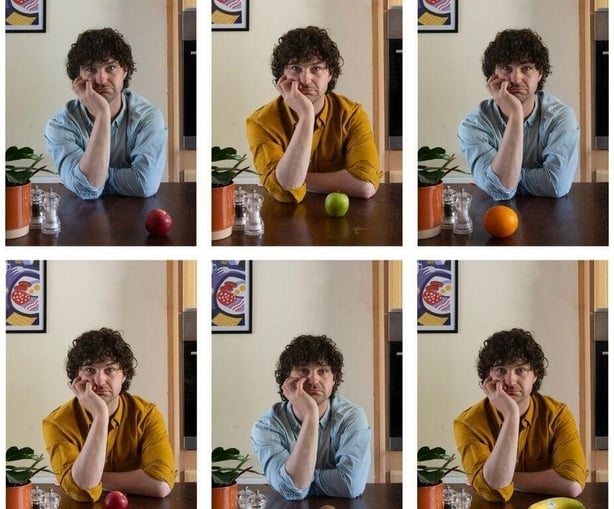
So we’ve made a play called He Dies in the End. It’s about a young man making sense of his life on the day that he dies. We hope it’s an irreverent story about love and grief. It’s performed by Darren Yorke, an extraordinarily gifted actor and dramaturge, and supported by our brilliant collaborators Jenni Little and Emily Waters. We hope that something might happen to you when you watch our play, that if you see something that reminds you of your own life that maybe you should do something about it. Perhaps we are taking ourselves too seriously to hope it’s a call from the dark to someone else in the dark and, as that old adage goes, that we are giving someone, somewhere, a voice.
I tell my civilian friend that theatremakers should take themselves less seriously, but that they should be much more serious about theatre itself. I think we should stop apologising to our friends about it. As I write this, the news is breaking that the great playwright Tom Stoppard has died. He tells us that writers aren’t sacred, but words are. That if you get the right ones in the right order, you might nudge the world a little.
He Dies in the End is at Smock Alley Theatre, Dublin from January 15th - 17th 2026, as part of this year's First Fortnight Festival - find out more here, and take a deeper dive into the First Fortnight programme here
