



I genuinely feared the cinema year had peaked in January when it kicked off with Brady Corbet and Mona Fastvold's The Brutalist, the 216 minute soon-to-be-multi-Oscar-winning fictional biography of visionary architect László Toth (Adrien Brody) and his wife Erzsébet. The couple flee Europe, try to rebuild their legacy a world away and in the process witness the birth of modern America.
That plot promised an epic; but with a budget of under ten million dollars its chances of delivering one were unlikely, to say the least. But when ecstatic buzz emerged from its premier at the Venice Film Festival -complete with the projectionist punching the air after having delivered more than three and a half hours on 70mm film in an uncalibrated theatre to an audience that could make or break the movie… something special was indeed upon us.
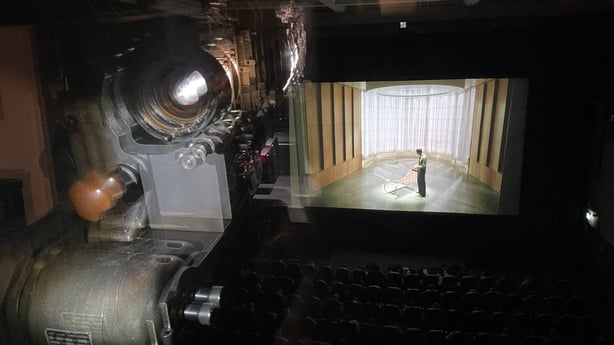
I received that same print at the IFI for Christmas last year, but not until January did we have time to put it together and prepare it for the public. Unusually, the film was shot using Vista Vision cameras - which expose the film horizontally instead of vertically, allowing for greater resolution and depth of field (Corbet promptly started a trend amongst directors; Paul Thomas Anderson followed suit in the summer and a rake of more Vista Vision films are currently in production).
The Brutalist showcases the art of cinema at its best: visual and emotional immersiveness without succumbing to empty spectacle. In a world of three and four hundred million dollar movies, Fastvold’s and Corbet’s relatively low-budget picture plays as big and ambitious as any of them. I projected the film dozens of times during the months of its release and just couldn’t turn my back on it; and not for the usual technical reasons. Daniel Blumberg’s Oscar-winning score also struck a cord with its recurring overture in progressive styles depicting changing cultural decades (complete with a Europop Italian version at the picture's climax).

There are a lot of things I can’t stomach in middle age that I soaked up as a younger man, such as hard liquor, meat, religion and onscreen violence. But the one which will send me running the fastest: animals in jeopardy. My day is ruined if I stand on a snail (I’m not joking). Now, put a cat in a repeated life and death situation? No. Feline. Way. Gints Zilbalodis’ Flow, an animated story of a cat whose home is devastated by a flood, escaping certain death many times to find refuge on a boat with several other animals… should send me running for the hills. But I didn’t. I cried bittersweet tears and - good lord - even watched it again. How is this possible? Dialogue-free with nary a human in sight, its minimalist style (created on a modest budget with open source computer software) deservedly resulted in an Oscar for Latvia - all achieved without Disney-esque emotional manipulation and sugary spectacle.
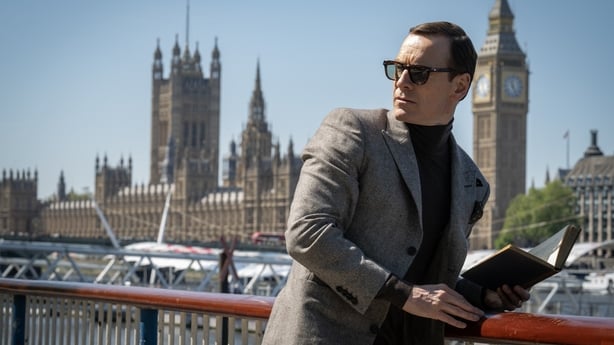
Where have all the adult films gone? You know, films made for a smart audience of a certain age for a night out at the pictures. Online is usually the answer. But Steven Soderbergh’s singular spy thriller (singular in that he directs, produces, shoots and edits his own pictures) Black Bag played at my local multiplex, alas not to packed houses. The reason why it got a proper release wasn’t just because it’s good (it’s brilliant, in fact), but it had movie stars Michael Fassbender and Cate Blanchett topping the cast, as husband and wife spies, one of whom may be betraying their country. Ninety odd minutes of sharp characterisation, cutting dialogue and gunplay, topped off by a delicious supporting cast including Naomi Harris, Pierce Brosnan and (personal favourite) Tom Burke. David Koepp’s screenplay is the very definition of lean (the plot is set up in three minutes instead of twenty) and every single character has as many good lines as the other. The top of my Christmas couch re-watch list.
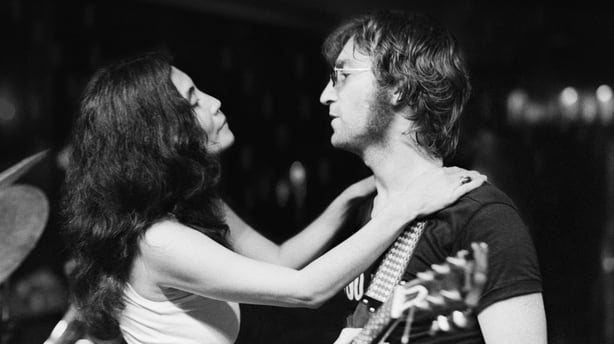
Soderbergh's next film (which he’s currently editing) is a documentary on John Lennon’s final interview, given just hours before he was murdered on the steps of the Dakota Building in New York. Before Lennon and Yoko Ono moved to that fateful residence, however, they spent eighteen months in the early 70s living in a modest flat in Greenwich Village. Kevin McDonald’s doc One to One: John & Yoko captures that tumultuous time of promise, interspersed with amazing concert footage from Lennon’s only musical performance to a stadium crowd since The Beatles. The film takes you on a rollercoaster ride through politics, media, music and the sheer vitality of the times they were living in New York; and for once, gives Yoko as much agency as John in the couple’s story. Another reason to go to the pictures: the sound mix on this film had an extra two channels for cinemas with Dolby 7.1 (like the Irish Film Institute), so the concert footage was beyond fab.
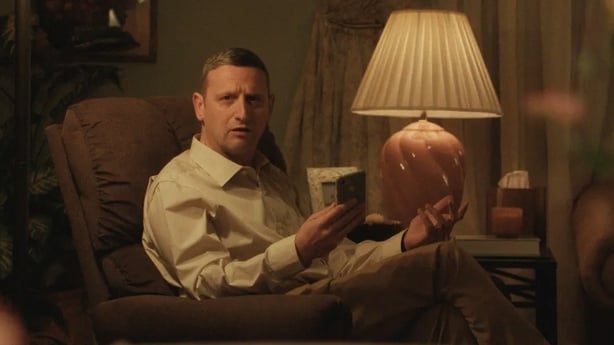
Laughing with strangers is life-enriching, so I find comedy suffers the most from the absence of a full house when I'm at the cinema. Andrew De Young’s Friendship, starring Tim Robinson, Paul Rudd and Kate Mara, busted my gut so much when I watched it from the projection booth, I took my partner to see it in the Odeon up the road. Though the audience was hardly maxed out, I laughed even more the second time at its premise of a suburban male (Robinson) trying to make new friends with a charismatic neighbour (Rudd), garnished with workplace challenges and a dollop of true crime. One can imagine what the Judd Apatow version of this would be like, jammed with cameos and about twenty percent as genuinely funny. It’s Tim Robinson’s film, really, and no one does the modern workplace milieu better than him. But when Paul Rudd steals it - and he does several times - it’s often without dialogue. The best being a silent moment of universal male social awkwardness I hope I personally never have to face. You often feel for these guys, yeah, but boy do you laugh at them.
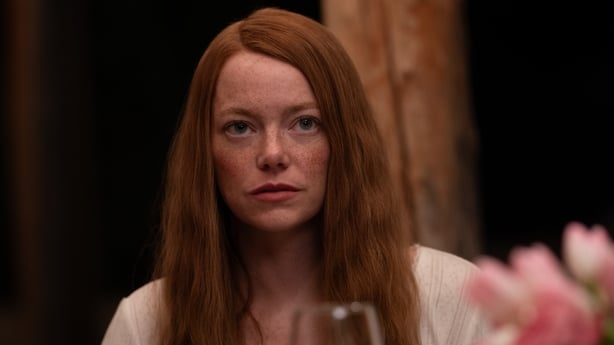
If there's a commonality to my favourite films this year, it’s that I could watch them all again and see myself watching them repeatedly as the years go by. There are plenty of movies I rate as good or excellent, but wouldn’t, for the most part, necessarily seek them out a second time. Ari Aster’s Eddington is a keeper. It's May 2020: a standoff between a small-town sheriff (Joaquin Phoenix) and its mayor (Pedro Pascal) sparks a powder keg, setting neighbours against neighbours in a small town in New Mexico. With a plot like that it’s a western at heart, though with none of the associated tropes - these are the COVID years cranked up to ten, sometimes to eleven. The greatness of this film lies in how it captures every element and touchstone of that period - nothing and nobody is spared. Both the self-righteousness of those following the rules and the selfish denial of others are pushed to spectacular levels of absurdity in the film’s final act. Yet somehow, the film never loses its grip on the characters, who despite their extreme actions, including murder, never cease to be sympathetic - that’s the power of Aster’s writing, in my book the best original screenplay of 2025. Divisive on its release (of course it was), this film will be watched by generations to come.
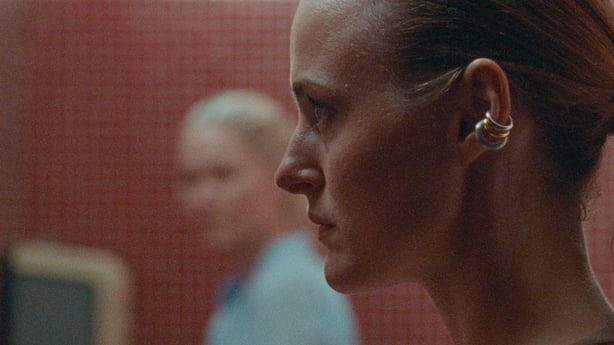
After an alleged sexual aggression between two 6-year-old boys, the parents and school staff are called in to clarify the incident in Halfdan Ullmann Tøndel’s Armand, Norway’s submission to this year’s Oscars. The son of cinema heavyweights Liv Ullman and Ingmar Bergman, Halfdan’s film ultimately becomes the unintended victim of its own strong premise and cast. You get so invested in the story that you can’t help feeling a little disappointed when it turns into a bit of a psychodrama with semi-surreal visual flourishes. Still, it contains my favorite performance by an actress this year in Renate Reinsvav’s portrayal of Elizabeth, a famous Norwegian actress and the titular character’s mother. Her entrance in this film is a doozy, first seen in a speeding car and then in a mostly deserted school corridor. Her sartorial choice is a swooshing rain coat, crunching as she marches towards the classroom for the meeting. Elizabeth’s smiley aloofness may initially seem offputting, but I couldn’t help but get sucked in by her enigmatic attitude. You know when a joke starts out funny, but goes on too long, stops being funny, goes even longer and starts being funny again? Well, Renate laughs for seven minutes straight at one point, without any cuts. You could feel the silence and awkwardness in the cinema I was sitting in, never mind the bemused reaction of the other characters sharing the screen. She deserved her standing ovation at Cannes for this scene alone.
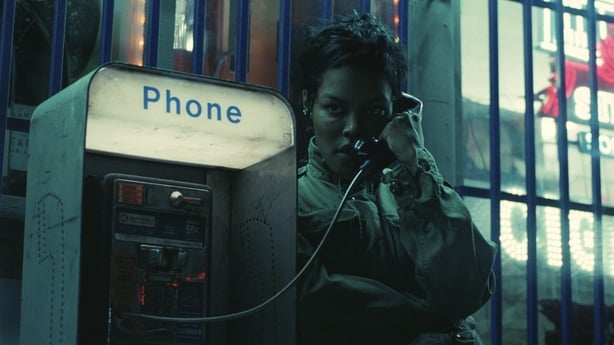
The resurrected film format that is VistaVision struck again in Paul Thomas Anderson’s One Battle After Another, his first movie in a contemporary setting since Punch Drunk Love in 2002. One of the reasons Anderson has avoided the times we're living in is that he hates cell phones; not as a concept, but how they tend to corrupt narrative. He had no choice, however, if he wanted to adapt Thomas Pynchon's novel Vineland, which he had been struggling to do for twenty years (maing a decent fist of Pynchon's Inherent Vice in the meantime). Honestly, at this point, I think it's clear Anderson is incapable of making a less-than-great film, and this one is no exception.
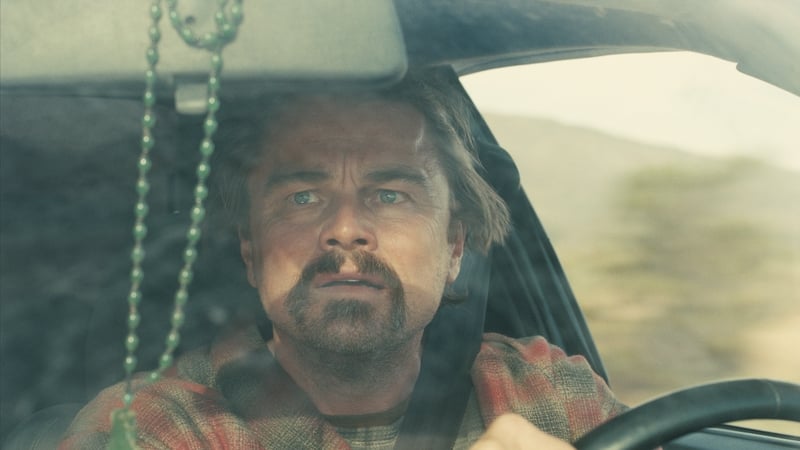
When an evil enemy resurfaces, a group of ex-revolutionaries - led by a shambolic Leonardo DiCaprio - reunite to rescue Leo’s daughter, Chase Infiniti, from the clutches of Sean Penn. Want 161 minutes to feel like 85? This one is an absolute triumph of editing. Studded from start to finish with memorable performances from the entire supporting cast, right down to the last bit player, Anderson continues his penchant for mixing professional actors with non-actors, achieving results like no other contemporary director. This picture feels so real and vital - and like his whole filmography, so eminently rewatchable. It’s only with repeated viewings do you realise how much narrative shorthand he is getting away with to keep up a pace that spans sixteen years. The emperor of the axiom ‘There are no small characters, only small actors’ continues to be Benicio del Toro, this time playing Sensi Sergio St. Carlos. You come away wishing you could sign up for his classes - and afterwards perhaps share a few small beers.
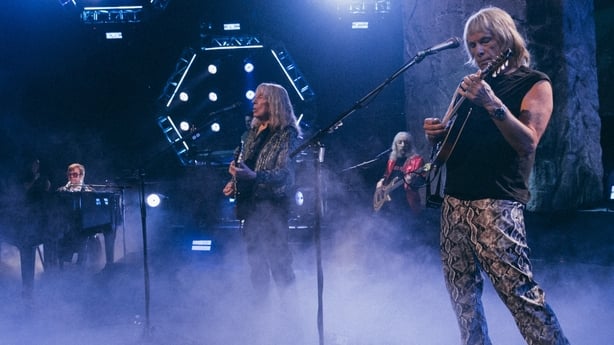
Much like the original back in 1984, Spinal Tap 2 came and went in the cinema, with its true home awaiting in repeated home viewings. Nigel Tufnel, David St. Hubbins and Derek Smalls may be back together, but Rob Reiner's film isn't really a full-blooded attempt to do a sequel to the quintessential rockumentary. Like many, I have a decades-long affection for these fellows, and I’m down with any excuse to get them in the same room to improvise and gently riff off each other. As a result, this one plays way better on a second watch. And is one of the few films I can think of I enjoyed more at home than in a cinema.
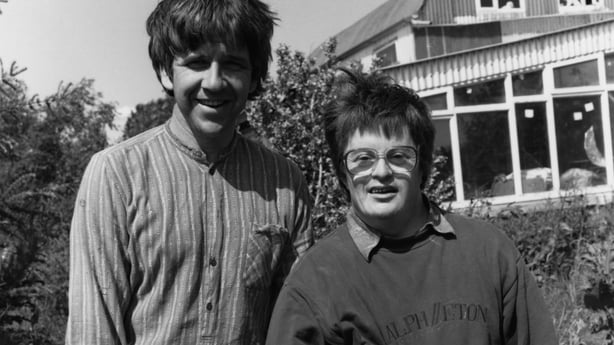
My film year closes closer to home with Eamon Little’s documentary, Born That Way, probably the most poignant picture I’ve seen in 2025. A portrait and celebration of Patrick Lydon, a social activist and former music journalist, who co-founded the Camphill Movement, a home and centre dedicated to not just caring for people with diverse mental abilities and challenges, but providing them with social nourishment. I’m not a religious man anymore, but by all definitions Patrick Lydon is a goddam saint for how he spent his life. Editorially, as a piece of documentary, this is an excellent watch, managing to document Patrick’s final year as he succumbs to motor neuron disease (MND), while recounting his journey and life’s work. I really recommend adding Patrick Lydon’s story to your Christmas (or new year) watchlist. Yes, you’ll be in tears; but in this time of great division, you’ll also see what a powerful effect just one person can still have on the world.
Starting with a brutalist and ending with a saint, 2025 sure was a good year for cinema. What of the next twelve months? Among my picks: Christopher Nolan swaps the land of Oppie for one of myths and legends when he brings us The Odyssey. So epic they had to invent new cameras to shoot it with. One half of the team behind The Brutalist, Mona Fastvold, takes to the director’s chair this time for the 70mm musical The Testament of Ann Lee. There’s Dune: Part Three, one final roll in the desert with Timothée Chalamet and Zendaya before director Denis Villeneuve goes in search of the new James Bond. Emerald Fennell tackles Wuthering Heights with Barbie and Frankenstein’s monster (AKA Margot Robbie & Jacob Elordi). Tom Cruise will be back, in VistaVision no less, starring in Judy, the mysterious new film from Alejandro González Iñárritu (expect a dramedy of epic scope). Robert Eggers' Werwulf will stalk us next Christmas. If you saw his Nosferatu you know what you're in for (it has most of the same cast).
But before that, come summer time…he’s back! Steven Spielberg will return to the summer blockbuster season for the first time in eighteen years with, well, nobody really knows yet. Except it that stars Josh O’Connor, Colman Domingo and Emily Blunt. And that it might be about UFOs. Oh, I’m sold.
