


What does Irish culture and identity look like one hundred years after the formation of the state?
This question is at the heart of we make our own histories on display at the National Museum of Ireland, Decorative Arts & History, Collins Barracks until 30th June 2024.
Curated by Maolíosa Boyle and Jonathan Cummins, the exhibition is the culmination of artist Anthony Haughey's residency at the Museum from 2021 - 2024. He introduces the exhibition below.
During the summer of 2021, I established an artist's studio in the National Museum of Ireland – Decorative Arts & History, conceived as a learning lab where dynamic conversations, workshops, and durational art processes resulted in the co-creation of artworks that reflect an exciting time of change in Ireland.
The museum’s collections reveal Ireland’s past as a colonised country entangled within the British Empire and its revolutionary struggle for independence.
A central proposition during my residency was to consider the National Museum of Ireland as a site of social transformation. Museums are central to nation-building and the formation of cultural identities – how we view ourselves. If this is the case, it is apposite to ask, What does Irish culture and identity look like one hundred years after the formation of the state? And does the museum reflect a culturally diverse society?
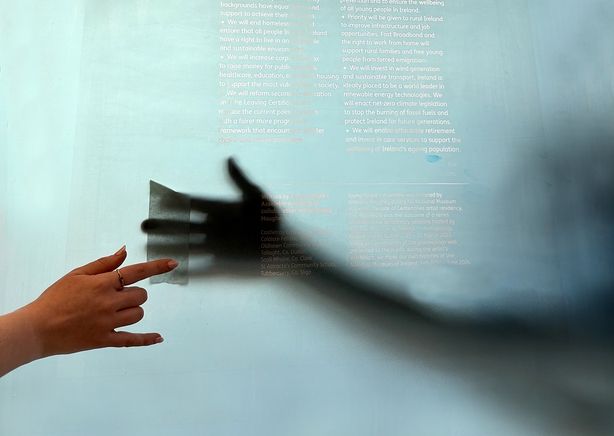
People's Assembly Manifesto For a Future Ireland
A provisional answer to these questions has resulted in a series of collaboratively produced artworks positioned within a historical-contemporary nexus, an intersection of colonial and postcolonial histories.
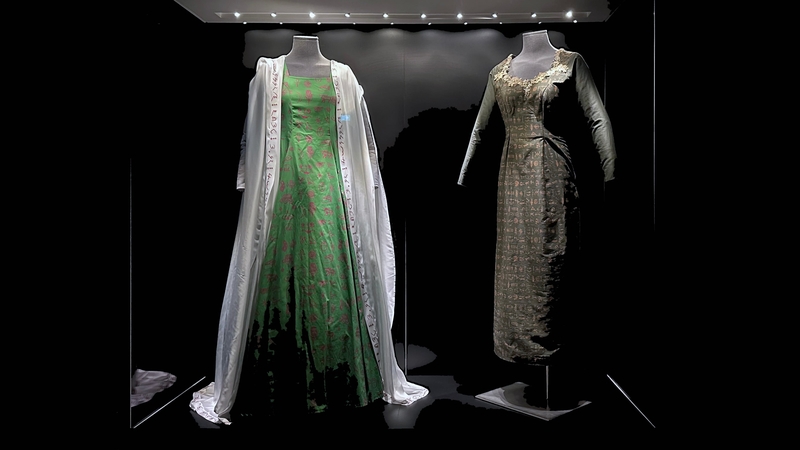
A Dress For Akumna is an African-Irish dress designed and produced collaboratively with Nwanne Diuto, a Nigerian women’s collective, and artist Bláithnaid McClean. The dress invites a conversation about social change in Ireland, where cultural identities are transforming through a process of hybridisation, described by Homi Bhabha as a reversal of colonial domination (1).
Many of the collections in the museum reflect a history of European colonisation of Africa, the subject of my most recent collaboration, a series of postcolonial dialogues mediated through artefacts selected from the ethnographic collection by participants from Sudan, South Africa, and Nigeria. In the resulting short film Remember to Forget the Past, three women narrators explore how the shadow of nineteenth-century colonialism continues to affect their lives today.
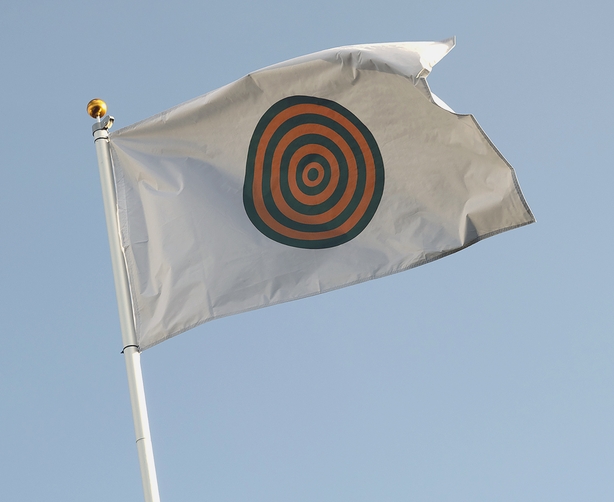
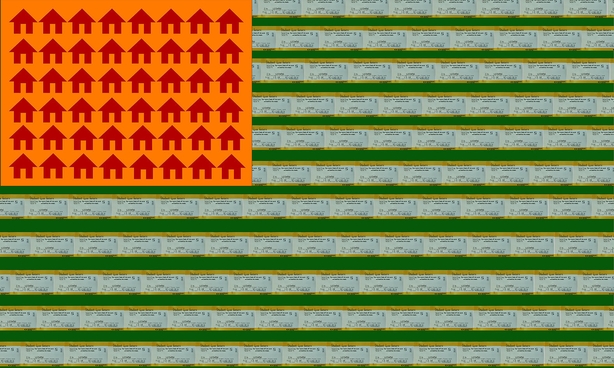
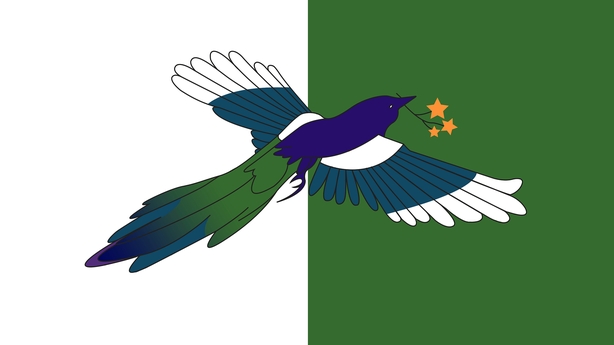
A Flag For Ireland consists of more than three hundred flags produced during a series of artist-led workshops where participants gathered to redesign Ireland’s national flag and to reflect on how Ireland can embrace a republic recognising people from all traditions and cultures.
In a similar register, Young People's Assembly is a video installation documenting an all-island forum of fifteen to eighteen-year-olds engaged in deliberative democracy discussing urgent issues facing their generation. An outcome of the forum is a Manifesto, declaring their beliefs, values, and intentions for a future Republic, a united Ireland.
The culmination of my residency will result in the accession of several co-produced artworks into the museum’s permanent collection – a multitude of cultures entering and transforming the museum. The exhibition title, we make our own histories, adapted from Karl Marx, insists that we are central to shaping historical narratives.
The discovery of my grandfather’s contribution to the 1922 War of Independence (documented in the Bureau of Military History) led me to the National Museum of Ireland and the residency. The outcome is a historical continuum that continues to shape and inform collective identities.
In years to come Akumna will visit the National Museum with her teenage son Kamsi Reign, and daughter, Kosi Anaya. Imagine their surprise when they discover the dress made for their mother in 2022 – part of the museum’s permanent collection, an artwork that utterly embraces transcultural identities and a transforming Ireland.
we make our own histories is at National Museum of Ireland – Decorative Arts & History, Collins Barracks, Dublin until June 2024 - find out more here.
(1) Bhabha, Homi K. (2004). The Location of Culture. London; New York: Routledge.
