


With UK and US elections around the corner, the importance of data privacy and the pressure on social media companies to examine political advertising has never been higher. Brittany Kaiser, who numbered among the Cambridge Analytica whistle-blowers has written a timely book for those hoping to understand what has happened in this market in the last few years.
This 400-page exposé isn't purely a look at how Cambridge Analytica (or SCL Group) operated. It is also an interesting examination of how someone can slowly abandon their ideals in the name of greed. The book also shows how the best intentions can be corrupted by power and the influence of a charismatic superior.
How well that really works will depend on how much the reader buys Brittany Kaiser's recounting of events and her attempted reinvention. From early on, the author expresses admiration for Julia Assange - that's an indication that Kaiser would not mind being mentioned in the same breath as the WikiLeaks founder.
However, it is important to remember that her 'shine a light' moment came well after the cracks first began to show at the controversial data company. She is keen to express her naivety, only fully reckoning with the company's misdeeds in the emotive closing chapters.
This is hard to accept, however, as the company's politics and modus operandi are clear from her first, chance encounter with CEO Alexander Nix. There were also several other early warning signs.
Her involvement in the company's dealings escalates quickly with an acknowledgment of her ambitions, built around the need to provide for her family. She enjoyed a privileged upbringing but her parents had become badly affected by the 2008 crash and her father's health was rapidly deteriorating.
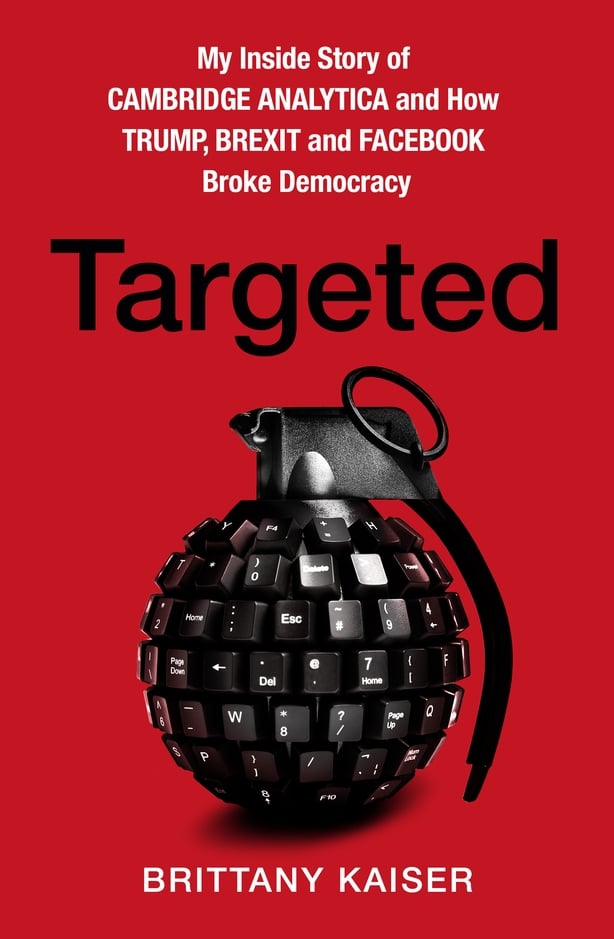
Cambridge Analytica’s job is explained through allegory - if you want to sell more Coca Cola at a cinema, don't run an ad, simply turn up the temperature and make everyone thirsty. We learn in Kaiser's work how they took the political atmosphere of nations around the world to boiling point.
This deal-with-the-devil story does produce some fascinating insights into the money of big data and the way Nix operated. Slow to pick up, the book becomes much more interesting when we finally arrive at the Trump and Brexit campaigns. However, Kaiser hasn’t fully developed the craft of setting a scene and her descriptions of locations like bars and hotels are dull. Entire sections of the book, including the naming of individuals and entities wholly irrelevant to the main narrative, seem unnecessary.
So too are the couple of glossy pages padding the centre of the book. These contain full colour photos and even selfies. This seems superfluous and I feel the book would have instead benefited from more extensive referencing and perhaps an index.
Kaiser is prone to repeating herself and as a result the book is too long. Some of its nearly 400-page length would have been better served elaborating on other issues such as non-political contracts. The author is curiously eager to establish how limited was her knowledge of events as they were unfolding, a strange admission in an ostensible 'tell-all.'
Kaiser wrestles with reconciling the work she does for her Republican clients and her old life as a campaigner for then-Senate hopeful Barack Obama. This account is sometimes contradictory. One instance outlines her decision not to vote in 2016, partly out of fear that her employer would see that she had supported Hillary Clinton. The very next paragraph reveals she had still "weaseled" a ticket for a VIP victory party for that candidate.
We do get to read about voter deterrence (read 'suppression'), native advertising, the inner workings of Cambridge Analytica, Facebook's controversial Friends API, the big money of data brokerage, psychographics, behavioural microtargeting, and an enjoyable section on how we are tracked through cookies.
While it handles the subject matter proficiently, it doesn’t exactly reveal much new about the data science or profiling models that came out with Christopher Wylie's whistle-blowing.
It is all coupled with half-baked commentary - perhaps reassuring for those of who live on this island - on how data privacy is a core principle of the EU. There’s still enough here for the reader who feel the need to consume everything concerning the darker aspects of our current political moment. Exercise caution, however, in assuming that the author’s account is exhaustive.
In sum, Brittany Kaiser's tiring and protracted move towards an exit seems to come not entirely from an ethical dilemma and more from a lack of recognition for her work and lack of support during the fallout.
Cillian Sherlock
