



RTÉ Sport's Damien O'Meara welcomes a new book which profiles Bill Shankly, Jock Stein and Matt Busby with some fresh thinking, eschewing oft-recycled stories which are already circulation through previous biographies.
By the time Jock Stein's thirteen-year reign as Celtic manager ended in May of 1978, Bill Shankly had already spent four years in premature retirement while the conclusion of Busby's second spell as Manchester United manager was just weeks short of its seventh anniversary.
Almost a half century on, with the landscape of the game unrecognisable from that which their clubs dominated, the trio still cast a lasting shadow over some of the sport's most famous institutions. To a man they are immortalised at their former places of employment, their statues a routine stop for thousands on match day, while their names adorn stands, roadways and famed gateways.
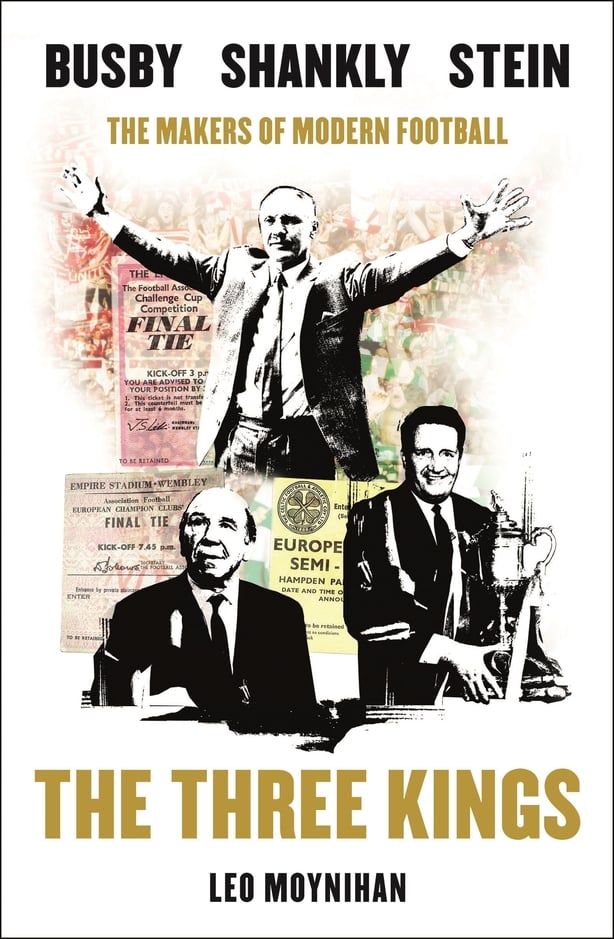
The trio remain the unquestionable patriarchs of Manchester United, Liverpool and Celtic, their stories have been told repeatedly, they are the subjects of much-repeated anecdotes, the central figures of excellent biographies. Thankfully, in the case of this new work, a fresh and insightful angle has been well executed.
The precursor to a documentary from the producers of the acclaimed film documentaries Senna, Amy, Diego Maradona and Supersonic, The Three Kings presents a compelling examination of the common threads and experiences which the men the book anoints 'the makers of modern football’ have in common.
Raised within a 20-mile radius of each other, they were the products of mining stock for whom football became a means of avoiding a prolonged career in the pits. They were men born of the working class, survivors of war who would transform the game beloved by so many of their peers, their welcome weekly distraction from the hardship of the world of the day.
Many of the parallels between the men are remarkable, so too are the collegiate relationships which are recounted, ones which may appear foreign in particular to fans of Manchester United and Liverpool. There is a revealing insight into the strength of the relationship between Busby and Shankly in particular, the former at one point encouraging his North West rival not to follow through with a threat to quit Anfield - that act some United fans might hope in retrospect had played out somewhat differently.
We are brought abroad the Glasgow Celtic team bus en route to the Estádio Nacional in Lisbon where they would become the first British European Champions. Shankly was by then in his eighth year as Liverpool manager, supporting not just his countrymen but their manager, his friend, seeking history.
Understandably there are areas covered here with which fans will be familiar, in particular Busby’s rebuilding of United post-Munich air disaster and Shankly’s disillusionment at his treatment by Liverpool post-retirement. All are dealt with, without the author falling into the trap of repeating stories often told in the past. Stein’s family background is intriguing, his Protestant upbringing was once considered enough to end his ambition to manage Celtic. His father’s allegiance to the Orange Order has often been airbrushed from other accounts.
Staunchly opposed to any form of sectarianism throughout his life, Stein at one point leaves his family home for an Old Firm game with his mother’s best wishes and his father's, hoping for a draw so as to not see either his son or Rangers the subject of a negative outcome. The book doesn’t shy away from the harsh sides of the men's characters, - considered by many to be father figures, they could be the distributors of some tough loving. This was demonstrated in the sometimes callous nature with which all three were capable of dispatching from their clubs, servants who had fallen below their ability to contribute to on field efforts.
Having read the book, the reader may well be left wanting for an era where the connection between player, manager, club and community was something more wholesome that the commercialism and detachment of the modern era. Maybe the ultimate lesson is that football, as Shankly once suggested, has unquestionably become "a game made complicated by people who should know better."
Damien O'Meara
