


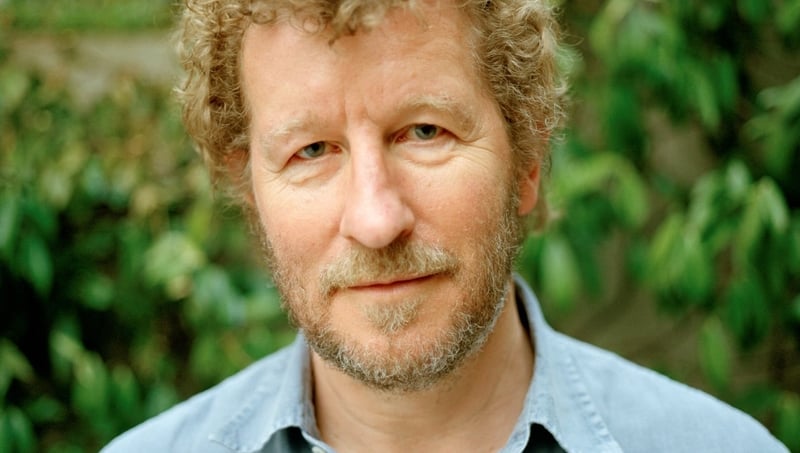
Sebastian Faulks' new novel delves back into the familiar Faulks milieu of World War II and, later, into the legacy of France's colonial past. Donal Byrne has been reading Faulks' latest best-seller...
There are two things that have distinguished Sebastian Faulks as a great novelist - the tenderness of his writing and his ability to take a sometimes dense historical historical sequence and fashion it into an accessible, accurate and absorbing foil for his characters.
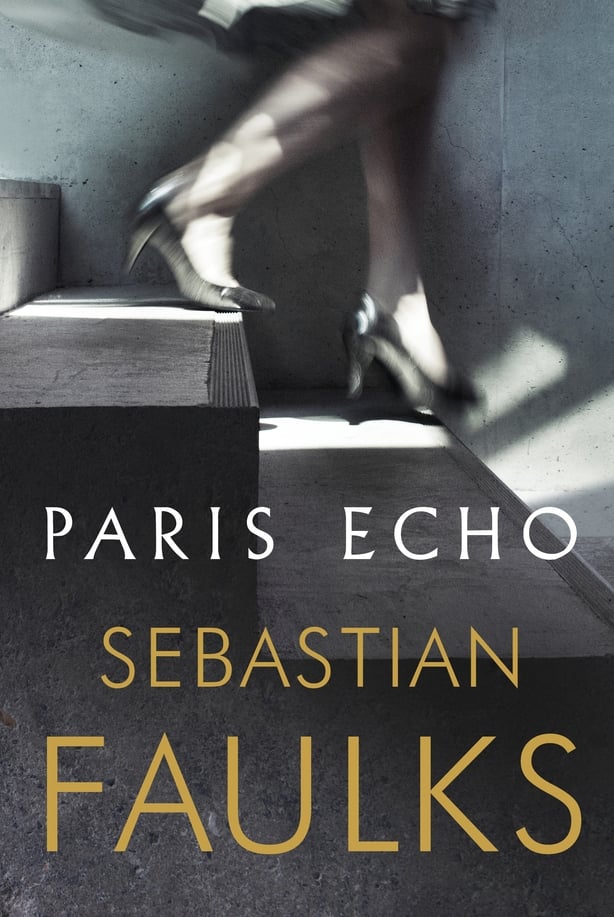
There is, of course, history at the centre of his latest novel, Paris Echo, which delves back into the familiar Faulks' world of World War II and, later, into the legacy of France's colonial past.
Hannah, an American academic, returns to Paris, the city in which she was betrayed by a Russian lover - her first real relationship - to pursue the experience of French women during the Nazi occupation. There she meets and then, quite improbably, takes in a Moroccan teenager who has left his home to discover more about the mother he never knew.
It takes time to establish where this is all going, but the novel does settle into a challenging and curiously engaging pattern of these disparate lives. Neither party has much in common with the other, but the vacuum isn't laboured, rather it's a challenge to the reader in its own right. For the most part, it works.
There are two very rewarding areas of French history explored. The experience of women during the German Occupation is very different from the usual narrative of brave Resistance girls hiding documents in their underwear or boldly approaching checkpoints on some dangerous mission.
The account of one young woman's encounters with an older German office perfectly exemplifies the complexity of the relationship between the occupied and the occupier. It is both moving and contextual - poverty and its deprivations, gifts, attention and flattery are all treated in a new perspective. One woman's recollections of her life during the Occupation and its life-long effects is one of the highlights of the book.
While Faulks' character Hannah pursues her work as professor, while young Tariq embarks on journeys of discovery on the Paris Metro, the names of whose stations punctuate different contexts and adventures. His foray into the banlieues - administrative areas of French cities - in search of work are promising, albeit conducted in a fug of marijuana smoke. His experience working in a chicken shack restaurant is funny and moving.
Slowly, the gauche teenager becomes aware of what these banlieues represent in today's world. They are ghettos where immigrants, many of whom are from former French colonies, live isolated, removed from conventional French society and culturally alone.
The novel deals not just with the dreadful legacy of the French deportation of Jews on behalf of the Nazi occupiers but also with how that legacy continued. So you get France's treatment of the supporters of Algeria's National Liberation Front and the involvement of the same man, Maurice Papon, in both the Nazi and Algeria-related episodes.
It was the self-same Papon who carried out the deportations and it was he who would oversee the crushing of the Algerian protests in the early 60's. The Paris police brutally suppressed the riots and the culmination of that suppression was the mass drowning of literally hundreds of people in the river Seine, their bodies washing up for weeks afterwards. Maurice Papon, however, enjoyed the protection of the French State for almost his entire career. He died only eleven years ago.
For me, the incendiary, crime-ridden wasteland that is the banlieues - in effect desolate landscapes ruled by gangs and bereft of law, order or security for those who live in them - and their origins in the political excision of immigrants are shameful reminders of how the Republic has failed its own principles.
I was more than keen to have a more comprehensive treatment from Faulks, particularly in the context of those Paris massacres and their hidden legacy.
Where this book undermines its own strengths is when Faulks uses the condition of temporal synaesthesia, a form of time travel, as a mechanism for bringing the past into the present in his narrative. During some episodes, when ghost-like characters enter the plot, I felt as befuddled as Tariq after dipping into a particularly potent bag of kif.
For all the guidance Faulks gives us on France's World War legacy and the post-colonial blindness of which the country is evidently capable - and which may at some point threaten France itself - he has ultimately failed to mine the material that would undoubtedly have made for a novel as engaging as any of his previous tales.
As for Hannah and Tariq, where they eventually find themselves is of little consequence to this reader, such is the banality of it all. A happy ending was a deflating experience, given what Faulks had so deftly explored in the book up to that point.
Donal Byrne
