




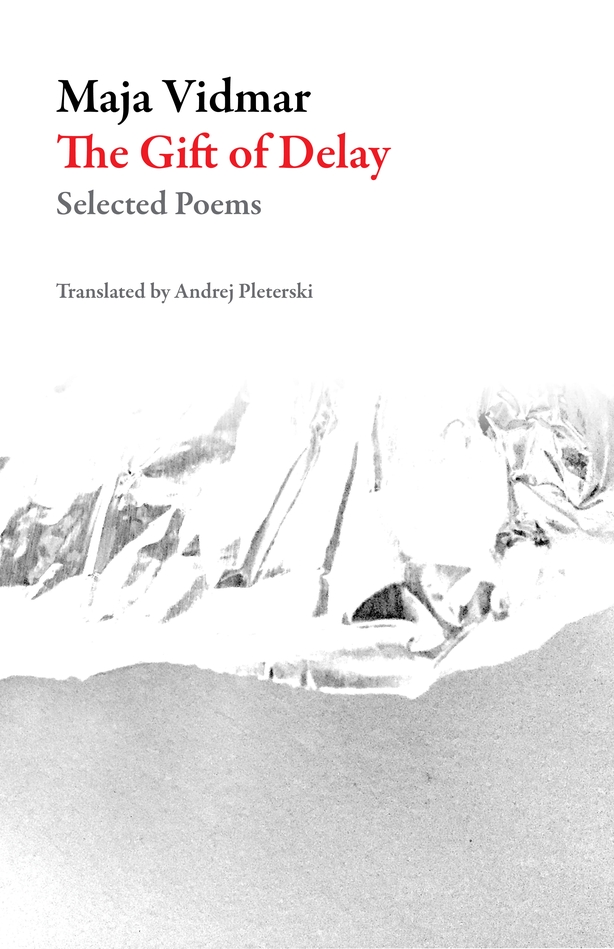
Maja Vidmar’s sprightly work evades easy summary as it glides noiselessly between time in the natural world and navigation through relationships, whether with family members or lovers.
Like Paul Celan, the Slovenian poet writes short lyrics – though not exclusively so – and there are some longer poems here in work that is drawn from a number of volumes.
In Dalkey Archive's engaging 121-page selection, the best of her poems have an almost commonplace charm, based on everyday conversation and a tactile familiarity with the ordinary interactions of the everyday. You do not sense a lyric persona who has cut herself off from the world through writing, but rather a writer who understands the messiness, the inevitable disappointments, the quest for quietude, the longing for an end to anxiety. Notwithstanding whatever may be going on, beauty assails the poet figure and is her constant redeemer. Nature can be a transcendent force, however tentative its tendrils may be.
Viewed from above,/what’s more beautiful than/the flashing river of light/on the wet road. (The Prayer of the Night)
She looks often to the animal kingdom and it makes for an interesting yin to the yang of her poems about nearest and dearest, be it daughter, son or lover. Her wonderful poem, The Magpie, is wistful and dispirited with a note of low expectation but a willingness too to be pleasantly surprised. The poem begins as follows:
When something/shines up on the sidewalk/or down in the grass,/it strikes me as if it were here what/ I might have been/looking for all this time.
There are short, sometimes oblique or enigmatic poems about birds and little creatures throughout the book, from the eponymous magpie, to the titmouse. Two consecutive poems are simply called The Ladybirds and The Squirrels. In essence, her best productions are tremulous poems that set off little tinkles, minuets or minute waltzes of verse.
The Couple, on the other hand, appears to take a pitiless, unflinching view of the business of getting through a relationship, day in, day out. The opening couplet sets the scene well:
We’re alone/on a lonely island./Waiting for a ship/that may not arrive.
Later poems in the book, such as Disappointment 1 and 11, hark back to the unillusioned realism of the aforementioned poem, The Couple.The earlier poems selected from her 2012 collection, How You Fall in Love, seem somewhat indulgent and gratuitously confessional. Perhaps they have lost texture in translation and may simply make more sense in Slovenian which is not meant to fault Andrej Pleterski, who has quite evidently done sterling work in the translations. The stance and tone of this particular group of poems to which I refer are markedly different from the poems in Presence, the first book from which selections are drawn, published in Slovenian in 2005. The poet’s first book, Distances from the Body - Razdalje telesa - appeared in 1984.
It is clear from the poems assembled here that Vidmar has deliberately employed a variety of structural approaches throughout her three decades and more in verse, be it her work in free verse or the more structured poems.
All of a Sudden is a wonderfully simple poem about the newly-minted draft of a poem which is lifted by a gust of wind out of the poet’s reach. For You is a perceptive, self-deprecating poem about the act of writing poetry itself, how her verses have been tarnished by the desperate attempt to be great. The poem is structured as one long sentence of 16 exceptionally short lines berating the over-achiever that the poet feels she may be, as she contemplates the wish for perfection: this strong desire/has ruined quite/a few of my good/poems.
Evasive, challenging, and resistant to anything formulaic or predictable, Maya Vidmar is clearly one of the finest European poets writing at present, as evidenced by this very satisfactory selection. Peter Semolič ’s appealing essay, dense with a particularly close reading, investigates these different facets of her development, by way of introduction.
