


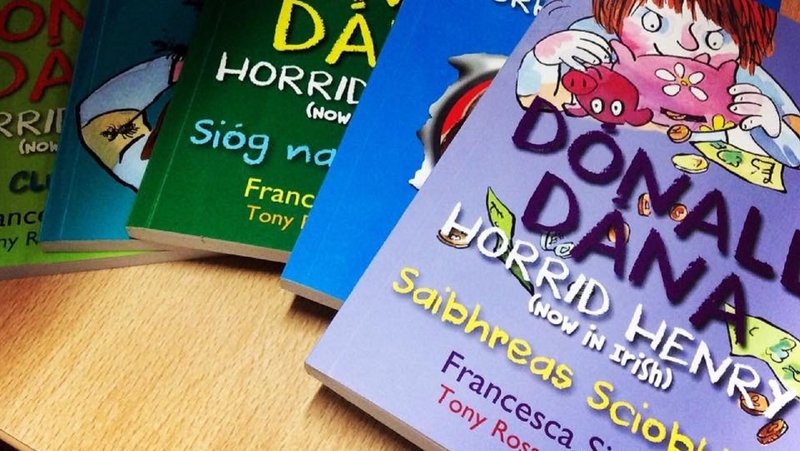
The arguments for and against the translation of popular “branded” books for children are many and various and there is no doubt that there are many wonderful and beautiful books "as gaeilge” available but children are as susceptible to branding as the rest of us! Thus, the translation of Enid Blyton’s Famous Five and the Horrid Henry series by Cló Iar Chonnachta was a shot in the dark that has proved very successful.
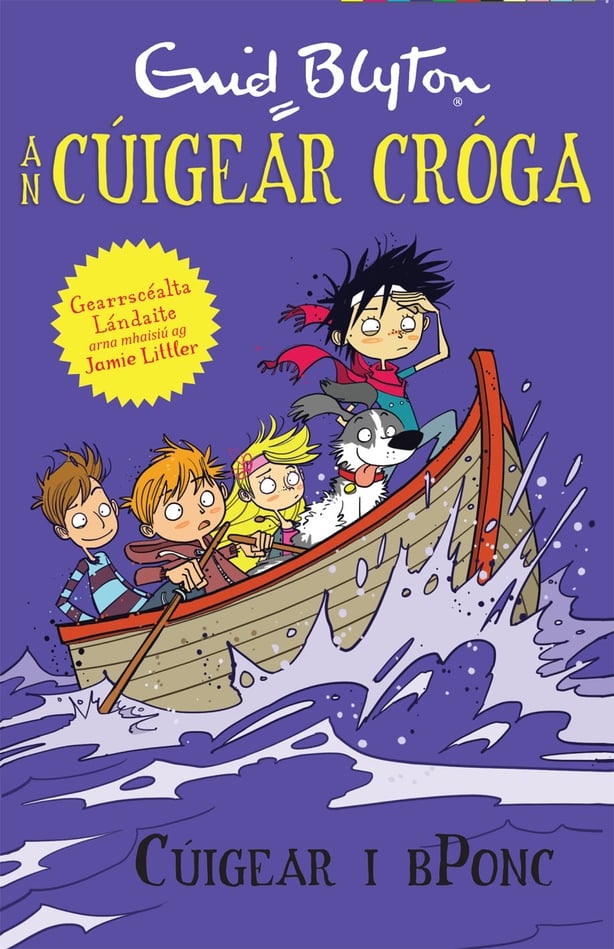
Children who take to reading in the middle classes of national school can read up to a book a day, and the challenge for those of us rearing native speakers in the Gaeltacht in to ensure a regular supply for them. It is with this in mind that three years ago the first series of An Cúigear Cróga was published. This is the title given to Julian, Dick, Anne, George and Timmy the madra as Gaeilge. Their names were not translated, but efforts were made to make the script as relevant to Irish children as possible. Anyone who has ever attempted translation will know that the challenge is to bring the meaning of the script to life, as opposed to changing all the words from one language to another. This is of particular importance when you approach translation from English to Irish, when the market is so varied.
Fainic! Seo chugainn ‘Dónall Dána’! Tá Horrid Henry ag teacht i nGaeilge https://t.co/UBjGU19ej1 via @tuairiscnuacht
— G Ní Thuairisg (@Gormfhlaith) October 28, 2016
You are trying to ensure that children who are learning Irish as a second language in the education system will be able to read the book and - more importantly - enjoy it. You are also attempting to attract those native speakers in the Gaeltacht to whom I referred to earlier. The balance between simplicity, verbosity and the actual story is sometimes difficult to achieve. Personally, I always translated with my own children in mind and the way we would speak to each other. Keeping it simple really is the key.
Ultimately, no matter which language it is written in, a good story is a good story. Children don’t overanalyse. They tend to live in the moment. They will enjoy a good yarn at all times.
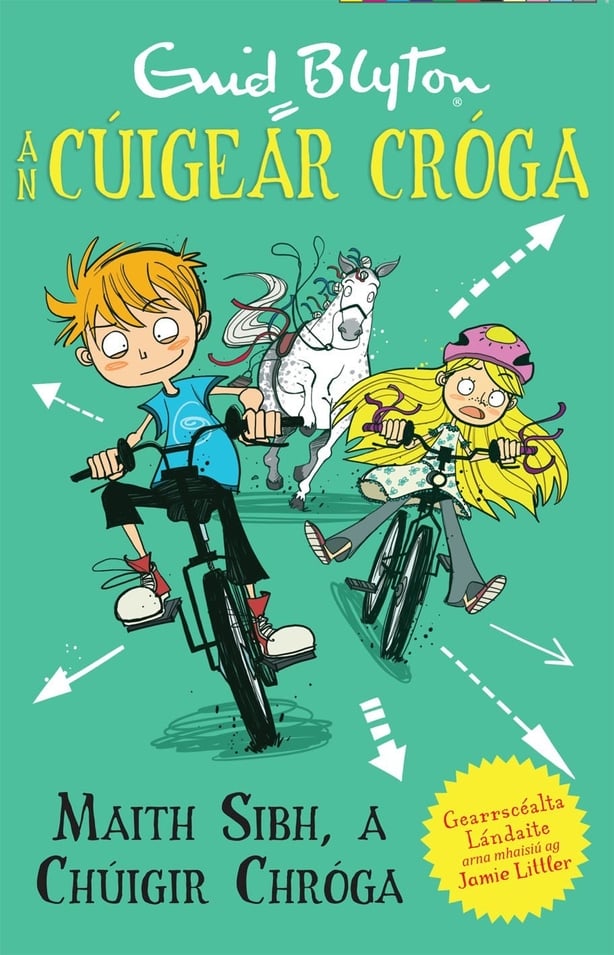
The perception of Gaeilge as old-fashioned and the oft-quoted and much resented (by those of us who speak the language) references to Peig can now be put to bed. And, when you look at the bigger picture that is what this is about . It is about providing more books to children who read Gaeilge, books that their peers read in English. And it is about persuading the children that their language is equally as cool as the one spoken by readers of Enid Blyton’s Famous Five, Horrid Henry, Dork Diaries and Roald Dahl. It is also about demonstrating to those who have a mortal dread of our native tongue that Gaeilge is accessible, fun and trendy.
The Dónall Dána (Horrid Henry) and Cúigear Cróga (Famous Five) books are published by Cló-Iar Chonnachta agus translated by myself and my colleagues Gormfhlaith Ní Thuairisg, Marion Ní Shúilleabháin and Caitlín Ní Chualáin. Available online at cic.ie and good bookshops nationwide. Bígí ag léamh!
