

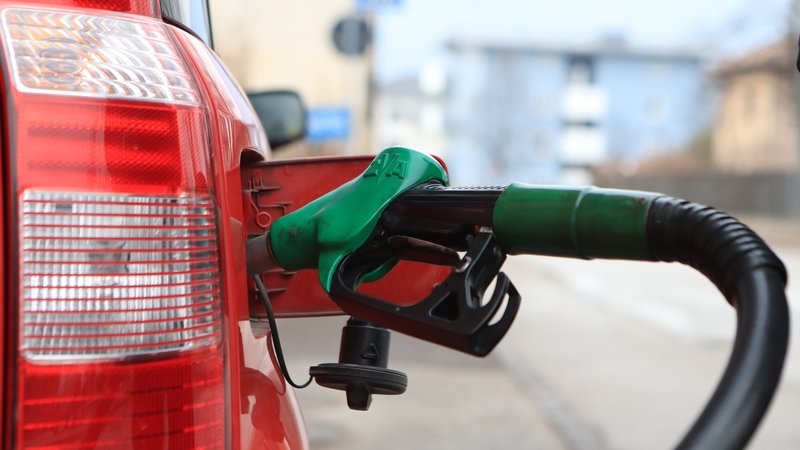
The Chief Executive of the fuels industry body Fuels for Ireland has said the organisation has been consulted about a proposed list the Government has drawn up of 100 designated critical fuel stations in the event of a major fuel crisis.
Kevin McPartlan described an exercise undertaken by the Government "a couple of weeks ago" as a "drill" that the fuels industry was part of.
Speaking on RTÉ's Saturday with Katie Hannon, Mr McPartlan said it is done "every couple of years" by the Department of Environment, Climate, and Communications, involving stakeholders, to discuss how to manage in the event of any major disruption to fuel supply.
But this time, he said, it factored in any potential impact on fuel supply of the war in Ukaine.
"They plotted the scenarios around the current horrible situation in Ukraine - that makes sense. But we don't want people to think there's any likelihood of this happening any time soon," Mr McPartlan said.
"It's a drill, it's an exercise; it's designed to plan for the worst-case scenario, and that's what we should do.
"It's prudent, it's a proper function of Government to do that in my opinion."
Mr McPartlan said he would "be lying" if he said there was no risk of this happening, but added that this does not mean it is a strong possibility.
He said that if there were a catastrophic interruption to the supply of fuel, ambulances, fire engines and garda vehicles still need to be able to move about.
"So this list is not a new thing, it's been there all along," he said.
"It's designed for that worst case scenario, what you would do if there was a very, very significant drop in supply."
Mr McPartlan said they have been consulted about the list of filling stations but have not seen the final product.
He said there is a "very strong NDA" on the contents of the list.
Read more:
Calls for new approach to tax on fuel
Govt not considering price caps as inflation rises to 7.8%
Speaking on the same programme, the Minister of State for European Affairs challenged the fuel industry to be clear about what it is doing to try and limit the impact of rising fuel prices.
Thomas Byrne said that instead of a making a "litany of complaints" about Government policy, Fuels for Ireland should respond to suggestions of apparent "profiteering" by some of its members:
"Why in some parts of the country which had traditionally, for some reason, cheaper fuel than other towns in nearby areas, they've all come up in the last while as well," he said.
"So perhaps we can get an explanation for that."
Mr Byrne defended the measures taken by the Government to reduce the burden on consumers of rising energy prices.
He said a "huge amount" has been done on transport and energy, and the Government is now trying to ensure that they are not just reacting week by week.
