
"A government of laws, not men."
That was the message illuminated across the side of the US Department of Justice in Washington DC on Tuesday.
The quote from founding father John Adams was projected on the top of a banner of US President Donald Trump, which has been hanging from the building for some months.
The nation's capital has seen its fair share of protests since Mr Trump moved back into the White House last year.
A few weeks ago, a golden toilet was installed on the National Mall to highlight Mr Trump's changes to the White House.
A so-called "Jeffrey Epstein walk of shame" also recently made an appearance.
This latest display came - from a group known as Justice Connection - due to the Trump administration’s announcement of an "anti-weaponisation" fund.
Made up of some Department of Justice alumni, Justice Connection said it wanted to send a message to stand for the department’s "integrity" and "rule of law".
But it is not just Justice Connection raising concerns, so too are politicians.
Surprisingly, opposition is gathering pace amongst Republicans.
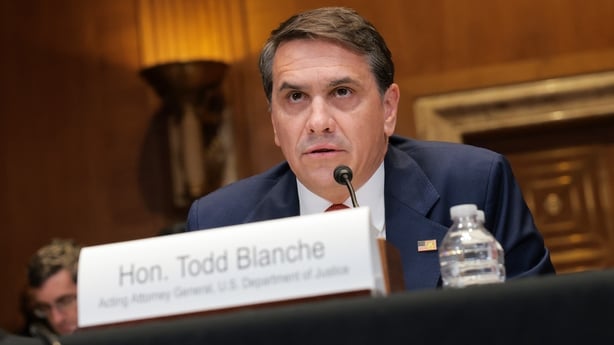
An "outrageous, unprecedented slush fund" is how Democrats described the creation of a $1.776 billion (€1.4 billion) compensation fund for individuals who allege they were wronged by the US government.
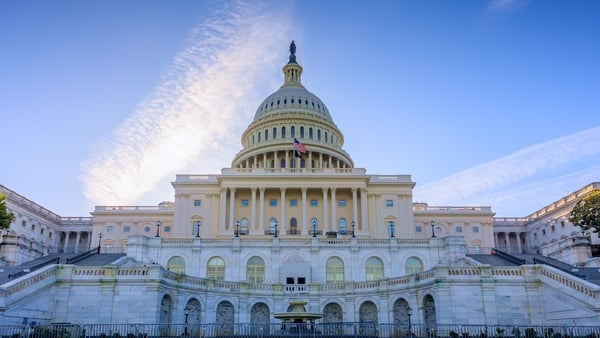
It is widely expected this could benefit those involved in the 6 January attack on the US Capitol and the Trump administration has not ruled out the possibility that those who were convicted of violent attacks on police officers could access it.
Two police officers who defended the US Capitol from rioters that day have already filed a lawsuit seeking to halt the fund.
The complaint alleged that Mr Trump "created a $1.776 billion taxpayer-funded slush fund to finance the insurrectionists and paramilitary groups that commit violence in his name".
Acting Attorney General Todd Blanche’s line of defence was that successful applications will not be based on party affiliation and floated the possibility former US president Joe Biden’s son, Hunter Biden, could be eligible.
While Mr Blanche added the president and his family would be exempt from payouts, his argument has done little to quell a growing and rare revolt in the Republican Party.
Questions over the transparency and necessity of the fund has widened cracks that have been spreading through Congressional Republicans’ support for Mr Trump.
Republicans have repeatedly dismissed efforts to check the president’s powers during his second term, even as he pushed the boundaries of war and trade laws.
A poll from PBS/NPR/Marist in February showed that 68% of Americans believe the system of checks and balances is not working well.
But the mood within the Republican Party grew sour this week, for several reasons, and has resulted in many changing course.
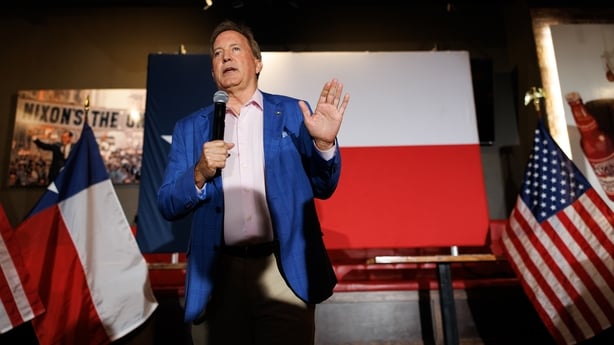
According to The New York Times, Republican senators were "livid" after Mr Trump endorsed Texas Attorney General Ken Paxton over Senator John Cornyn in the state’s Senate race.
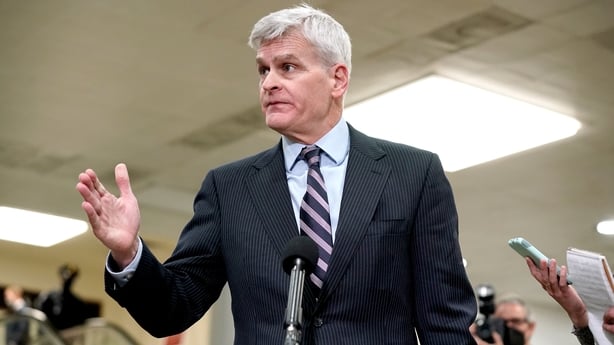
GOP Senator Bill Cassidy of Louisiana also lost his re-election bid after Mr Trump backed a challenger in the primary race.
President Trump has often called on Republicans to fall in line or he would move to unseat them.
Senator Cassidy had voted to impeach him in 2021.
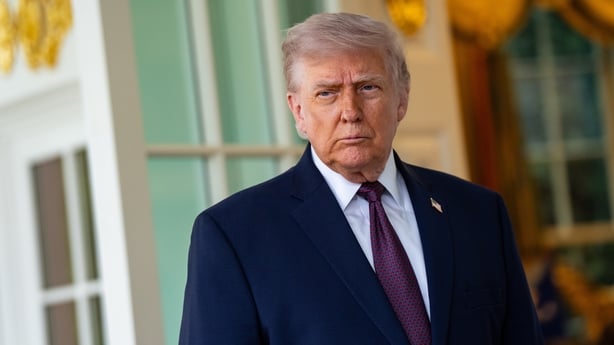
"Get smart and tough Republicans, or you’ll all be looking for a job much sooner than you thought possible," he wrote on his social media platform Truth Social on Wednesday.
"Maybe he doesn’t think he needs us ... but I don’t know. Last I checked, the laws don’t just appear before his desk to be signed," said Republican Senator Lisa Murkowski of Alaska.
The push back is not just coming from the usual Republican critics like Ms Murkowski and outgoing Senator Mitch McConnell, who asked: "So the nation’s top law enforcement official is asking for a slush fund to pay people who assault cops? Utterly stupid, mortally wrong - take your pick."
The backlash came in the form of words and action.
Republicans postponed their plans to pass tens of billions of dollars in additional funding for immigration enforcement agencies on Thursday, with a dispute over the future of the fund emerging as one of the main complications.
NPR reported that while the fund was not part of the measure, enough GOP Senators were so alarmed by the plan that they wanted it addressed before sending the immigration funding to the president’s desk.
Senate Majority Leader John Thune went as far as to say that the White House should have consulted Congress, which technically controls the purse strings, before the settlement was announced.
This, he said, made "everything way harder than it should be".
He also acknowledged that Mr Trump’s endorsement of Mr Cornyn’s opponent complicated matters.
Separately, House Republicans cancelled a vote on a resolution to halt the war in Iran after it became clear they did not have enough votes to defeat it.
President Trump’s so-called primary "revenge tour" has also sparked resistance on the Senate floor.
As he unwillingly heads towards exit door, Senator Cassidy provided a critical vote to advance a stalled war powers resolution that could restrain the president’s powers when it comes to the Iran war.
He also hit out at the fund.
On social media platform X, he said: "People are concerned about paying their mortgage or rent, affording groceries and paying for gas, not about putting together a $1.8 billion fund for the president and his allies to pay whomever they wish with no legal precedent or accountability."
Democrat Senator Richard J Durbin pondered: "Is it possible on 21 May 2026, Republicans finally found an ethical bridge too far?"
The fund is part of an unprecedented settlement between Mr Trump and two of his sons and the Trump Organisation and the government that he oversees over the leaking of his tax returns.
It is not the only agreement that this week sent shockwaves through Washington and beyond. Another element added fuel to a growing fire.
A separate agreement was reached that "forever" bars the Internal Revenue Service from auditing Mr Trump’s old tax returns.
Eyebrows were further raised as Mr Blanche made no mention of the additional term while testifying before a Senate committee earlier on Tuesday.
It was revealed afterwards.
In a conversation with Scott Greytak, Deputy Executive Director of Transparency International US, he expressed deep concern and said he has never seen anything like this before.
He said: "This is entirely extraordinary.
"I think that its association with this $1.7 billion fund for weaponisation of government compensation makes the whole package we are in completely uncharted waters here in the United States.
"Ordinary taxpayers in the United States can't negotiate immunity for future scrutiny of their past tax.
"It is unthinkable that public officials would be able to use political power to obtain protections that are unavailable.
"The question is whether or not Congress is going to rise for that challenge, or whether or not we're going to continue to see a relatively blank check when it comes to these extraordinary breaches of our norms."
Republicans now face a political calculation that could define the midterms and the remainder of Mr Trump’s time in office.
Is loyalty to Mr Trump still an electoral asset?
Or is that loyalty becoming a growing liability amid high prices at the pump and falling approval ratings?
With Congress away for a week, will dissent grow when politicians return or will they retreat under pressure?
Asked on Thursday at the White House, if he was losing control of the Senate Mr Trump replied: "I really don’t know. I can tell you ... I only do what’s right."
President Trump may have a far less nonchalant response if the latter turns out to be the case.