


The first face-to-face talks involving Georgian and Russian officials since their brief war in August have been suspended.
EU and UN organisers said 'procedural difficulties' were encountered on the first day of the meeting in Geneva.
'We encountered procedural difficulties, so we decided to suspend the meetings scheduled for this afternoon and to continue the consultations,' said EU representative Pierre Morel.
'Our purpose is to resume the discussions in Geneva during the coming month, we have identified 18 November for the next session of Geneva discussions,' he added.
Mr Morel would not be drawn into specifics but said 'There is a problem of status, format. I won't go into details. All these, I think we can group them together under the question of procedure.'
Even before talks began, Russia and Georgia failed to agree on the status and participation of representatives of Abkhazia and South Ossetia, the Russians saying that without them 'any agreements concerning their security are impossible'.
The Georgians had argued that the official format for the talks should only include representatives of Georgia, Russia, the US, the EU, the OSCE and the UN.
'We did not find a solution on the way to meet,' said a member of the Abkhazia delegation, midway through the first day of talks.
Georgians and Russians failed to meet face-to-face during the talks, as the day's meetings with each side were held separately.
'There were two separate meetings, the Russians and the Abkhazians in one and the Georgians in another,' Sergei Shamba, foreign minister of Abkhazia, told journalists.
Conflict-resolution process
Earlier, UN Secretary-General Ban Ki-moon said the goal was to restore confidence between the two sides and launch a conflict-resolution process.
The aim is to win agreement for experts to meet every two weeks in Geneva, diplomats said. They will discuss refugees and other displaced people, and security and stability.
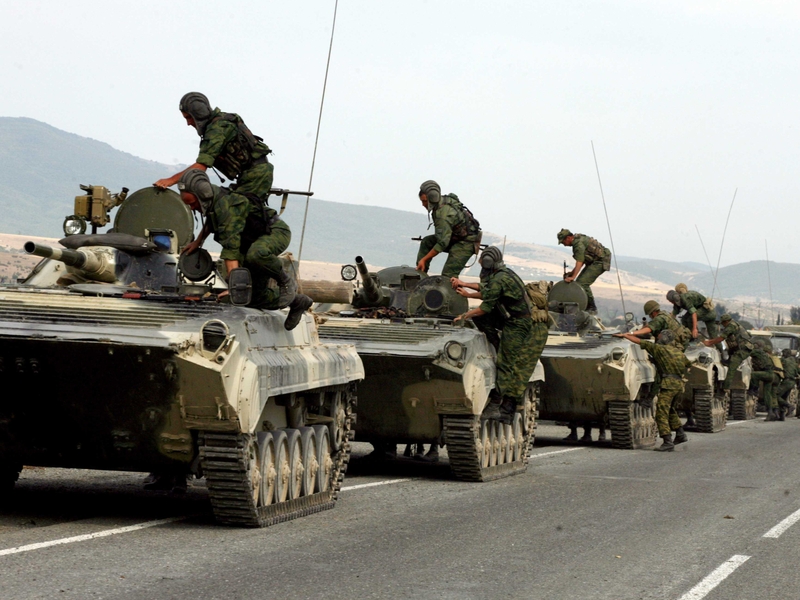
Months of skirmishes between separatists and Georgian troops erupted into war in August when Georgia sent troops and tanks to retake South Ossetia, which threw off Tbilisi's rule in 1991-92.
Russia responded with a powerful counter-strike driving the Georgian army out of South Ossetia.
Moscow's troops then pushed further into Georgia, saying they needed to prevent further Georgian attacks.
Last week Moscow pulled out of buffer zones adjacent to the regions ahead of a 10 October deadline in a ceasefire brokered by France as current president of the EU.
Up to 20,000 people have returned to their villages in the buffer zone adjoining South Ossetia since then, the UN refugee agency said yesterday.
